
When a spindle needs replacing
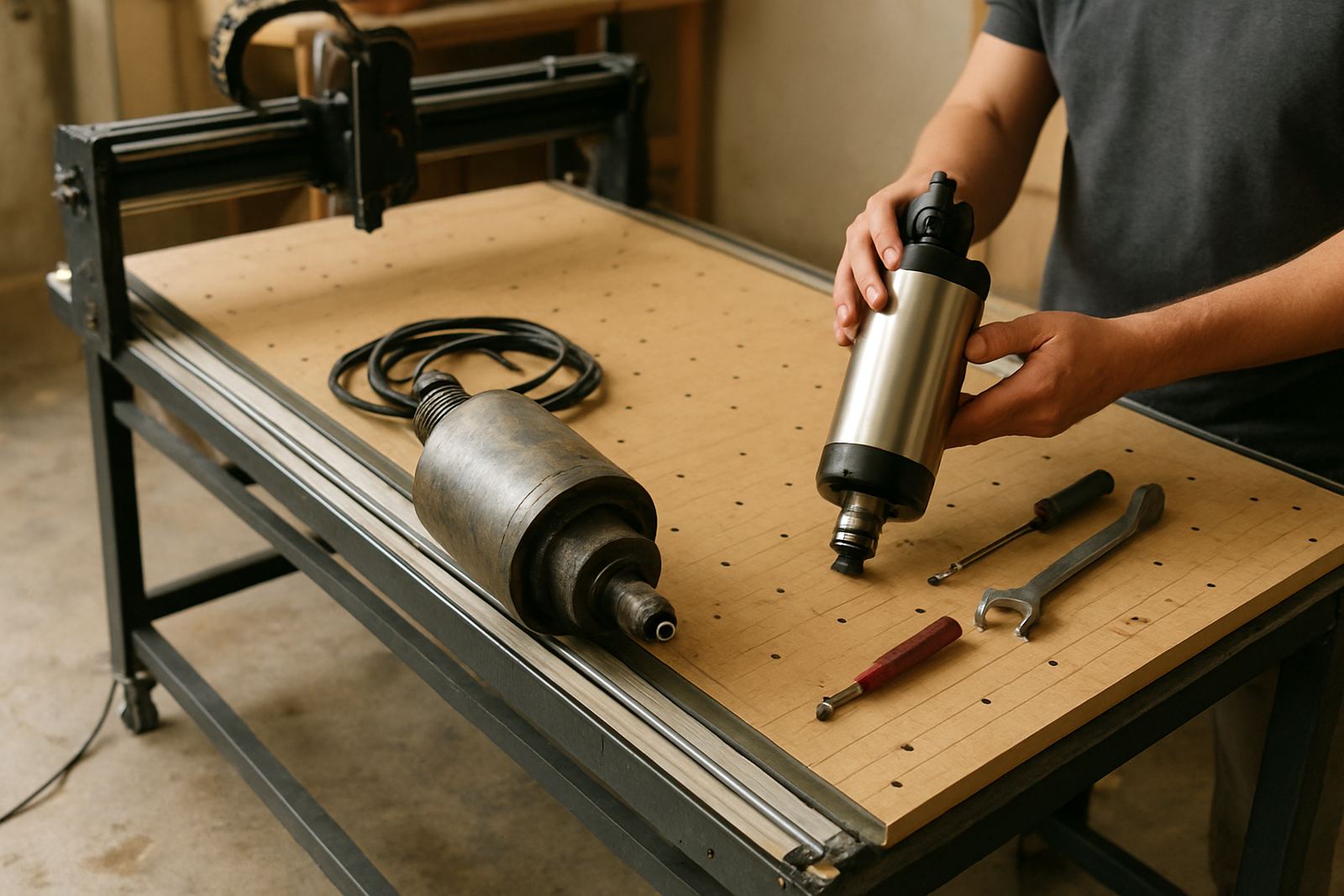
Spindles on hobby and small workshop CNC routers do hard daily work, especially on MDF, ply, solid timber and plastics. Heat, dust, poor cooling, bearing wear, moisture and long run times can all shorten service life. In Pretoria, Silverton, Centurion and the East Rand we often see failures after heavy cutting, poor dust extraction or voltage dips during load-shedding. A spindle that is starting to fail may still turn, but the signs are there long before it stops completely.
Common warning signs include unusual bearing noise, vibration in the cut, overheating, loss of speed under load, burning smells, reduced finish quality, and errors when the machine tries to start. If you are hearing a high pitch whine or the tool marks are getting rougher on the edges, it is worth checking the spindle before the issue spreads to collets, control settings or the material itself.
- Excess play in the shaft or nosepiece
- Grinding, buzzing or rattling during run-up
- Cut marks that are uneven or chatter-prone
- Trip events, overheating or start-up failure
- Water or dust ingress on the motor end
What our spindle replacement includes
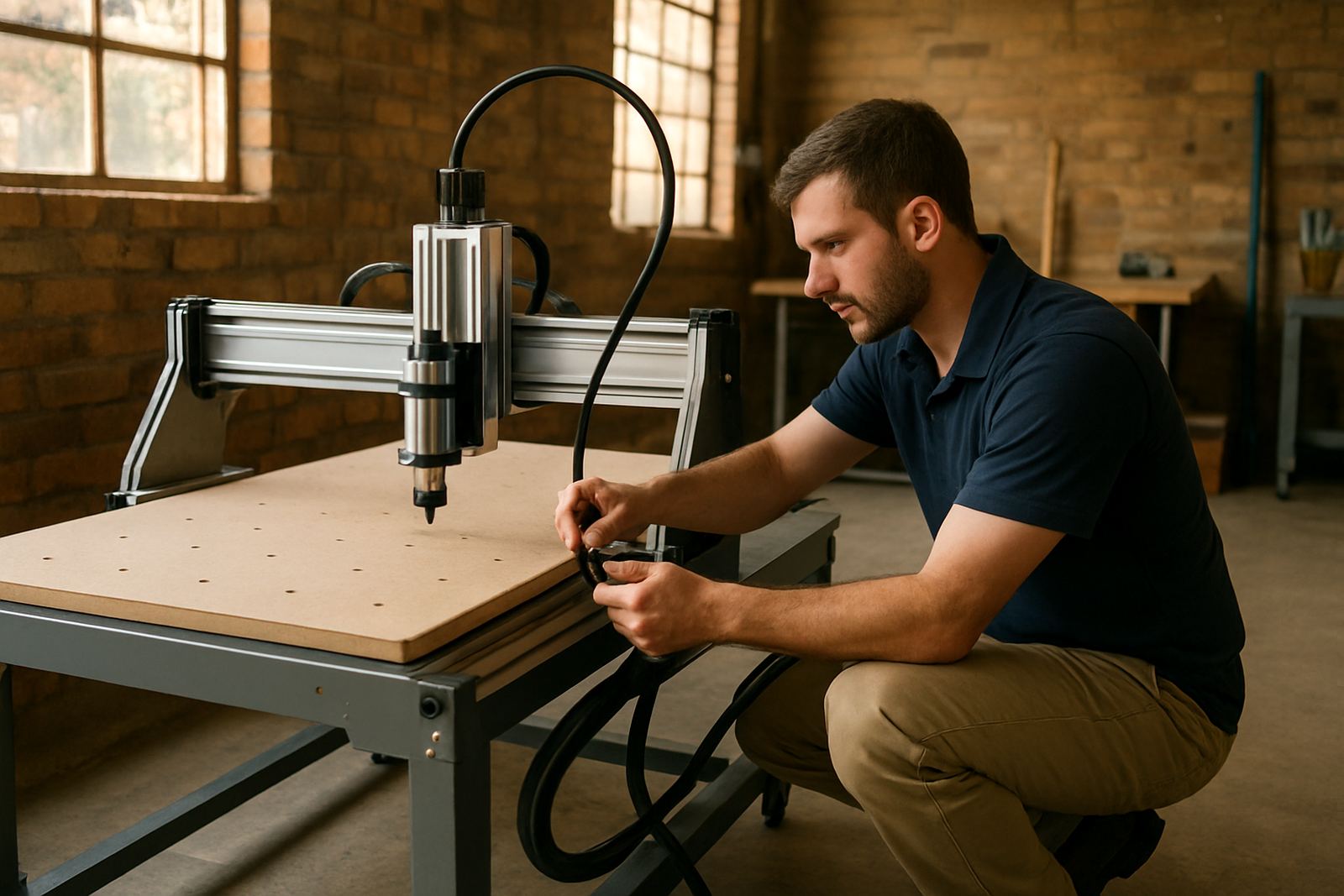
Our service is built to get the correct unit in place and working properly, not just swapped in and sent out. We check the existing mounting, cooling arrangement, wiring condition, connector type and control compatibility before fitting the replacement. That matters on smaller routers, because a spindle that is the wrong size, speed range or collet format can create more problems than it solves.
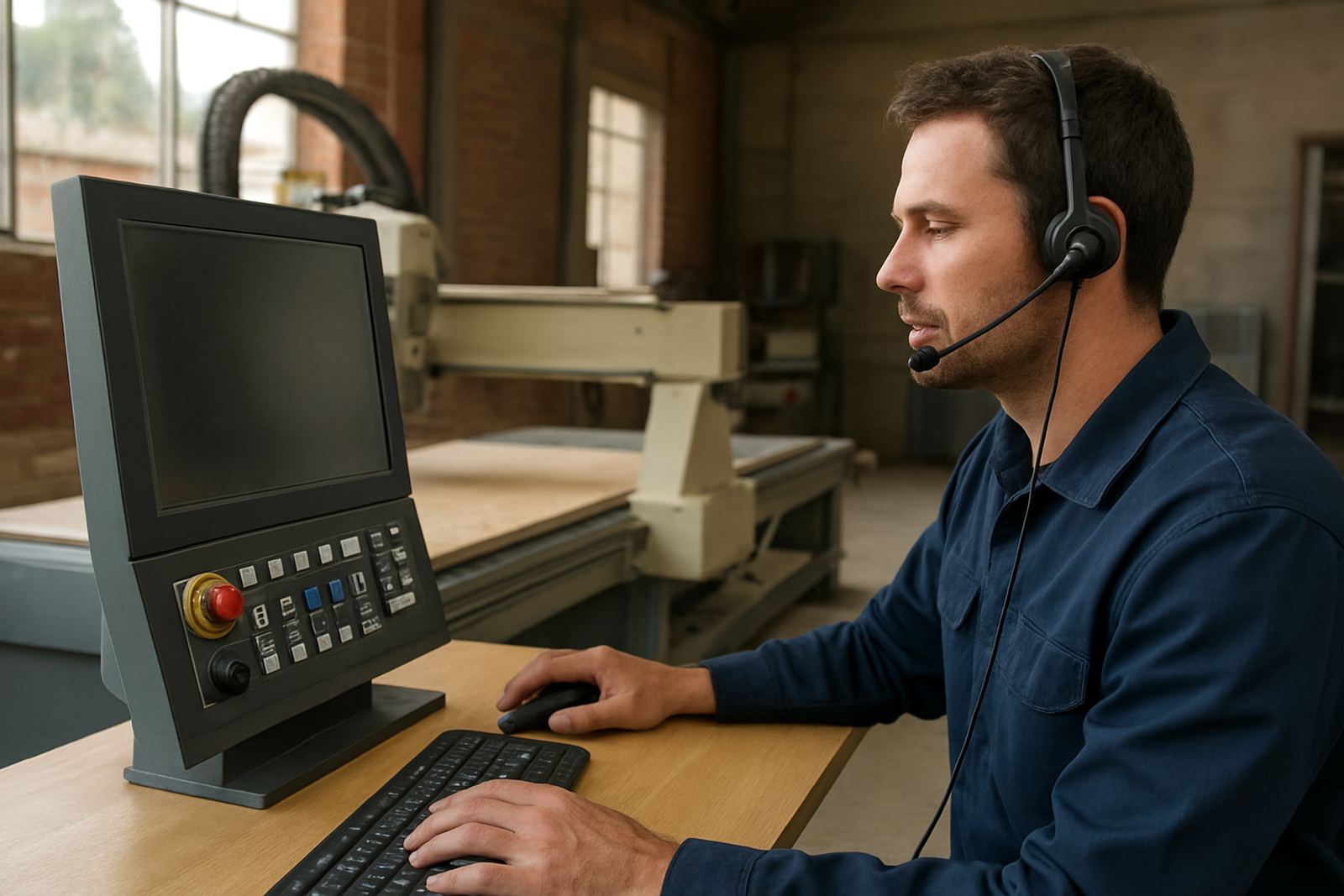
We handle the fitting, alignment and functional checks, then confirm the machine is ready for cutting again. Where needed, we also assist with control tuning, starting parameters and a basic test cut so you can see how the machine behaves under load. If the old spindle failure has affected bearings, cable terminations or cooling lines, we will flag it early so there are no surprises later.
- Removal of the failed or worn spindle
- Fitment of the replacement unit with correct mounting
- Wiring and connector checks
- Cooling and airflow inspection where applicable
- Run test, spindle direction check and recommissioning support
Our replacement process from inspection to restart
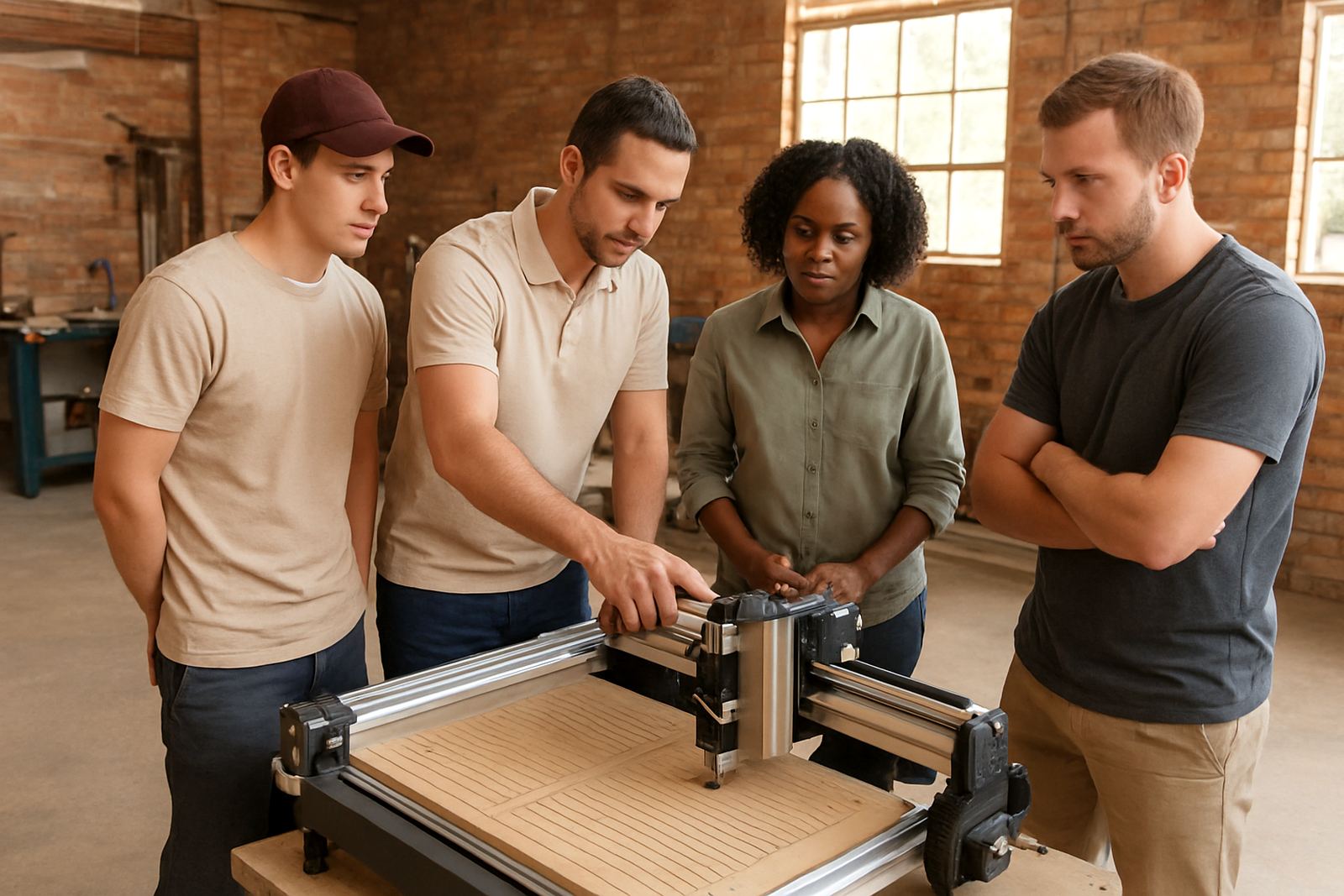
We keep the process straightforward because many workshops cannot afford long downtime. The first step is an assessment of the machine and spindle specification. We confirm shaft diameter, mounting style, power rating, voltage, speed range and collet size so the new unit matches the router and the work you do. If the machine is used for cabinet work, sign work or acrylic cutting, we take that into account as well.
Once the replacement is agreed, we schedule the work and prepare the correct fitting parts. On site or in our Pretoria base, we remove the failed spindle, clean the mounting area, inspect the cable run and check for dust build-up around the gantry and electronics. After fitment we test rotation, listen for vibration, verify speed response and confirm the spindle is holding temperature within normal limits. If needed, we can also provide a refresher on safe startup and shutdown, because many spindle problems begin with small operating habits that get overlooked.
- Step 1: Identify the fault and confirm the specification
- Step 2: Prepare the replacement and fitting parts
- Step 3: Remove, fit and align the spindle
- Step 4: Test speed, direction, noise and heat
- Step 5: Recommission the machine and hand over notes
Turnaround, call-out cover and support areas
Turnaround depends on the machine model, access to the correct replacement and whether the job is handled in Silverton or at your workshop. For many standard hobby and desktop units, same-week replacement is often possible once the part is confirmed. If a special mounting, rare connector or matching cooling setup is needed, we will give a realistic lead time before work starts. That way you can plan around production, weekend orders or school project deadlines.
We support Silverton, Pretoria East, Centurion, Midrand, Kempton Park and other areas nationwide where spares and remote guidance are needed. For clients outside Gauteng, we can assist with fault confirmation, spare selection and installation guidance so you are not guessing at the wrong part. In coastal areas, extra attention to humidity and corrosion is important, while inland workshops need to manage dust and voltage stability. We take both into account when advising on replacement and aftercare.
- Local workshop support from Pretoria base
- On-site help in selected Gauteng areas
- Remote diagnosis and spares planning nationwide
- Clear time estimates before work begins
Pricing approach that keeps the job practical
Spindle replacement pricing is based on the fault, machine type, access to the spindle, and the exact specification required. Some machines need only a straight unit swap, while others need cable work, mounting adjustments, bearing-related checks or control tuning. We quote according to the work involved, so you know what is being replaced and why. There are no guesses hidden in the job.
We can also advise on whether a spindle can be economically repaired, or whether replacement is the better long-term option. On smaller routers, a replacement is often the safer choice when there has been bearing noise, overheating or repeated start-up faults. If you are budgeting for a workshop, we can also recommend a spare plan for the main wear items so a future stoppage does not turn into a week of lost time. That is especially useful for businesses running short production windows or depending on weekend work.
Maintenance intervals that help the new spindle last longer
A new spindle should not be left to run until it fails again. Regular checks help keep the bearings cooler, reduce vibration and prevent dust from working into the motor and collet area. In most small South African workshops, a monthly visual inspection and a more detailed service every 6 to 12 months makes sense, depending on hours run and the material being cut. If you cut MDF daily, service needs are higher than for a hobby router used a few hours on weekends.
We recommend checking collet condition, mounting bolts, cable strain, cooling flow, dust extraction and temperature after heavy jobs. If you use the machine near the coast, or in a humid room, corrosion and moisture need more attention. For inland areas like Pretoria and Midrand, dust control and stable power are usually the bigger issues. Good maintenance lowers the chance of a repeat failure and helps protect the control system too.
- Daily: clear dust and check for unusual noise
- Monthly: inspect mounting, cooling and cable strain
- 6 to 12 months: detailed service, speed test and bearing check
- After power events: confirm startup and run temperature
Key facts
| Spindle types supported | Common hobby and small workshop CNC spindle units for wood, MDF and plastics |
|---|---|
| Power range | Typically 0.8 kW to 2.2 kW depending on the machine and application |
| Speed range | Approx. 8 000 to 24 000 rpm, model dependent |
| Cooling options | Air-cooled or water-cooled setups, subject to machine design |
| Typical fitment checks | Mounting size, shaft diameter, voltage, connector type and control compatibility |
| Service area | Silverton, Pretoria East, Centurion, Midrand, Kempton Park and nationwide support |