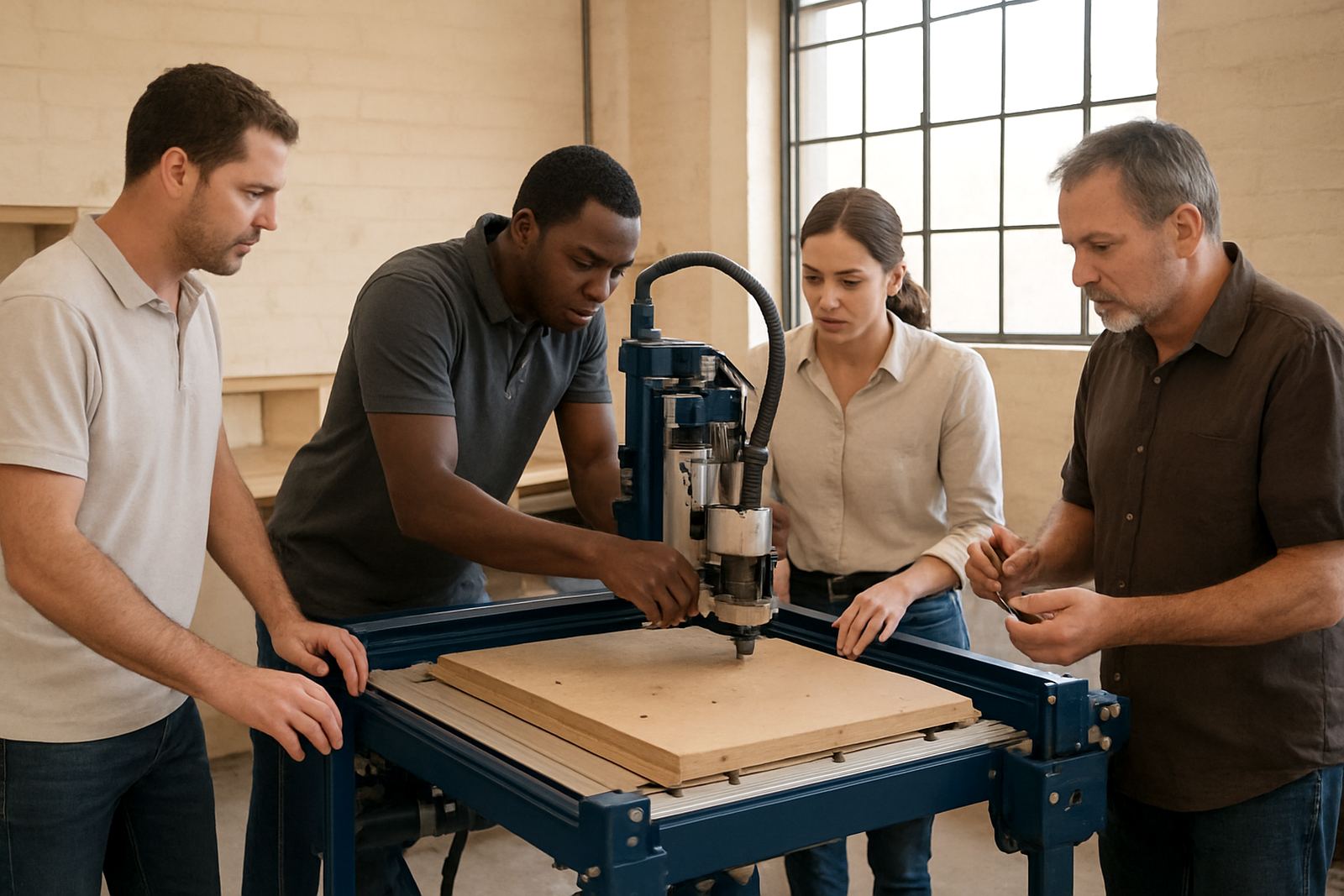


What Spare Parts Planning Covers
Spare parts planning is for workshop owners who need a practical way to keep a CNC router running without tying up cash in parts that may never be used. We look at your machine model, daily cutting load, material type, power supply stability, and how far you are from support in Pretoria, Centurion, Midrand, Kempton Park or elsewhere in South Africa. A small hobby router used on weekends does not need the same holding as a machine running MDF parts every day.
We focus on the items that stop production first. That usually means motion components, limit switches, spindle wear items, drive accessories, control cables and consumables. For coastal workshops, where humidity can affect electrics and bearings, we also look at storage conditions and corrosion risk. If your site is affected by load-shedding or unstable supply, we factor in surge risk and restart issues too.
- Machine use review based on hours, material and duty cycle
- Risk rating for downtime, from low use to daily production
- Recommended stock list with quantities and reorder points
- Advice for safe storage in dust, heat and humidity
How We Build a Spare Parts List
We start with the machine details and a short discussion about how you work. A router that cuts MDF boards for signage has different wear patterns from one cutting acrylic or plywood. We also ask what usually causes trouble on your side, such as broken bits, loose connections, worn bearings, dust ingress or power dips.
Once we know the setup, we map the parts into three groups. Critical parts are items that can stop the machine immediately. Fast wear parts are those that need regular replacement. Support items are the smaller spares that save time during repairs, like connectors, belts, fuses and sensors. The result is a sensible spares plan, not a shelf full of guesswork.
- Critical parts for immediate recovery
- Wear parts for planned replacement
- Support parts for quicker field repairs
What We Normally Recommend Holding
The exact list depends on the table size, drive system and controller, but a good starting point is usually built around practical fail points. On smaller desktop and hobby routers, the most useful holdings are belts, limit switches, end stops, collets, cables, fuses and basic spindle service items. On larger tables, we may add drive components, relay parts, sensors, cable chains and control board support items.
For routers used in dusty MDF work, filters and cleaning items matter just as much as electrical spares. For workshops near the coast, sealed storage packs and inspection intervals help prevent damage from moisture. If the machine is used in a training room or shared space, we may suggest an extra set of consumables so work does not stop when one set is already in use. Small parts are easy to ignore until they are the reason a whole job sits for two days.
- Belts, pulleys, couplings and motion wear items
- Limit switches, sensors and control cables
- Spindle consumables, collets and cooling related parts
- Fuses, relays, terminals and electrical support items
The Planning Process From First Call to Final List
Our process is straightforward. First, we confirm your machine details and the way it is used. Second, we review the known wear points and any past breakdowns. Third, we prepare a holding recommendation with priority levels so you know what to buy now and what can wait. If needed, we can do this alongside a starter setup visit, preventive maintenance or remote support session.
After the list is agreed, we help with ordering, substitution options and practical quantities. If a part is no longer available in the same form, we explain the closest suitable alternative and whether any control tuning or fitting changes are needed. Where replacement intervals matter, we note them on the plan so your team can keep track without guesswork.
- Step 1: machine review and operating conditions
- Step 2: failure history and downtime risk check
- Step 3: spares list with priorities and quantities
- Step 4: ordering support and replacement guidance
Turnaround, Ordering and Support
Most spares planning jobs are turned around quickly once we have the machine information and a clear picture of use. For a simple hobby router, you can usually expect a short planning cycle. For production machines or sites with repeated breakdowns, we may take a bit longer to make sure the list is practical and not overdone. If a part is urgently needed, we can help identify the priority item first and keep the rest for later.
Support is available from Silverton, Pretoria, with training and spares supplied nationwide. That helps whether you are in Pretoria East, Centurion, Midrand, Kempton Park or a town further out. We are used to customers who need answers by phone or message, especially when a machine is down and the day’s cutting is already behind. If you are unsure about a component, send the details and we will help confirm it before you order.
Pricing Approach and Maintenance Intervals
Pricing is based on the time needed to review your machine, the complexity of the setup and whether you need one machine checked or several. We keep the approach simple and quote according to the work involved, not a one size fits all package. If you only need a basic holding recommendation, the cost is lower. If you want a detailed parts strategy for multiple routers, spindle support and consumables planning, the price reflects that extra detail.
Maintenance intervals matter because good spares planning changes as the machine ages. In general, we recommend a monthly visual check on hobby machines and weekly checks on units that run daily. Belts, cables, filters and spindle wear items should be reviewed more often in dusty MDF work. In humid areas, storage and inspection should be tighter. Waiting until a part fails is usually what makes a small issue expensive.
- Monthly checks for low use machines
- Weekly checks for daily production machines
- Shorter intervals in dusty or coastal environments
- Review spares after any breakdown or control fault
Key facts
| Service area | Silverton, Pretoria East, Centurion, Midrand, Kempton Park and nationwide |
|---|---|
| Typical machines | Desktop, hobby and small workshop CNC router tables |
| Materials considered | Wood, MDF, plywood, plastics and similar sheet materials |
| Planning output | Priority spares list with quantities and replacement notes |
| Support channels | On site visits, remote support, message and phone |
| Main focus | Reduce downtime and keep spare holdings sensible |