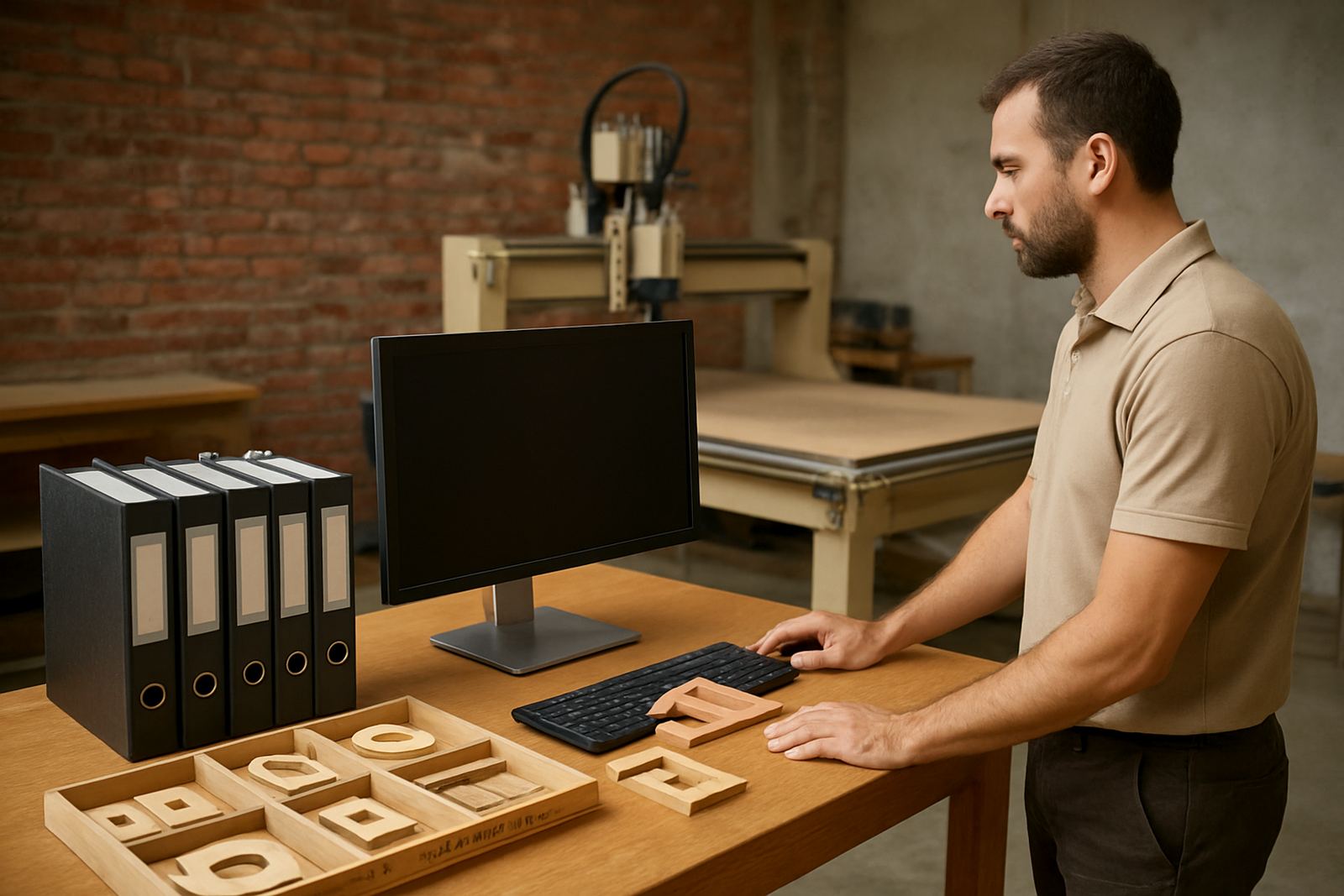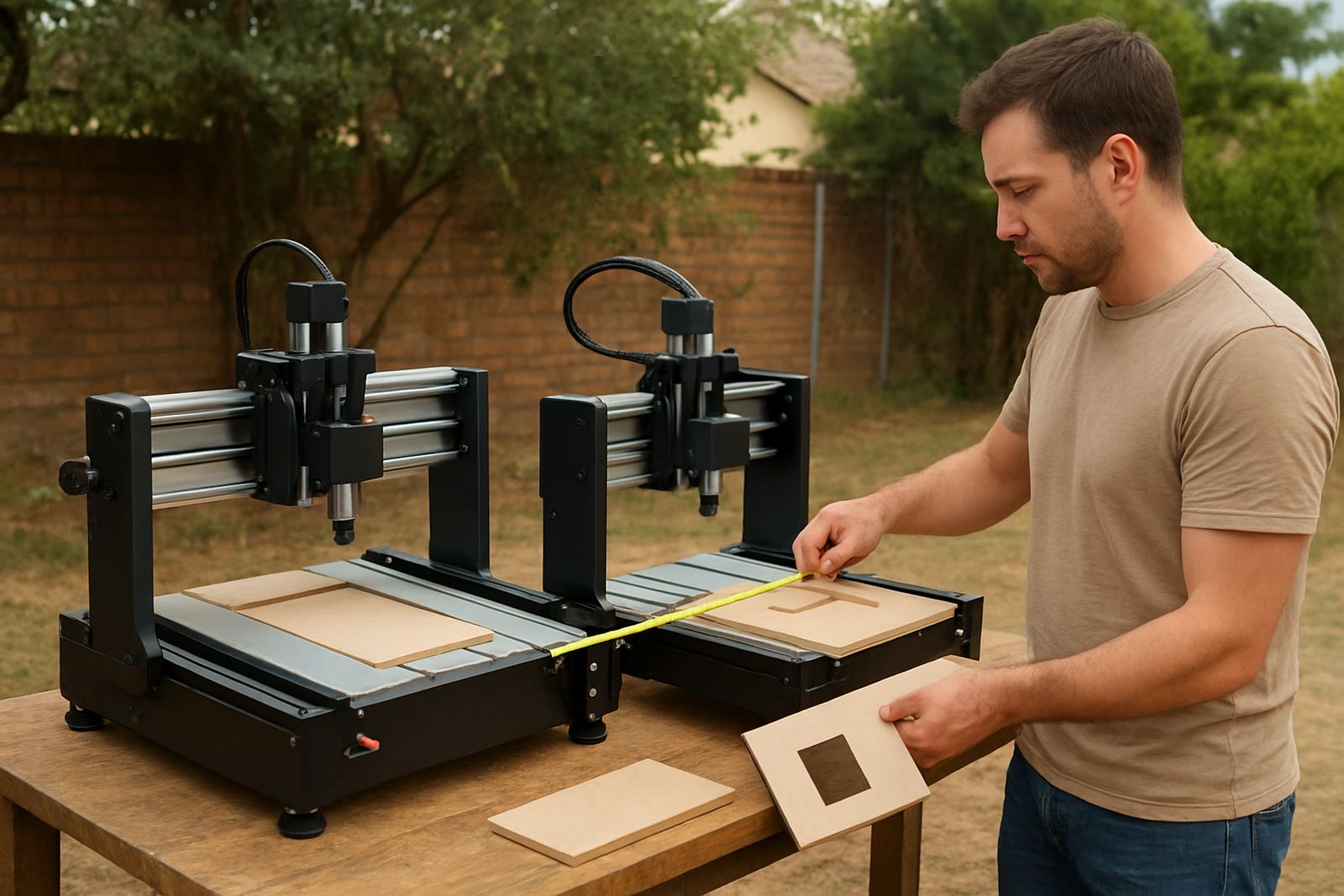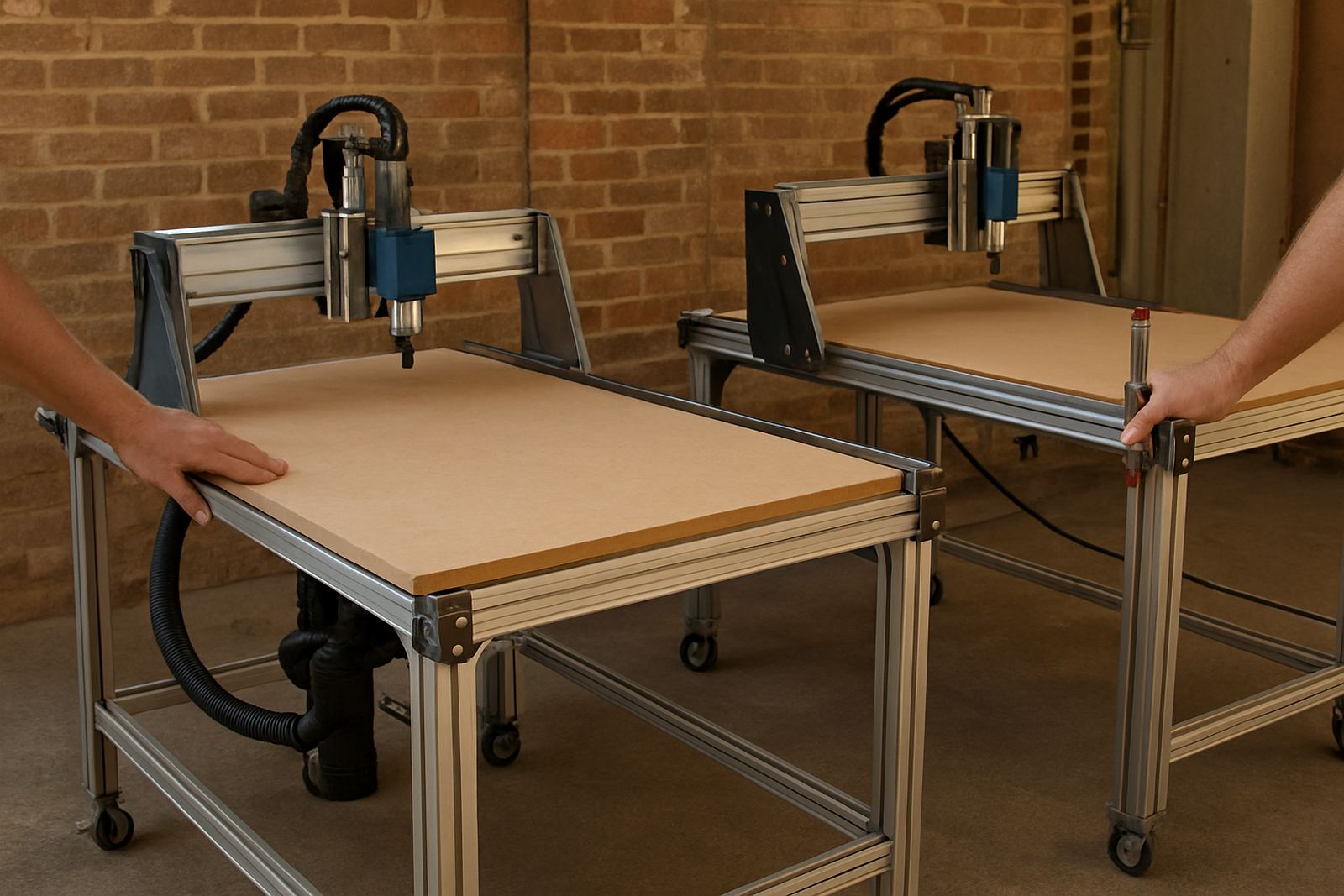
What vacuum hold-down does best on a CNC router
Vacuum hold-down works well when you are cutting full sheets or many repeated parts from one board. It pulls the material down against a spoilboard so the sheet stays flat and the cutter can move without the part shifting. That makes it a strong option for nested cabinet parts, signage blanks and production runs where speed matters.
It is especially useful with MDF and other flat sheet goods because the air can be drawn evenly through a porous spoilboard. On plastics it can also work well, but only if the sheet is large enough and the seals are right. Small offcuts and narrow parts are another matter, because the vacuum simply does not have enough surface area to grip properly.
- Best for full sheets and repeat jobs
- Useful when setup time needs to stay low
- Strong on flat MDF, some timber boards and large plastic sheets
- Needs a well sealed spoilboard and a decent pump
Where mechanical clamps still win the job
Mechanical clamps give you positive grip, which is why many smaller workshops still rely on them. If the part is small, irregular, heavy or already warped, clamps are usually safer than vacuum. They are also handy when you are cutting close to the edge of a sheet, because you can place them where the cutter will not strike them.
For hobby routers and compact tables, clamps are often the practical choice. You do not need a large pump, you do not need a perfectly sealed spoilboard and you can hold down odd shapes for prototyping or one off parts. The trade-off is that clamps can slow production and they sometimes get in the way of the tool path if the setup is rushed.
- Better for small parts and odd shapes
- Good for warped boards and heavy stock
- No pump required
- Can slow down repeat production if many parts need repositioning
Part size, material and thickness decide the method
The most important question is not which method is better in general, but what you are cutting today. A 1200 x 2400 mm MDF board behaves very differently from a 100 x 300 mm timber sign blank. Thin sheets with a large surface area suit vacuum. Short, narrow or non porous parts often need clamps or a combined setup.
Material also matters. MDF is easy to hold with vacuum because air passes through it, which helps create an even pull. Solid timber is less predictable because grain, knots and surface finish change the seal. Plastics can be tricky too, especially if the sheet bows under heat or if the surface is too smooth for good friction. In those cases, clamps or a vacuum table with proper zoning may be the safer call.
- Full sheets: vacuum usually faster
- Small parts: clamps usually safer
- Warped or bowed stock: clamps or support blocks
- Plastic sheet work: test the grip before you cut full depth
Accuracy, finish quality and repeatability
Vacuum hold-down can improve finish quality because the sheet stays flat and does not lift at the corners during cutting. That matters when you are doing pocketing, engraving or nesting where even a small movement can leave a poor edge or a stepped cut. When the material is flat and the hold-down is even, repeatability is usually better as well.
Clamps can still give good accuracy, but only when they are positioned carefully and the part is supported properly. If a board flexes between clamps, the cutter may leave a slight rise in the middle. That can be a problem on thinner MDF and on large panels cut in a warm workshop where humidity changes through the day. In Pretoria, for example, a panel that was flat in the morning can move a little by afternoon if the shop is open to dust and moisture.
For fine work, many operators use vacuum for the main sheet and then add small stops or tabs where needed. That gives a good balance between speed and control.
What works in a Pretoria workshop with load-shedding and dust
Local workshop conditions affect the choice more than people expect. In Silverton or Pretoria East, a vacuum table needs reliable power and a clean seal. If load-shedding hits mid cut, you need a plan for the part not moving. Smaller routers with clamps may be easier to manage if power interruptions are frequent and production is occasional.
Dust is another factor. Fine MDF dust can clog seals and reduce vacuum performance, while chips from timber can stop a board from sitting flat. A clamp setup is less sensitive to that, but the operator must still clear debris before tightening anything. On humid days in coastal areas, or even during rainy spells inland, sheets may swell slightly and the hold-down method should be checked again before cutting.
- Vacuum needs clean seals and steady power
- Clamps tolerate interruptions better
- Dust and offcuts must be cleared either way
- Check sheet flatness again after transport or overnight storage
A practical rule for choosing the right setup
If you are cutting full sheets in batches, start with vacuum hold-down. If you are making small items, odd shapes or short runs, use clamps. If you are not sure, use both together where the machine setup allows it. Many workshops find that a hybrid approach saves time and reduces scrap because the vacuum handles the broad area while clamps secure the risky spots.
For a furniture maker in Centurion cutting cabinet side panels, vacuum is often the faster choice. For a sign maker in Kempton Park cutting small acrylic letters, clamps may be the safer option. The point is to match the hold-down to the part, not force every job into the same method. That keeps toolpaths cleaner and reduces the chance of a workpiece moving just as the final pass starts.
At CNC Router Hub in Silverton, we see that the best setup is usually the one the operator can use consistently, with good results and less fuss. A machine that holds the job properly is easier to run, easier to train on and easier to keep productive over time.