
Why spoilboard condition affects every cut
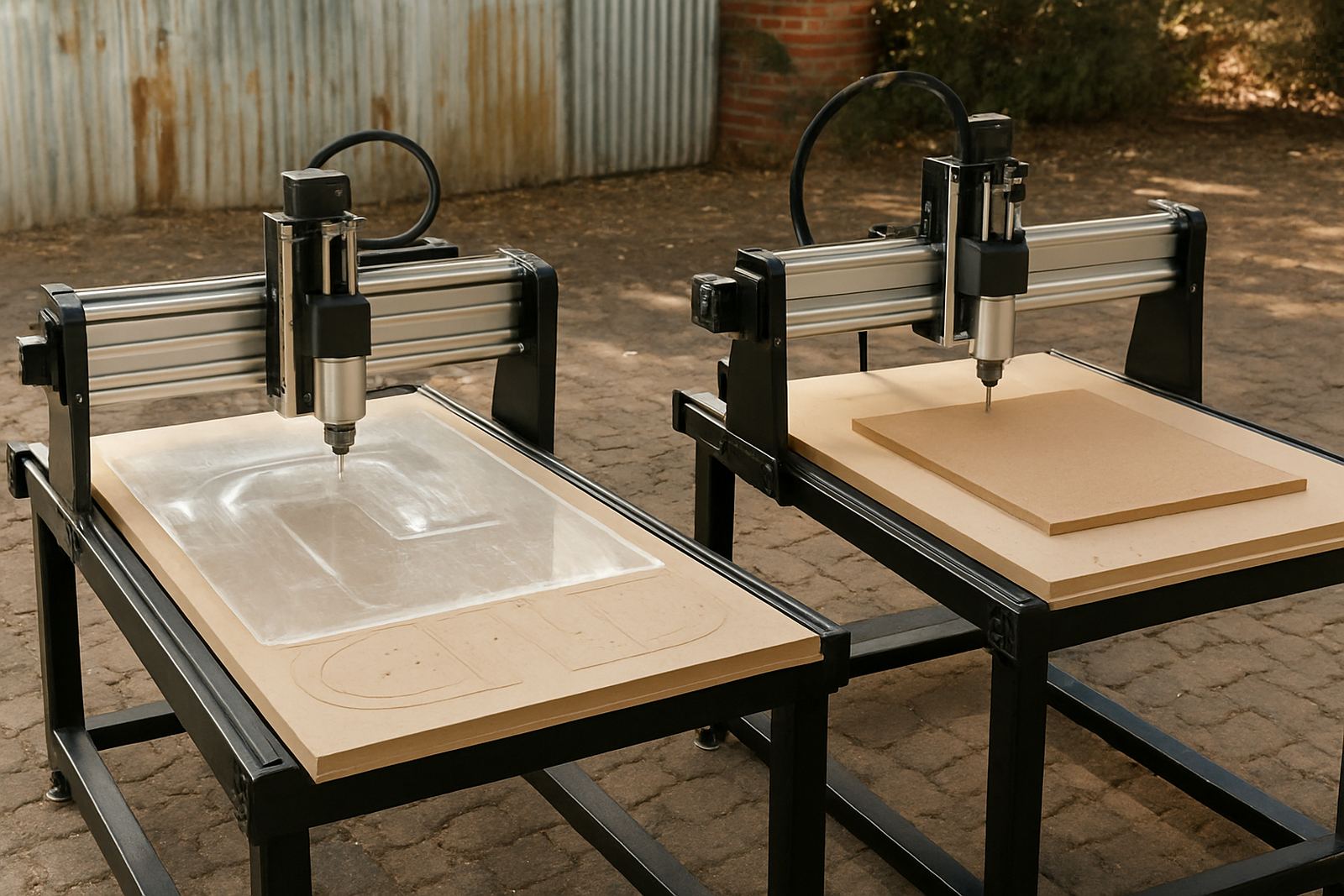
The spoilboard is the sacrificial surface between your clamps, vacuum hold-down or screw fixings and the cutter path. If it is not flat, your material is not truly flat either, and that affects pocket depth, edge quality and repeatability. On MDF, plywood and plastic, even a small rise or hollow can leave marks that are hard to hide later.
In small workshops around Silverton and Pretoria East, spoilboards often carry a hard workload. One day it is a set of cabinet parts, the next it is acrylic signage or template work. That mixed use means the top face gets worn in patches, not evenly, so resurfacing needs to happen before the board gets too uneven to recover.
A fresh skim cut does not fix a bad setup on its own, but it does give your router a level reference again. That is what keeps the machine honest.
Signs it is time to resurface
Most operators wait too long. By the time the spoilboard starts giving trouble the cut quality has already dropped and the holding is unreliable. A quick check with a straightedge or a dial indicator can save a lot of wasted material.
- Parts are cutting deeper on one side than the other
- Vacuum zones lose grip in the middle or at the edges
- Clamp marks or screw heads are sitting proud
- The top surface has repeated cutter tracks in the same areas
- You need to reset Z more often to get the same result
If you are seeing any two of these signs, plan a resurfacing. If the spoilboard has deep grooves from past jobs, replacement may be better than cutting it down again, especially on thinner boards.
How often to skim the surface
There is no fixed rule because use differs from one workshop to the next. A hobby router used on weekends may only need resurfacing a few times a year. A busy shop working MDF panels daily may need it monthly or even more often. The key is to measure, not guess.
For most South African users, the smartest approach is to keep a simple log. Record the date, the material type, and how much was removed. If you are cutting mostly MDF in a humid area like Kempton Park or near the coast, the spoilboard may move more between seasons. In dry months it may seem fine, then after a spell of humidity it starts to twist slightly.
During load-shedding, some operators switch machines off and on more often than usual. That is not a direct spoilboard issue, but it does increase the chance of restarting a job on a surface that has already shifted or been disturbed. Check the board before continuing a long run.
Good resurfacing practice in a small workshop
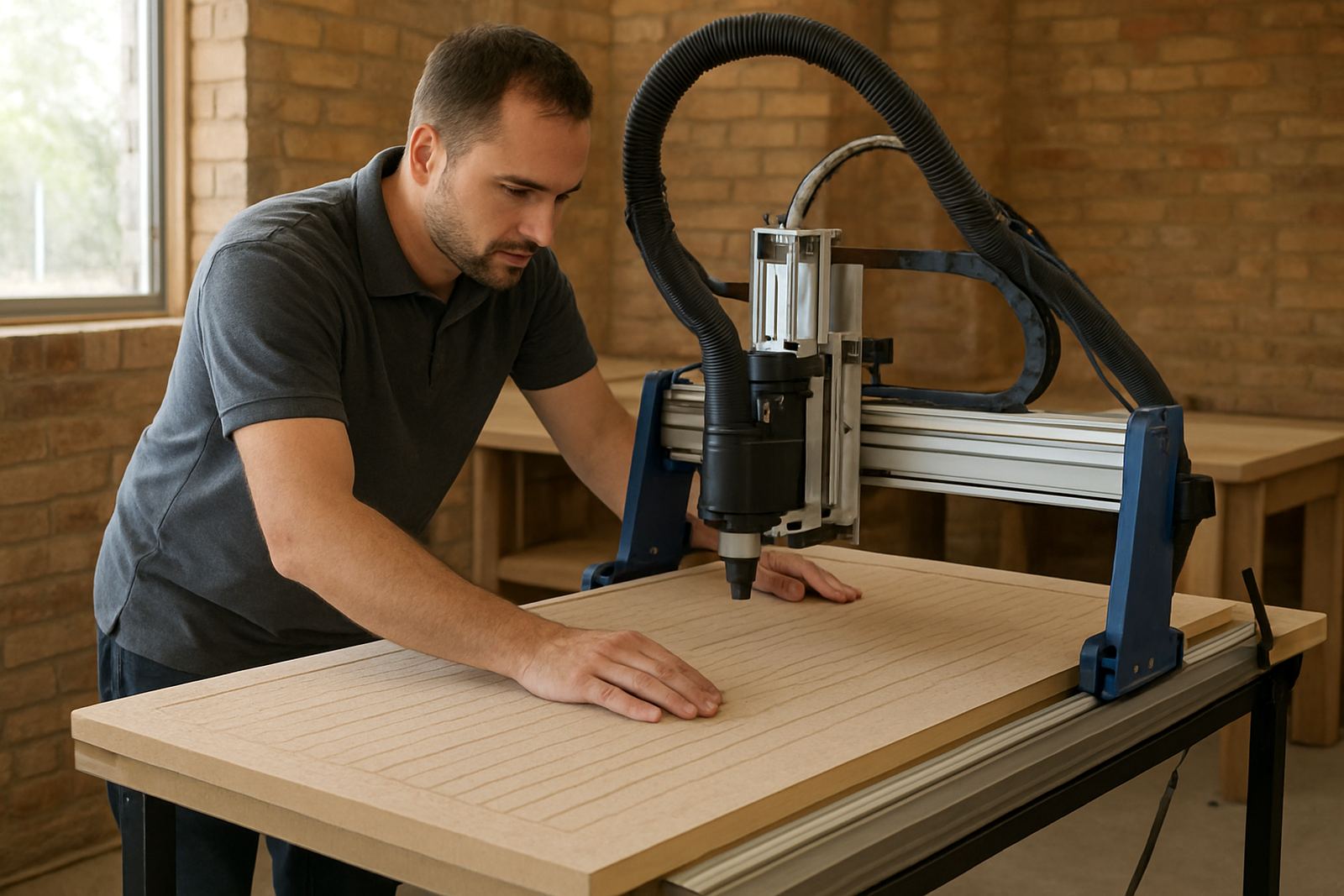
Resurfacing should be light and controlled. You are not trying to remove millimetres of material unless the board is badly damaged. The goal is to clean the top face, restore flatness and keep enough thickness for future maintenance. If you cut too deep too often, the board becomes thin, weak and harder to hold down securely.
Before skimming, confirm that the gantry, rails and spindle are running square and that the machine itself is level enough for your work. A spoilboard can only compensate for so much. If the table is badly out, the spoilboard just copies the error.
- Check that the board is fixed firmly to the machine bed
- Use a cutter suitable for surfacing MDF or similar board
- Set a shallow pass and test a small area first
- Clear dust fully before measuring the result
- Recheck zero after surfacing, do not assume it stayed the same
Dust extraction matters too. Fine MDF dust builds up quickly and can make the surface look flatter than it is. Clean it properly before making any decision.
Hold-down, clamps and cut quality
A well-kept spoilboard improves hold-down because the contact surface is more even. Vacuum systems seal better on a flat board, and clamp pads sit properly without rocking. That means less movement, fewer rejects and cleaner edges. If your work is shifting, do not only blame the cutter or the file. Look at the surface first.
Many users in Pretoria and Centurion cut a mix of one-off and repeat jobs. For that kind of work, the spoilboard must be practical. Mark out safe clamp zones and avoid placing fixings in the same lines every time. Otherwise you create ridges and hollows that force you into more frequent resurfacing.
Keep cutting areas separate from assembly areas. A spoilboard that is used for routing only will last longer than one that also gets glue, screws and heavy manual handling.
When resurfacing is not enough
There comes a point where another skim cut will not solve the problem. If the board is swollen from moisture, split around fixings or too thin after repeated cuts, replacement is the better choice. That is common in workshops without stable temperature control or where the machine sits near open doors and high humidity.
Look carefully for these warning signs:
- Edges lifting or delaminating
- Deep grooves that would need excessive removal
- Screw holes that no longer grip properly
- Persistent high and low spots after surfacing
- Board thickness getting uneven across the table
If you are not sure, measure it. A few minutes with proper tools can tell you whether the board still has life left or whether you are better off fitting a new one and starting clean.
A Pretoria example that saves time and material
A small Silverton workshop making MDF panels for display units was seeing inconsistent pocket depth on repeat jobs. The operator kept adjusting tool offsets but the issue did not go away. After checking the spoilboard, the team found the centre section had worn low while the clamp lines were slightly raised. A light resurfacing restored flatness and the next batch cut cleaner with less manual rework.
The lesson was simple. The machine was not the problem, the working surface was. Once the spoilboard was brought back into shape, the workshop used fewer test cuts, saved material and spent less time resetting jobs. That kind of gain matters when you are working to a tight schedule and every sheet counts.
For users across Pretoria East, Midrand and further afield, the same rule applies. Keep the spoilboard clean, flat and thick enough to do its job, and the router will give more consistent results.