
Why sheet handling matters before the first cut
Most damage to sheet material happens long before the cutter starts moving. A panel can arrive square and clean, then pick up edge chips, bowing or a scratch because it was lifted badly, dragged over a rough floor, or stored flat with weight on one corner. In a small workshop, that one mistake can throw out a whole nesting job.
Good handling also protects the people doing the work. MDF and full-size plastic sheets are awkward in tight spaces, especially when one person tries to manage the load alone. A safer routine means less strain on backs, fewer pinched fingers and less chance of a panel slipping when load-shedding has left the area darker than expected.
Plan the route from storage to router table
Before moving any sheet, clear the path. Measure door widths, check for loose offcuts on the floor, and make sure the route to the CNC router table is wide enough for the material plus the people carrying it. In places like Silverton and Pretoria East, many workshops work in modest spaces, so it helps to map the route once and keep it consistent every time.
Good planning is not complicated, but it must be done every time. A panel moving from rack to machine should never need to turn sharply past a compressor, step over a cable, or squeeze between stored material and the wall. Those tight turns are where corners crack and hands get trapped.
- Keep the floor dry and free of sawdust before moving sheets.
- Open gates, roller doors and internal doors first, then move the panel.
- Check that the machine bed is clear and ready to receive the sheet.
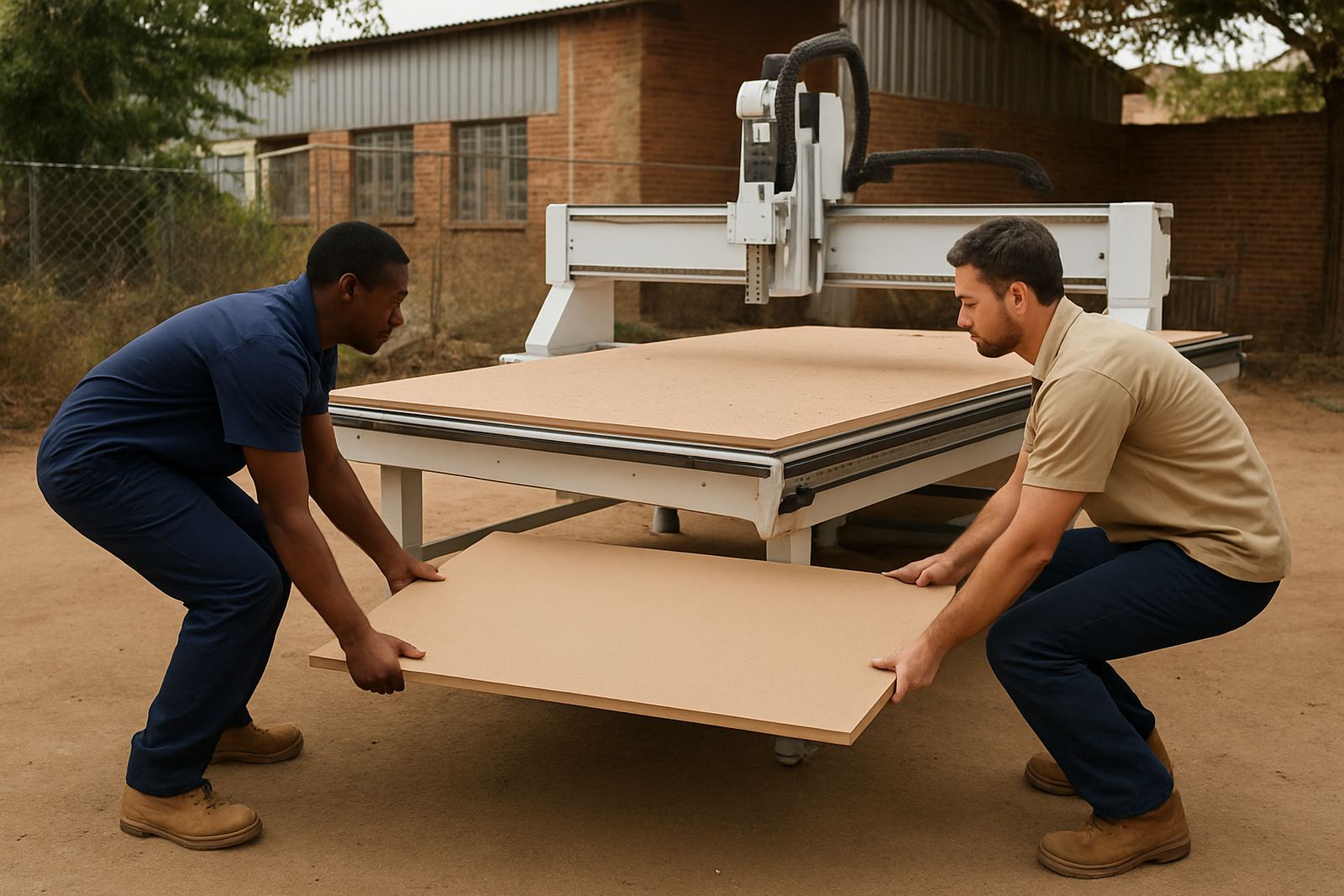
- Have one person guide the front edge and one person control the rear.
Use the right lifting method for panel size
Small sheets can often be handled by one trained operator, but larger panels need two people or lifting aids. The aim is to keep the sheet close to the body and avoid twisting while carrying. When two operators lift together, agree on the count before moving so the panel rises evenly and does not swing. That matters with MDF, which is heavy for its size and can flex at the centre if held unevenly.
For frequent work, simple aids make a difference. Sheet carts, edge supports and roller stands reduce lifting height and help guide the panel onto the machine bed. In a workshop near Midrand or Kempton Park where the daily volume is higher, these aids can save time and reduce tiredness by midday. Even a homemade support frame can help if it is level and stable.
- Do not lift by one corner only, it puts stress into the sheet.
- Keep hands clear of pinch points at edges and under the panel.
- Use gloves with grip, but not bulky gloves that reduce feel.
- If a sheet feels too heavy or awkward, stop and get help.
Protect edges and surfaces during loading
Once a sheet is lifted, the next risk is contact damage. A rough floor, a screw head on a pallet or a steel frame edge can chip a corner in seconds. For finished MDF and many plastics, even a small nick can become visible after machining. Keep the handling surface clean, and if a sheet must be slid at all, slide it over a smooth support rather than concrete or steel.
In humid coastal conditions, some panels can absorb moisture during storage and become more prone to swelling at the edges. Inland around Pretoria the issue is often dust and dry air, but a panel left near an open doorway can still pick up grime. Store sheets on flat, supported racks and separate them with clean bearers where needed. If sheets are stacked on a slight uneven floor, the bottom panel can warp before anyone notices.
- Place a clean cover sheet on any rack or trolley surface.
- Never drag finished faces over raw timber or metal.
- Keep plastic sheet corners wrapped until the sheet is ready to use.
- Inspect each panel under light before loading it onto the table.
Loading onto the machine without bending the panel
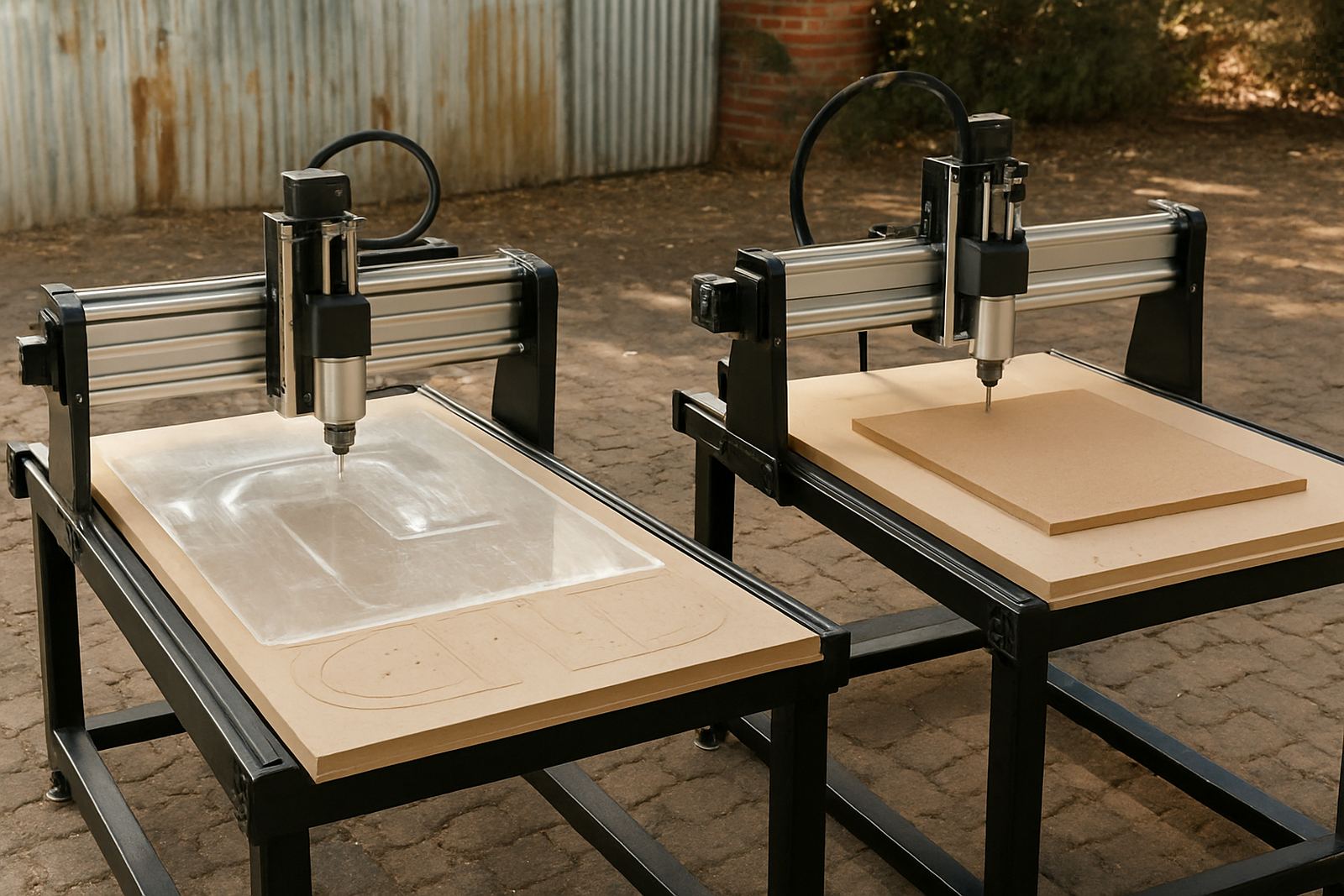
When the sheet reaches the CNC table, the last few steps decide whether the material sits flat or starts the job with a twist. Lower the panel gently onto the supports and check that it lands evenly. If the bed has vacuum zones, confirm that the sheet covers the intended area and is not hanging off one side. If the table uses mechanical hold-down methods, make sure clamps and stops are set before anyone releases the load.
For smaller workshops in Centurion or Pretoria East, it is tempting to rush this stage so the machine can start cutting sooner. That usually costs more time later. A sheet that is not square at loading can cause poor alignment, extra trim cuts and wasted material. A minute spent checking the first placement can save an hour of rework.
If the panel must be repositioned, lift it clear rather than pulling it across the bed. Pulling creates friction marks and can disturb any spoilboard surface that has already been set up. Keep fingers away from the underside once the sheet is resting on supports, and do a final visual check before clamping or vacuum is engaged.
Build a simple routine for a small workshop
Most safe handling systems are not complicated. They rely on the same sequence being followed every time, even when the day is busy or the order is urgent. A short routine helps new operators learn faster and gives experienced staff fewer chances to miss a step. This is especially useful in hobby rooms and smaller cabinet shops where the same person may load, cut and unload through the day.
A practical routine can include a pre-move check, a two-person lift where needed, a clean loading surface, and a final inspection once the sheet is on the bed. If load-shedding affects the workshop, keep torches nearby and make sure the route is still safe when the lights go off. In a dim space, a sheet edge that is easy to see in daylight can be hard to judge, and that is when small mistakes happen.
For workshops in Silverton, Pretoria East, Midrand, Kempton Park and surrounding areas, the same handling logic applies whether you are cutting a single MDF panel or preparing a run of plastic parts. The goal is simple: move the sheet safely, keep it flat, and start the job with no surprises.
When training and spares support makes the difference
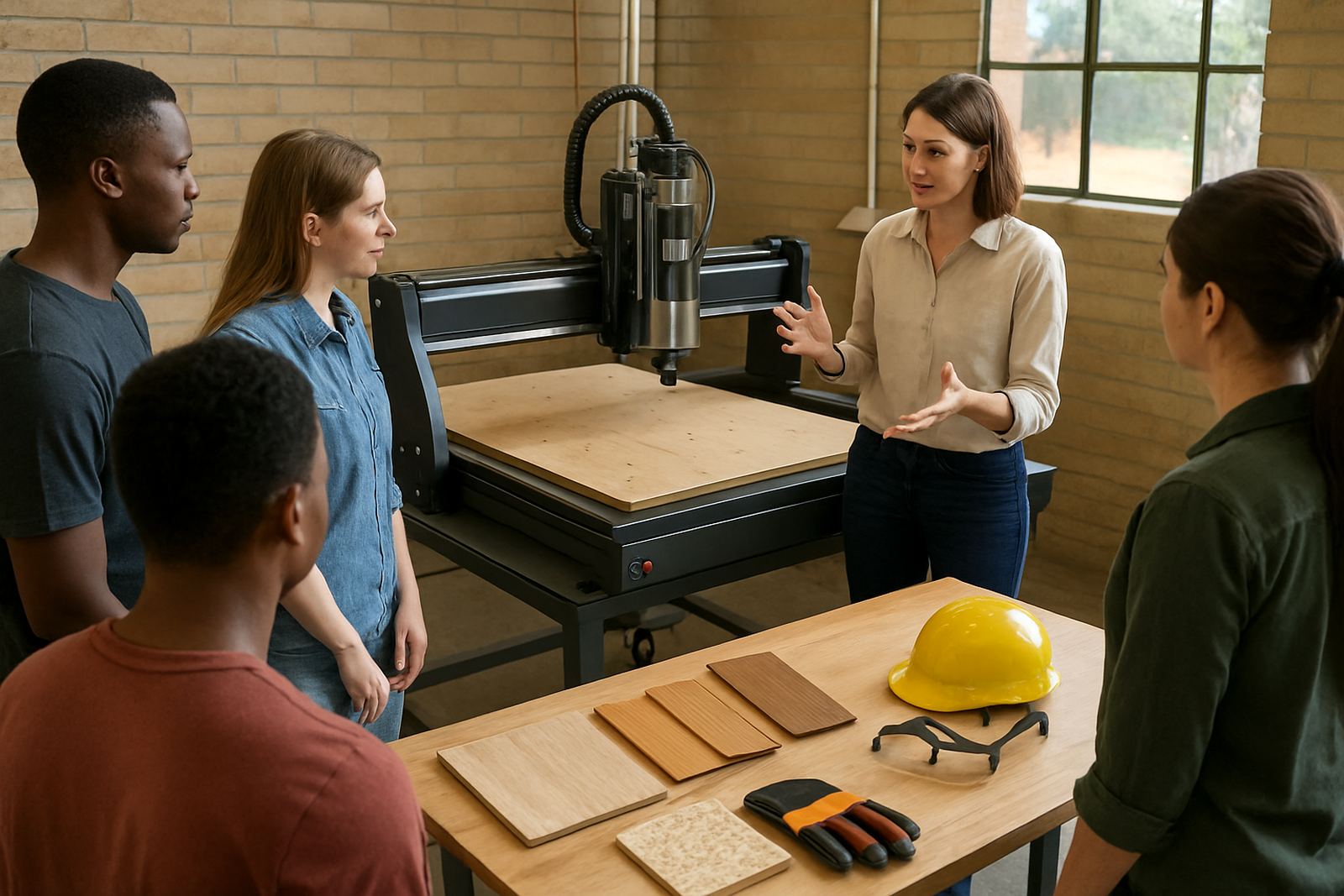
Safe sheet handling improves quickly when operators know what to look for and how the machine should be loaded. Training can cover lifting methods, table setup, sheet alignment and what to do when a panel starts to flex or catch. It also helps to keep basic spares and consumables planned ahead of time so there is no rush when a roller, clamp or support part wears out.
CNC Router Hub works with users across Pretoria and nationwide to help them set up practical handling routines for hobby and workshop use. Whether the need is operator training, a starter setup visit, preventive maintenance or spares planning, the aim is to keep the machine area working safely and the material in good condition. That saves money, and it keeps people from doing heavier lifting than they need to.
For advice, spares or training support, contact the Silverton, Pretoria base on our contact form.