Why small CNC rooms get loud so quickly
In a compact workshop, noise reflects off walls, concrete floors and metal shelving, so the sound from the spindle, stepper motors and extraction fan builds up fast. Even a modest desktop router can feel much louder in a 30 square metre space than a larger machine in a room that has proper separation and soft surfaces.
At our Silverton base, many customers ask the same question after their first week of cutting MDF: why does the machine sound fine at 9am and unbearable by 2pm? The answer is usually a mix of acoustics, tool choice and the way the workshop is organised. If the router sits beside a wall shared with a neighbour or next to a steel gate, the noise carries more than people expect. A bit of planning goes a long way, and it does not have to cost a lot.
Place the machine where the sound has somewhere to go
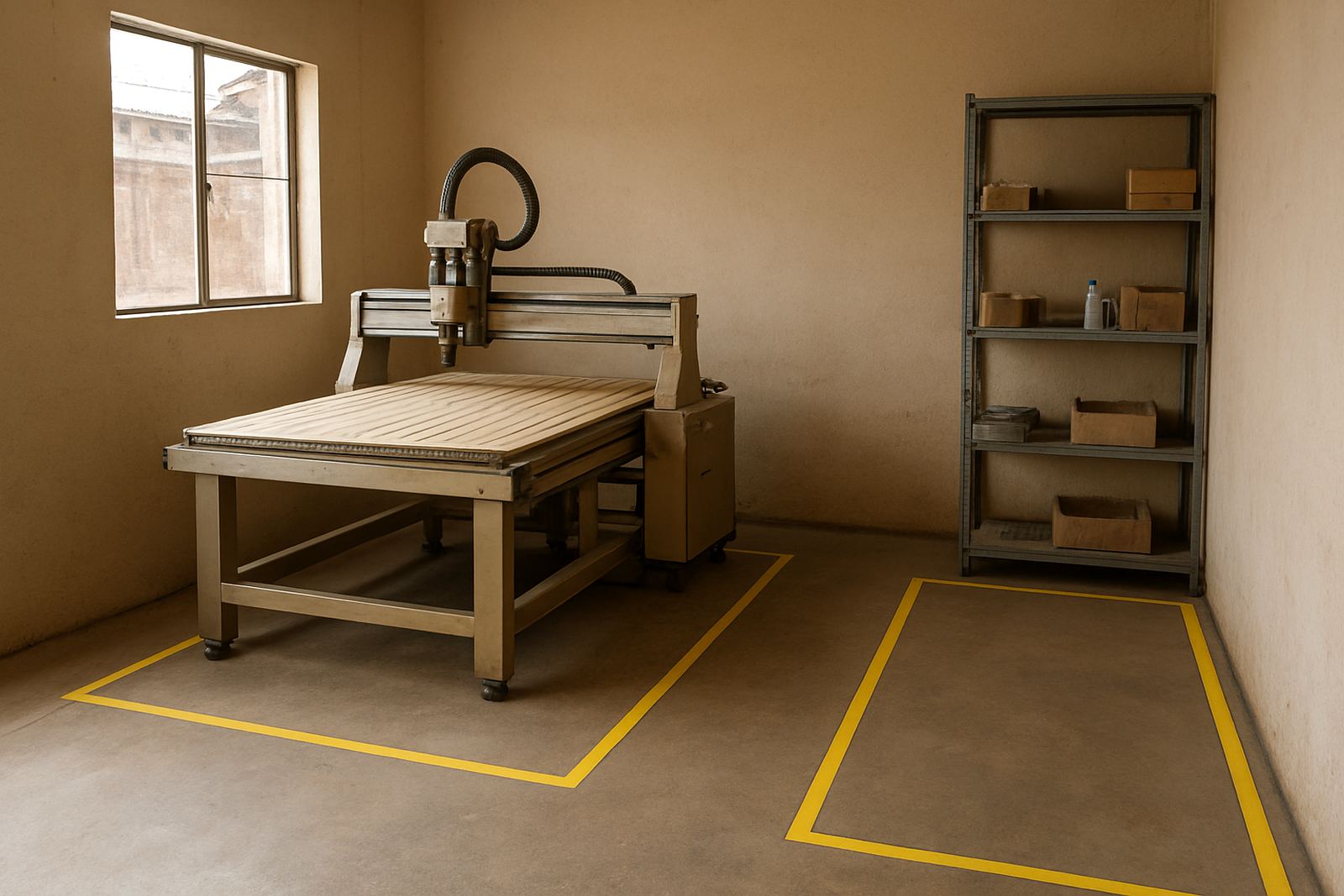
The first step is not a panel or a mat. It is location. Put the router away from corners and hard wall intersections if you can. Corners throw sound back into the room, while a machine with open space around it tends to feel less harsh. If your shop is in Pretoria East or Centurion and you share a wall with another tenant, this matters even more because the structure can act like a speaker box.
Try to keep the machine on a solid base that does not rattle. A shaky stand makes the frame vibrate and adds extra noise that does not help anyone. If the floor is uneven, level the base properly instead of packing it with loose offcuts. That small fix can reduce the buzzing you hear when the machine accelerates and changes direction.
- Keep the router off thin partition walls where possible.
- Leave space behind the machine for cable movement and airflow.
- Use a stable stand or table with proper feet, not scrap timber.
- Avoid placing the extraction outlet right against a wall that reflects noise.
Extraction planning is about dust and sound together
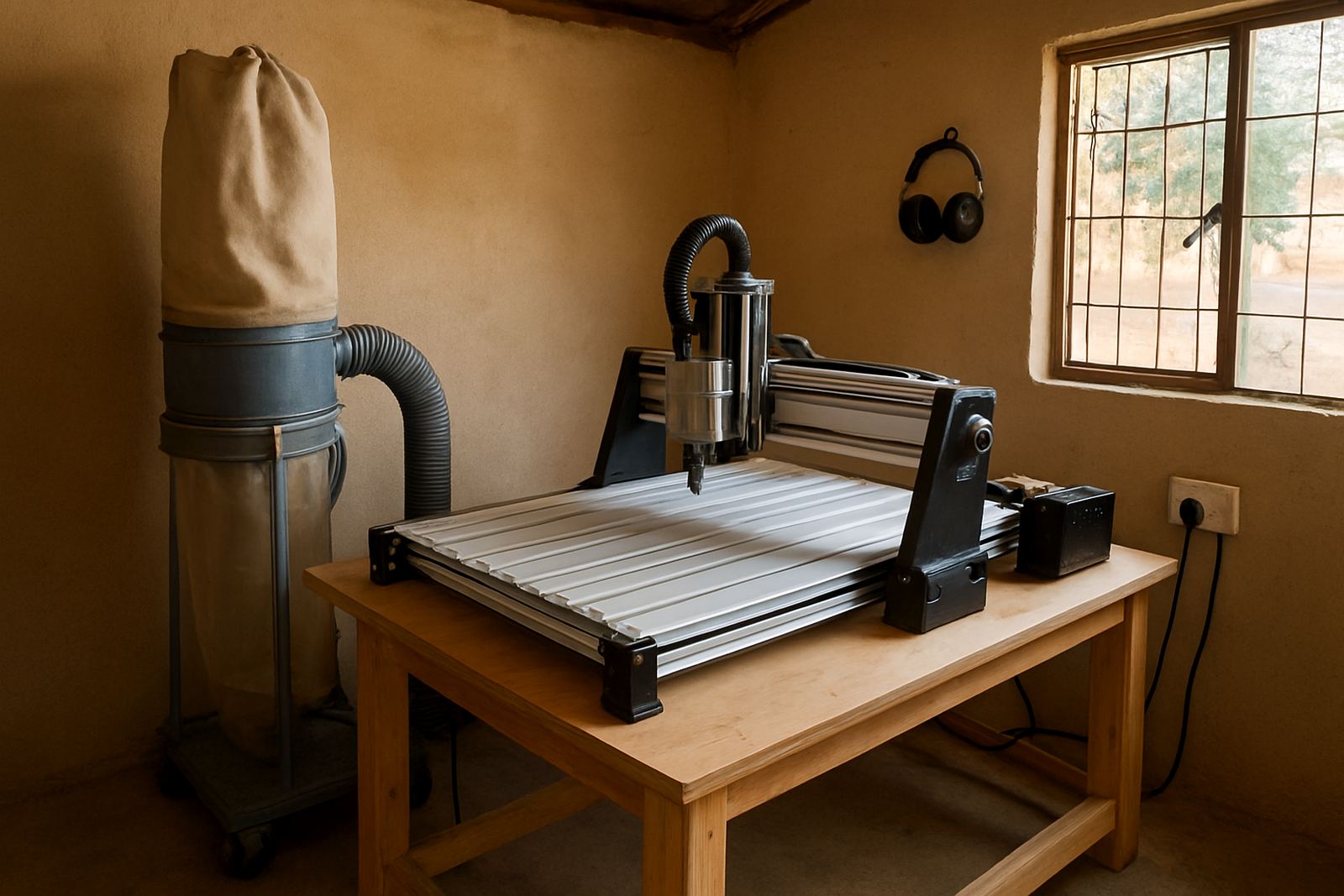
Many small workshops treat dust extraction as a separate job, but the two issues are connected. A badly planned extractor can be one of the loudest items in the room. If the hose run is too long, full of sharp bends or undersized for the machine, the fan works harder and the noise goes up. That extra strain also means more dust left behind, which is bad for MDF and even worse for plastics that clog up quickly.
It helps to size the extraction properly for the router table you are running. Short runs, smooth bends and a clean filter setup all make a difference. In humid coastal areas the dust can clump and settle differently, while in dry inland conditions it becomes fine and airborne, so the same system may behave differently from Durban to Pretoria. If you are running a small unit in Silverton or Midrand, plan the extraction path before you bolt the machine down, not afterwards. Its cheaper to change a hose route than to live with a noisy one for years.
- Use the shortest practical hose run.
- Keep bends gradual rather than tight.
- Match the extraction size to the machine and material.
- Service filters and bags before they become blocked.
Tool choice and cutting strategy can lower the noise floor
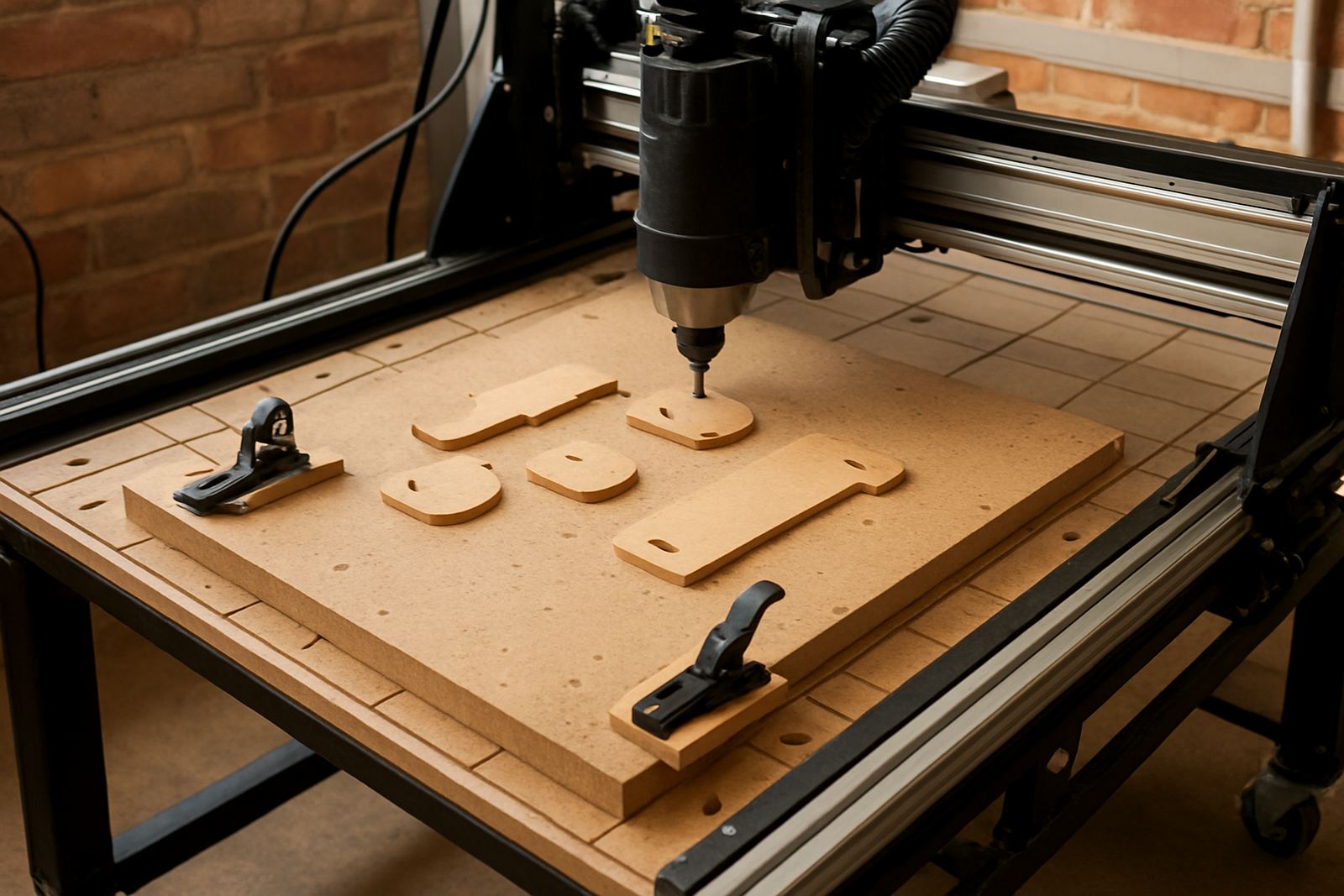
Noise is not only about the machine. The cutter itself matters. A blunt tool, the wrong feed rate or an aggressive pass depth will make even a small router sound rough. MDF especially can punish poor settings because it packs dust into the cut and makes the machine work harder. Plastics can chatter if the speed is too low or the chip clearance is poor.
For hobby users and small sign shops, it is usually better to take lighter passes and keep tools sharp than to force one heavy cut through the full thickness. The machine sounds calmer, the finish improves and the motor is less stressed. That also helps when the power supply is already not ideal during load shedding, because a machine under strain is more likely to trip or behave badly when the supply changes. If you are hearing a new squeal, rattle or knocking sound, do not ignore it. Those noises often point to worn bearings, loose couplings or a spindle that needs attention.
Simple habits can keep the cutting sound more controlled:
- Use sharp tools for MDF, timber and plastics.
- Reduce pass depth on dense material.
- Check hold-downs so the sheet does not vibrate.
- Listen for changes in tone, because a new noise often means a fault.
Schedule noisy work for the hours that suit everyone
Even when a machine cannot be made silent, it can be run at sensible times. In a small workshop near homes, schools or shared business units, the wrong schedule can create complaints fast. That is why realistic production planning is part of noise control. If the loudest jobs are grouped into a defined block, staff can manage expectations and neighbours are less likely to be caught off guard.
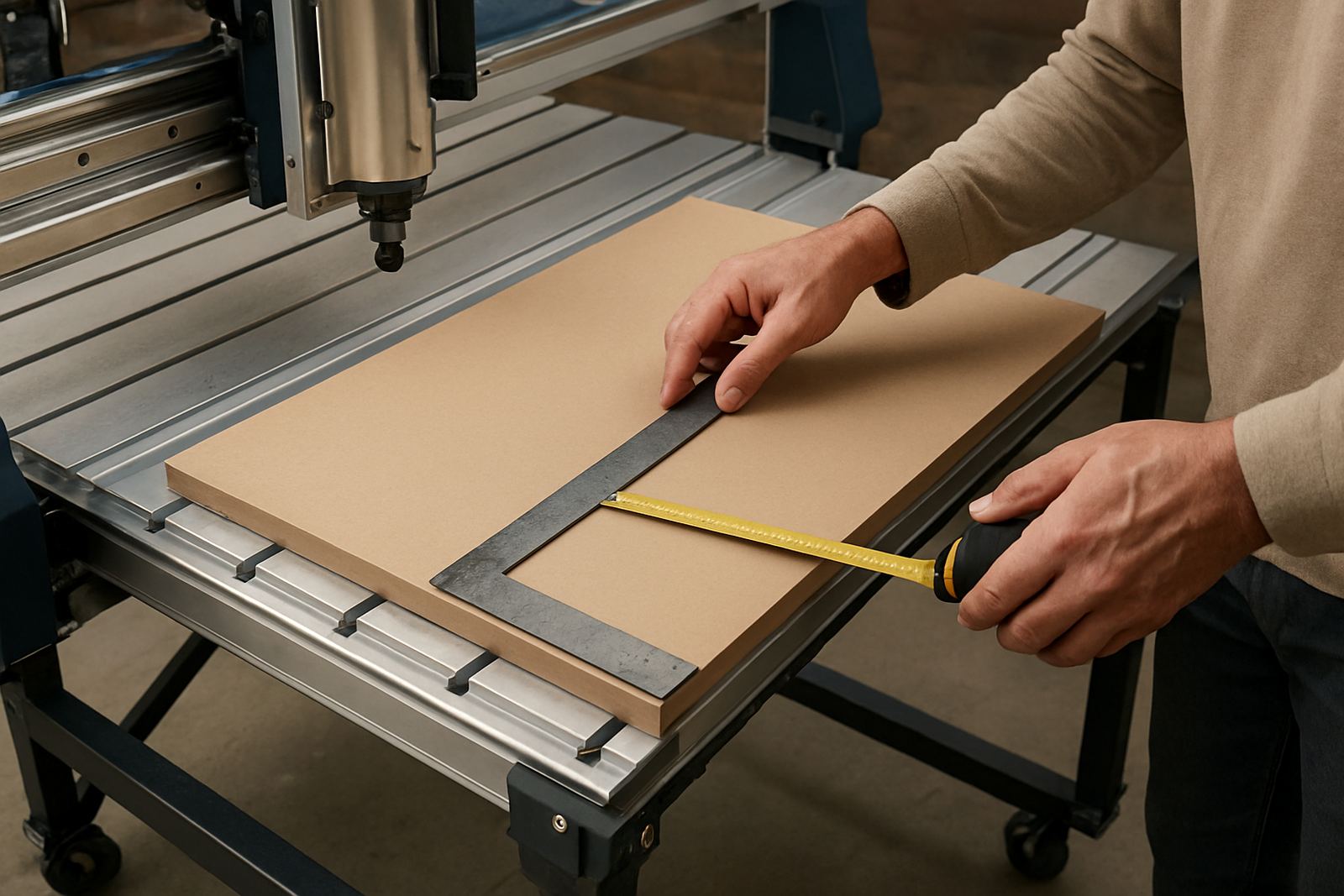
A practical approach is to separate your day into quieter setup tasks and louder cutting tasks. Use the first part of the morning for file checking, material prep and tool setup. Put the main cutting run into a set window and avoid running the extractor or spindle late if the building echoes at night. If you have a local order going out to Pretoria East, or a batch for a customer in Centurion, tell them when the machine will be running so collections and loading do not overlap with the noisiest period. This kind of planning saves stress, and it also gives the operator space to work carefully.
A Silverton example: one room, three uses, less noise
A small sign and cabinetry workshop in Silverton once had one room for cutting, packing and storage. The CNC table sat against a wall, the extractor was in the corner and the compressor was next to the door. The result was constant noise all day. The owner thought the machine itself was the problem, but the real issue was the layout. After moving the extractor outside the main room, shifting the router away from the wall and setting fixed cutting times, the workshop became far easier to work in. Staff could speak without shouting, and the neighbours stopped complaining about the afternoon rush.
That sort of change is possible in a small space. You do not need a bigger building first. You need a better order of operations. Start with where the machine sits, how air moves through the room and when the loudest jobs happen. Then check whether the spindle, rails and drive system are in good shape. If the machine is making more noise than it used to, a service visit can often pick up the cause before it turns into downtime.
When to bring in support and keep the machine running properly
If the sound has changed, the safest move is to inspect the machine before continuing production. Many noise complaints come from things that can be sorted early: loose fasteners, worn belts, spindle wear, cable drag or a control issue that is making the machine hunt instead of moving cleanly. In small shops, one bad bearing can spoil a full day of work and create a lot of unnecessary noise. A quick check now is better than a bigger repair later.
We help with operator training, software basics, starter setup visits, preventive maintenance, breakdown support, spindle replacement, control tuning, remote support, refresher training and spares planning. For workshops in Pretoria, Silverton, Centurion, Midrand, Kempton Park and beyond, the aim is simple: keep the machine usable, keep the team safe and keep the noise at a level that suits the space.