Why cycle time matters before you cut the first panel
Cycle time is the full time a part spends on the machine from start to finish, including loading, cutting, tool changes, probing where needed, and unloading. If you only price the cutting time you can end up underquoting by a fair margin, especially on small jobs where handling time is a big part of the work. For a Pretoria workshop doing cabinet components, signage blanks or plastic brackets, that gap shows up fast.
A good estimate gives you a better quote and a better production plan. It also helps you decide whether a job fits into an afternoon slot or needs a full day. For hobby users taking paid work on the side, that difference can be the line between a neat profit and a rushed evening with a machine still running after load-shedding kicks in.
Break the job into real workshop steps
The easiest way to estimate cycle time is to split the job into stages. Do not treat a sheet as one block of time. Think through loading, zeroing, cutting, part removal and any finishing or inspection. A 2400 x 1200 mm MDF sheet may take only 18 minutes of actual cutting on a simple profile, but the full cycle can stretch closer to 35 minutes once you include setup and handling.
- Loading material and checking squareness
- Setting the origin and tool length
- Toolpath run time
- Tool changes or passes
- Part removal and sorting
- Quick clean-up and inspection
When you quote this way, you can see where time is being spent. On small runs, the machine may be idle less than you think, yet the operator is busy the whole time. That matters when you are scheduling jobs back to back.
Use material and tool choice to shape the estimate
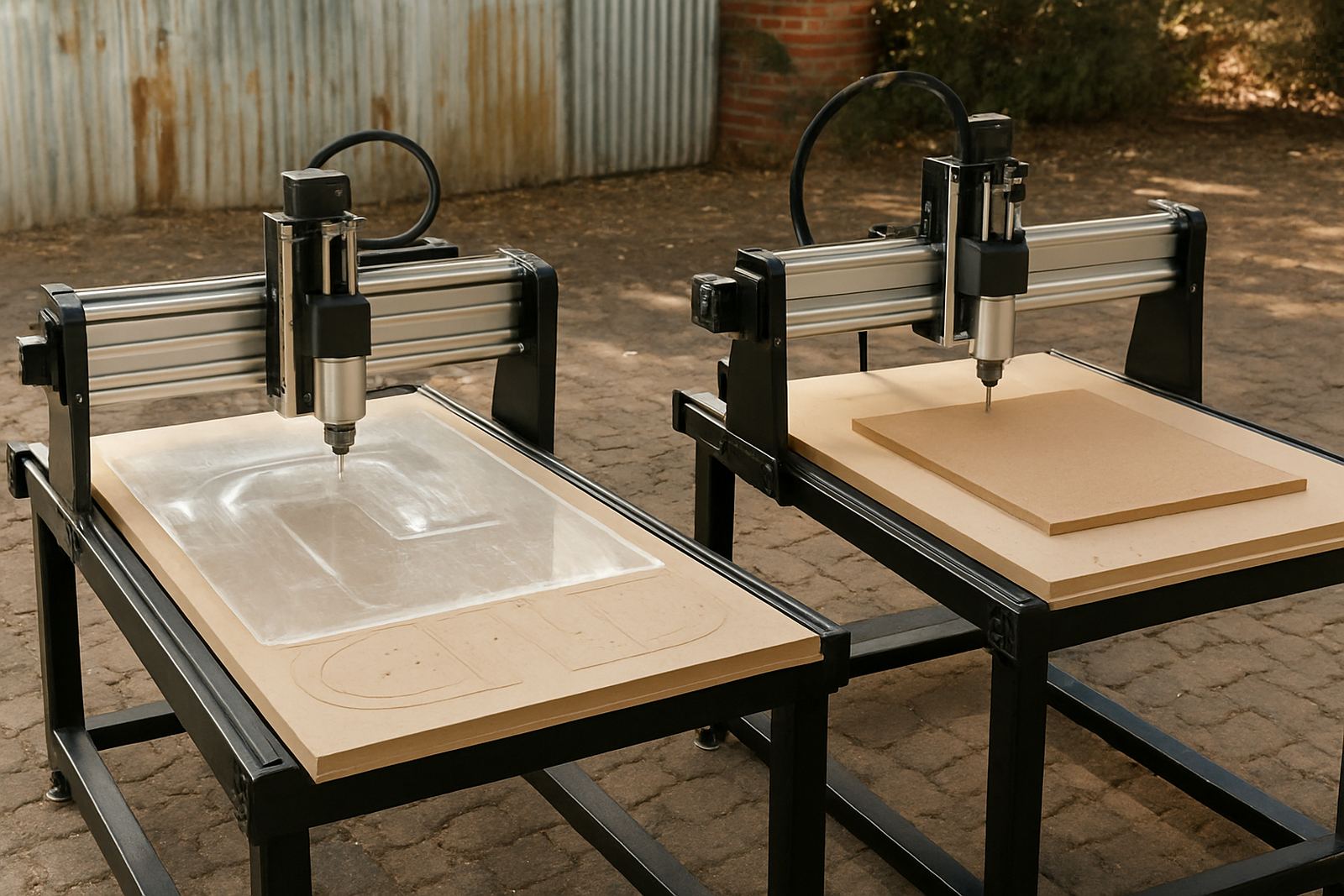
Different materials cut at very different speeds. MDF usually allows steady feed rates and clean passes, while hardwoods may need slower movement to avoid burning or chatter. Plastics need careful chip control, because heat build-up can melt the edge and spoil the finish. If you use the same numbers for all three, your estimate will be off.
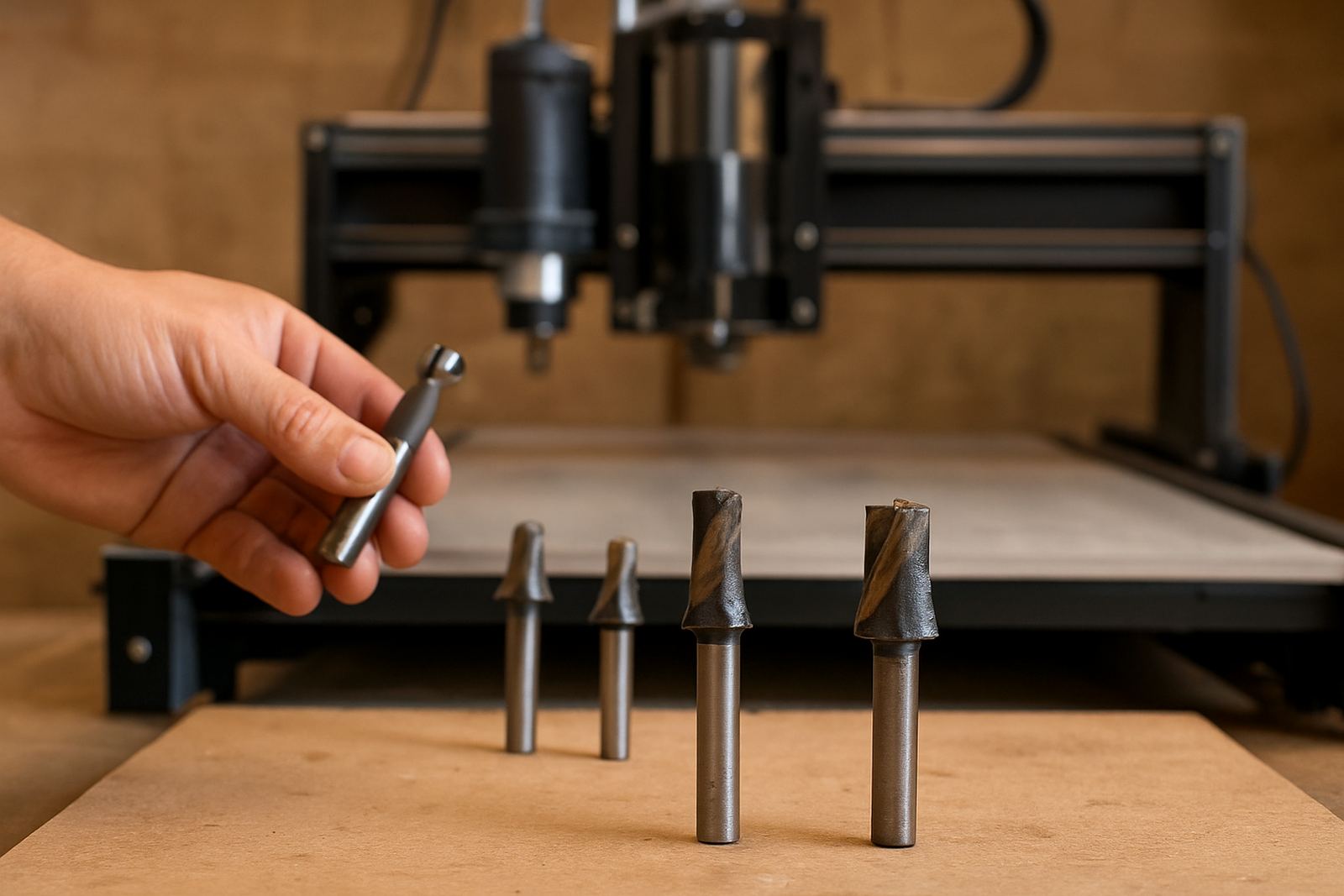
Tool diameter and path strategy also change the result. A larger cutter can remove more material per pass, but only if the machine, spindle and hold-down method can support it. A fine detail job with a small tool will take longer, sometimes much longer than the customer expects. In Silverton and Pretoria East we often see this on nameplates, display panels and custom inserts where the detailing looks small but the machine time adds up.
- Thicker material usually means more passes
- Small cutters improve detail but increase time
- Soft plastics may need slower feeds to prevent melting
- Dense boards often need extra allowance for tool wear
A simple method for quoting small production runs
For repeat jobs, build a basic time model. Start with one part, time the full cycle, then multiply by quantity and add a sensible allowance for checks and interruptions. If the first part takes 12 minutes and the next nine parts average 8 minutes each, you do not quote the whole batch at 80 minutes and move on. You add an allowance for setup, handling and the fact that real workshop life includes the odd clamp issue or software pause.
A practical method is to use three numbers: setup time, cycle time per part, and recovery time. Recovery time covers things like restarting after a short power issue, clearing a toolpath error, or resetting after a spindle replacement or control adjustment. That extra step is not wasted time, it is part of the job.
- Setup time: 15 to 45 minutes depending on complexity
- Cycle time per part: based on a test cut or previous job
- Recovery time: allow a small buffer for stoppages and checks
Testing one part first saves money later
If you are unsure, run one sample part before committing to a production quote. A single test piece can show if the feed rate is too high, if the bit is leaving fuzz on MDF, or if the plastics need a slower pass. That one test is cheaper than discovering the problem on the twelfth part of a twenty part run. It also helps if the customer wants a finish that must be sanded or cleaned before delivery.
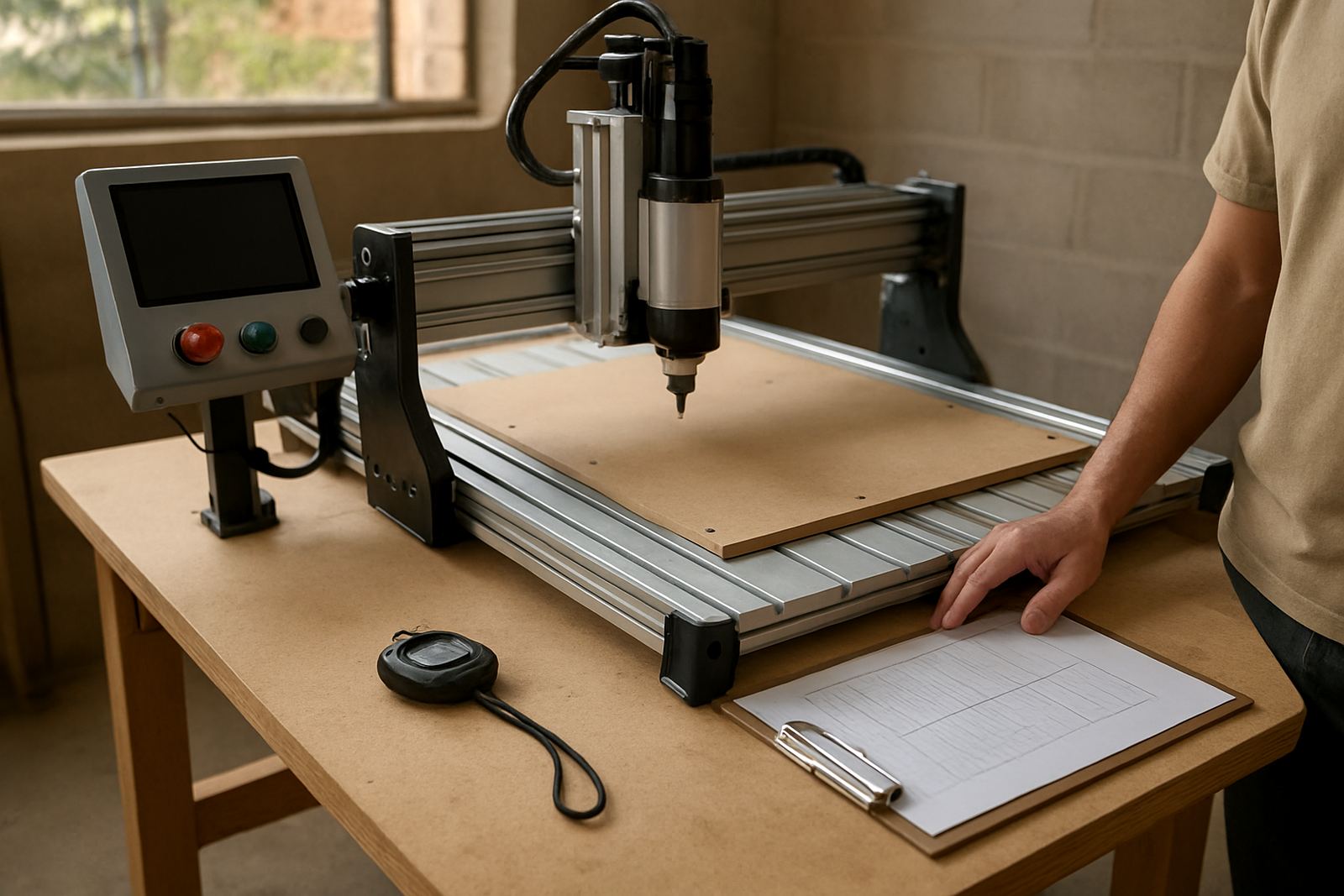
At our Silverton base, we encourage customers to keep a record of each test run. Note the material thickness, tool used, feed speed, spindle speed and actual cut time. After a few jobs you will have your own local reference sheet. That is especially useful for workshops in Centurion, Midrand and Kempton Park where the same kind of work often comes in again from the same clients.
Build in South African workshop realities
A cycle time estimate is only useful if it matches the conditions on the floor. In Gauteng that means planning for power interruptions, waiting for compressed air, and the temperature swings that can affect plastics and adhesive-backed boards. Near the coast you may need a different allowance again because humidity can move sheet material and change how it sits on the table. The machine does not care about the invoice, it cares about the setup.
Think about the whole day, not only the cut. If you have training booked in the morning, a breakdown support visit in the afternoon, or spares collection before lunch, your machine time must fit around that. A realistic estimate helps you keep those commitments without overpromising on same day turnaround.
- Allow buffer time for load-shedding and restarts
- Keep spare cutters and common consumables on hand
- Check hold-down and vacuum before every longer run
- Record actual times so future quotes are quicker
When to ask for training or a setup check
If your estimates keep missing the mark, the issue is often not the machine alone. It can be software setup, tool selection, feeds and speeds, or poor table preparation. A starter setup visit, refresher training or control tuning session can save hours over the next few jobs. For small businesses and hobby users alike, that support is often the fastest way to get cycle times under control.
Once the machine is dialled in, quoting gets easier. You know how long a standard MDF panel takes, how much a spindle replacement affects your schedule, and what to tell a customer before the job starts. That kind of certainty is worth more than a rough guess, especially when you are trying to keep small production runs moving.