
Why dust control matters before the first cut
Wood, MDF and plastics all throw off fine dust when cut on a CNC router, and that dust does more than make a mess. It can hide the toolpath, settle on rails and limit switches, and work its way into bearings, control boxes and spindles if it is left to drift around the shop.
In a busy Pretoria workshop, especially in Silverton or Pretoria East where space is often tight, good dust control is part of daily order. It helps the operator see what is happening at the cutter, keeps the table clearer between jobs, and makes it easier to inspect finished parts without brushing off layers of powder first.
Start with extraction that matches the material
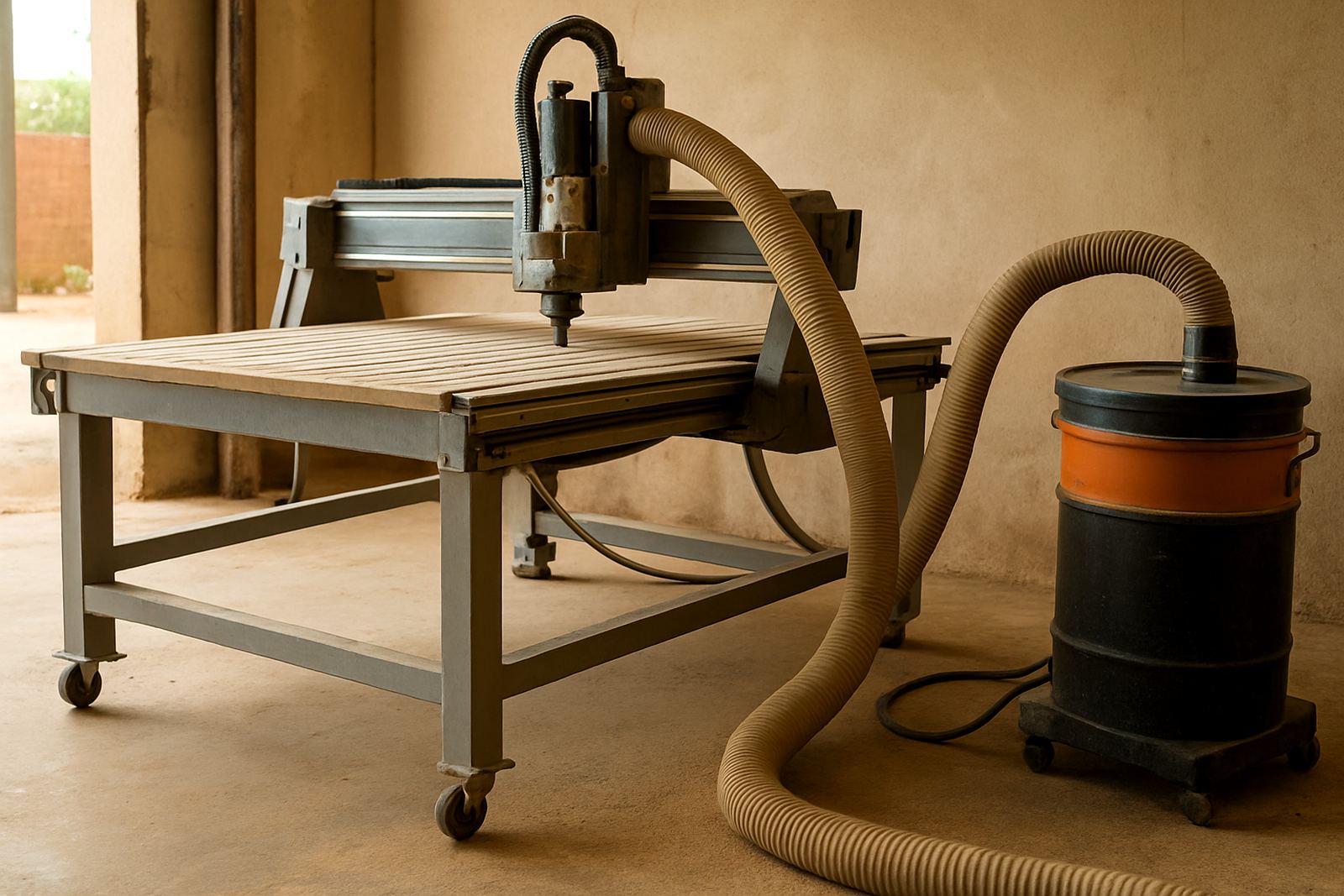
There is no single setup that suits every job. MDF makes a very fine dust that hangs in the air, while solid timber gives off chips and fluff. Plastics can create lighter shavings that build up around the bit and gantry if there is no airflow. The extractor and hose size should match the work you do most often.
- For small hobby routers, check that the nozzle reaches close to the bit without blocking movement.
- For MDF work, use a higher airflow extractor with good filtration so the fine dust is captured.
- For plastics, keep suction steady and clear the bed often so offcuts do not wrap around the cutter.
- Make sure hoses are not crushed under tables or bent too sharply, as this cuts performance fast.
In many smaller shops the extractor gets treated as an extra, but it should be part of the machine setup from day one.
Keep the machine clean while it is running
Dust control is not only about the extractor. A clean machine starts with habits. Brush down the spoil board, clear the bed before every new sheet and check that clamps, hold downs and vacuum zones are not blocked with offcuts. A quick inspection before starting can save a lot of downtime later.
Operators in Centurion and Midrand often run short production batches after hours, so it helps to build a simple routine that anyone on the team can follow. Wipe down exposed rails, check cable tracks and look for dust around the spindle mount. If the machine starts sounding rough or the carriage feels sticky, stop and clean it before the problem becomes a service call.
- Empty collection bins before they overfill and reduce suction.
- Check filters regularly, especially after MDF jobs.
- Use a soft brush or vacuum on rails, not compressed air that pushes dust deeper.
- Keep a small cleaning kit next to the router for fast changeovers.
Humidity and winter dust changes in Gauteng workshops
Dust behaves differently depending on the weather. In Pretoria and Kempton Park, dry winter air can make fine dust travel farther, while summer humidity can cause particles to cling to surfaces and form sticky buildup. Neither is ideal, and both call for regular cleaning not just one big weekly sweep.
If your workshop is near an open roller door or in an industrial area with traffic dust, extra care is needed around the machine bed and electronics cabinet. It helps to seal gaps where possible, keep material stacked off the floor and schedule a proper clean at the end of every shift. A little time spent here saves a lot of wear later, and the place stays safer too.
Protect the operator and the rest of the team
Good extraction supports visibility, but it also helps protect people. Fine dust from MDF and plastics can hang in the air long after the cut is finished. Even a small router in a home workshop can create enough airborne dust to need proper extraction and sensible personal protection.
- Wear the correct mask or respirator for dusty jobs.
- Keep the cutting zone fenced off from general workshop traffic where possible.
- Open doors for cross ventilation only when it does not pull dust through the whole building.
- Train new operators to stop the machine before reaching in to clear buildup.
For businesses taking on training in Silverton or through remote support nationwide, the message is simple: clean cutting is safer cutting. The machine stays easier to manage and the team spends less time dealing with nuisance dust on benches, tools and stock.
When to replace spares and call for support
Dust control systems wear out in small ways first. A hose cracks, a filter loads up too quickly, a gasket leaks or the spindle area starts collecting more dust than usual. Those are early signs that something is not sealing or pulling as it should.
It is worth planning spares before a breakdown happens. Keep an eye on hoses, brushes, seals and filters, and replace them before they start causing poor extraction. If airflow drops, the machine sounds different or dust begins collecting in places it never used to, ask for breakdown support, control tuning or a service check. A short visit or remote check can often sort the problem before it affects a full run.
For shops in Pretoria East, Centurion, Midrand and beyond, the goal is simple. Keep the cutter clear, keep the extractor working and the rest of the workshop will stay easier to run.