
Why collet cleanliness affects every cut
The collet is a small part, but it does a big job. If dust, resin, or fine chips build up inside the collet or on the taper, the cutter may sit off-centre. That can cause chatter, burning on MDF, poor finish on plywood and quicker wear on the cutter itself.
On hobby routers and compact workshop machines, the problem often shows up after a few hours of cutting sheet goods. A machine can sound fine at first, then start leaving marks or making a rougher edge than usual. In many cases the issue is not the cutter at all, it is just a dirty collet needing attention.
What to clean after a cutting session
For woodworking, MDF and plastics, fine residue gets everywhere. Resin from pine, MDF dust and plastic swarf can pack into the collet slots and the spindle taper. A quick clean after use helps prevent build-up from becoming a hard layer that is difficult to remove later.
- Remove the cutter only when the spindle has fully stopped.
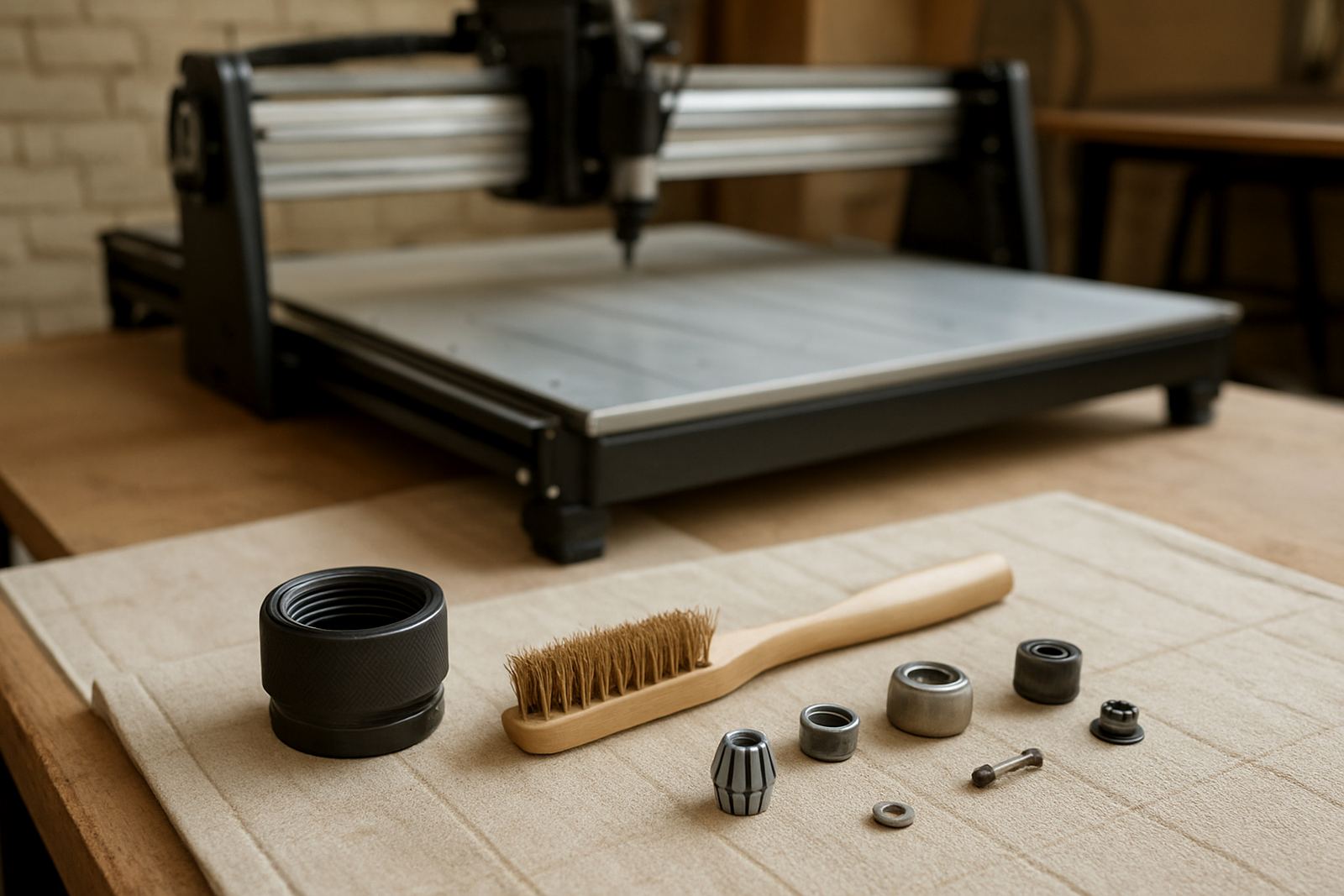
- Brush loose dust from the collet nut and the collet itself.
- Check the taper inside the spindle for fine debris.
- Wipe with a clean dry cloth before refitting.
- If resin is heavy, use a suitable cleaner and dry the parts fully.
Do not leave wet solvent on the parts. Moisture, especially in coastal humidity, can leave marks on steel parts and make the next fit less consistent.
How to remove a collet without damaging it
Collets are precise parts and they do not like being forced. If the cutter feels stuck, use the correct method rather than prying with a screwdriver or hammering the nut loose. That sort of damage can ovalise the collet and affect runout from then on.
- Switch off and isolate the machine before working on it.
- Use the correct spanner sizes so the nut is not rounded off.
- Back off the nut slowly while supporting the cutter.
- Drop the collet out gently and keep the parts together.
- Inspect for nicks, burrs or cracked spring slots.
If a cutter has been held too tightly for too long, or dust has packed around the shank, it may need a careful release. Do not force it, because one damaged collet can spoil several jobs before the fault is noticed.
Cleaning method for workshop dust and resin
A simple cleaning routine works well for most small CNC router tables. Start with a dry brush, then a cloth, then a proper wipe of the collet and nut. If there is resin or sticky build-up, use a cleaner that is safe for machine parts and make sure every piece is dry before assembly.
Use a torch to check the slots. Fine grooves and any dark ring around the taper are signs that more cleaning is needed. If you can feel grit when turning the nut by hand, stop and clean again. A collet should feel smooth, not sandy.
For plastics cutting, pay extra attention because melted chips can cling to the inside edge. Once that residue hardens, it can hold the cutter slightly off line. That often shows up as a small wobble, then a poor edge on the next pass.
When a collet needs replacing, not just cleaning
Cleaning helps a lot, but a worn collet will still give trouble. Springs lose tension over time, slots crack and the gripping surface can become polished or damaged. If you keep tightening more than usual just to hold a cutter, the part may already be past its best.
Look out for these signs:
- Visible cracks near the slot ends.
- Rust spots or pitting on the taper.
- Cutters slipping even when properly tightened.
- Noticeable vibration at normal feed rates.
- Repeated poor finish on jobs that used to cut well.
It is often cheaper to replace a tired collet early than to keep chasing bad cut quality, broken cutters and time lost on rework.
A Pretoria example from a small sign shop
A small sign maker in Silverton was cutting MDF letters for shop displays and kept seeing fuzzy edges and slight burning on the corners. The cutter was new, the feed settings were reasonable, but the machine had been running daily without a proper collet clean. After removing fine dust from the taper and replacing a worn collet, the finish improved straight away and the cutter ran quieter.
That sort of problem is common in busy Gauteng workshops where machines sit in a lot of dust, and load-shedding can interrupt normal cleaning routines. A five minute check at the end of the day is easier than spending half a morning finding out why the job went off.