
When a prototype panel saves time and money
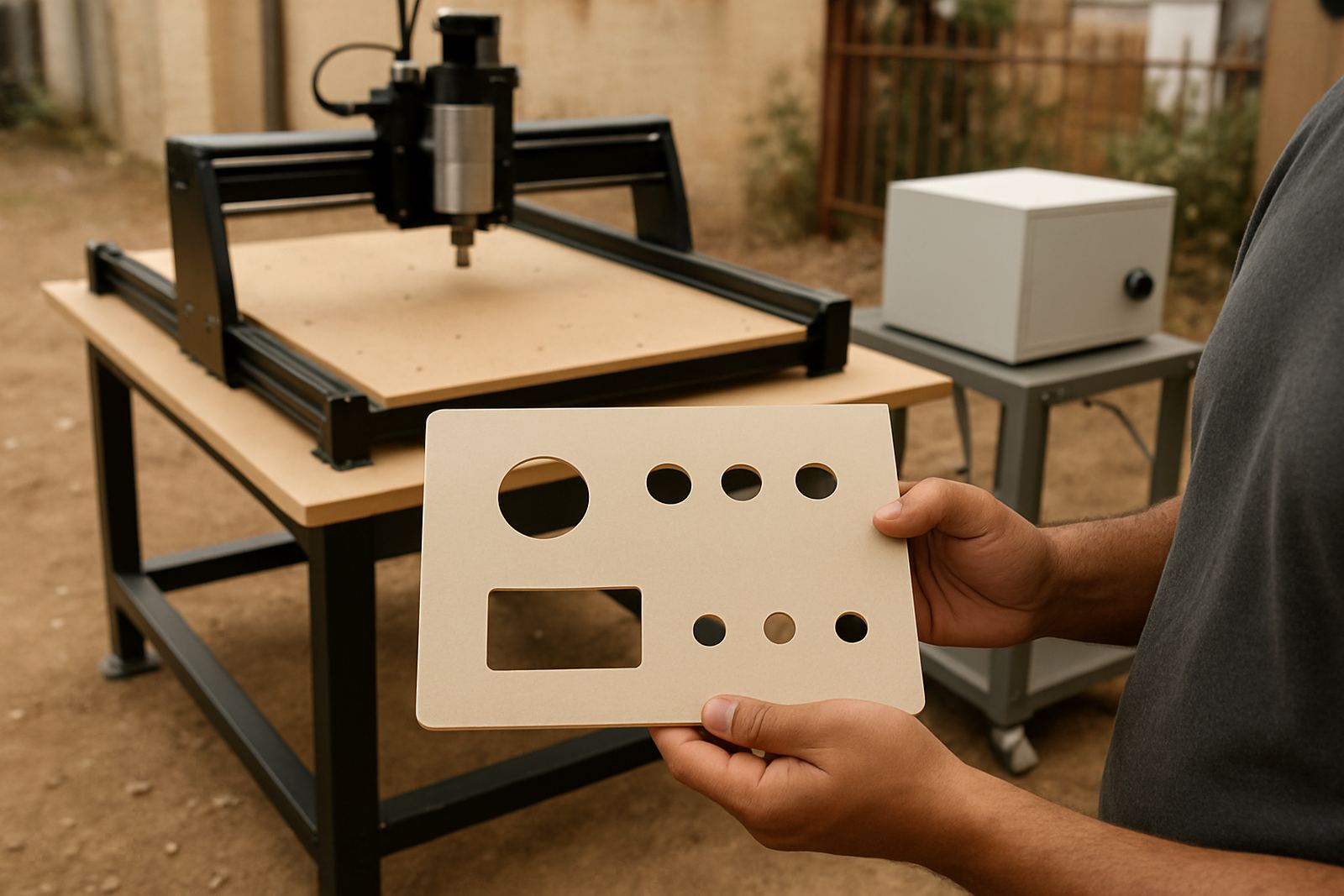
Prototype panels are used when the drawing looks right on screen but you still need to prove the holes, slots, pockets and edge clearances in real material. In woodworking, MDF and plastic work, a small test run can catch a wrong offset, a clamp mark or a cable route that would cost you far more on a full sheet. For many Pretoria workshops the first panel is not about making a sale, it is about checking the job before material gets wasted.
This is useful for cabinet makers, signage shops, fitment crews and hobby users working from a garage or small unit. If you are cutting joinery parts, machine covers, instrument panels or jig boards, a short test cycle helps you confirm the dimensions against the actual tools and fixings. That matters even more when you are working after hours or around load shedding, because every re-cut means more lost time.
Typical router table setup for test panels
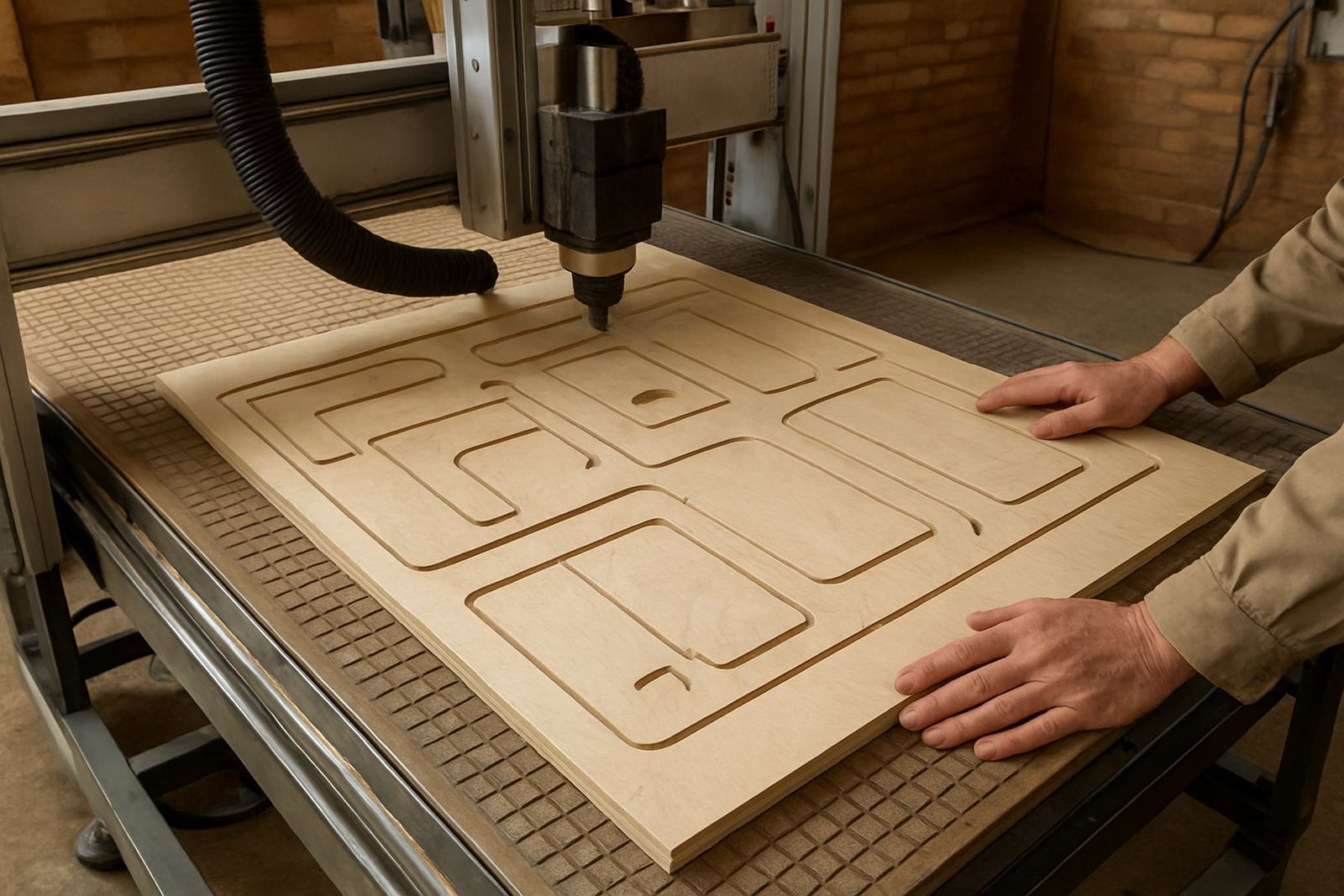
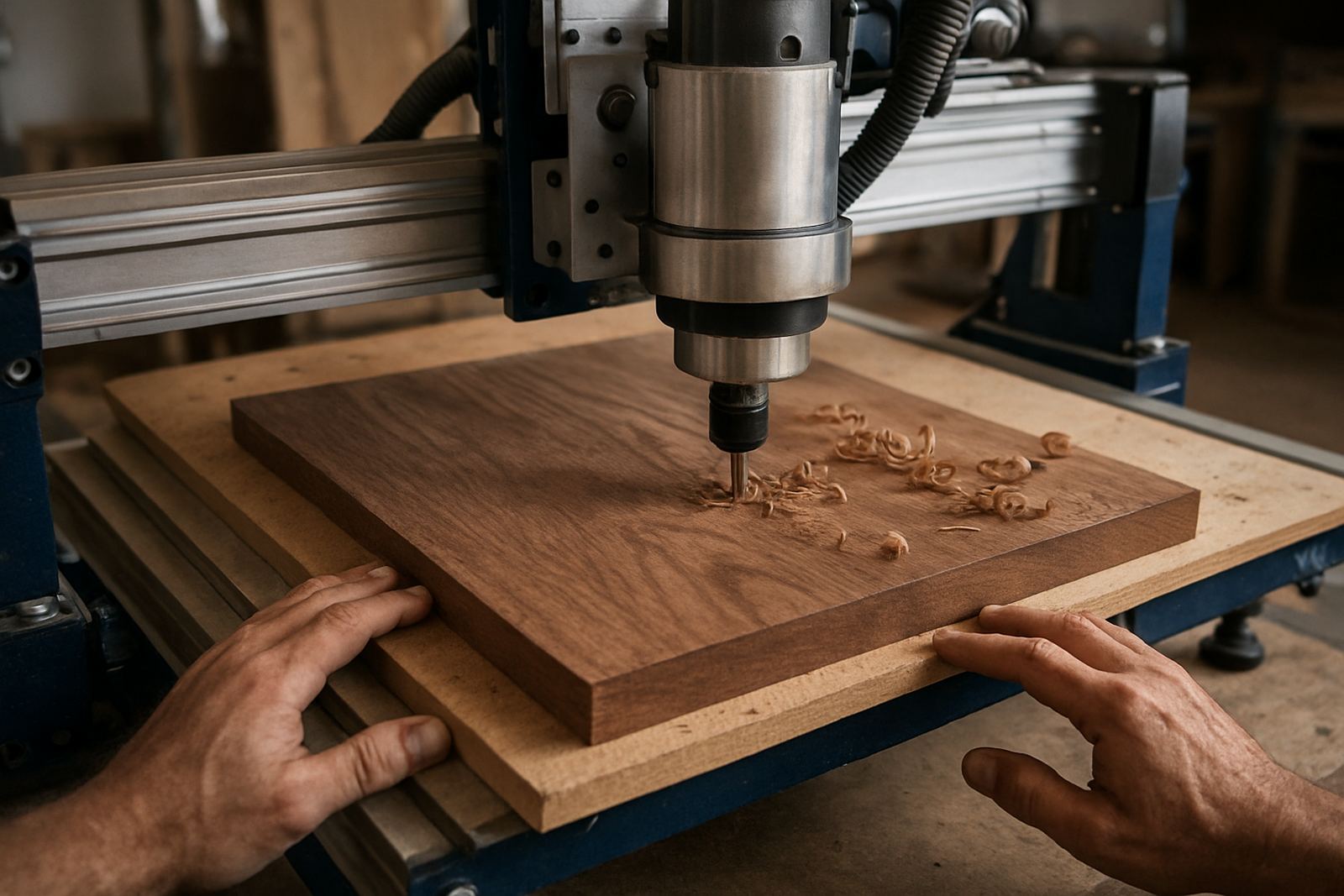
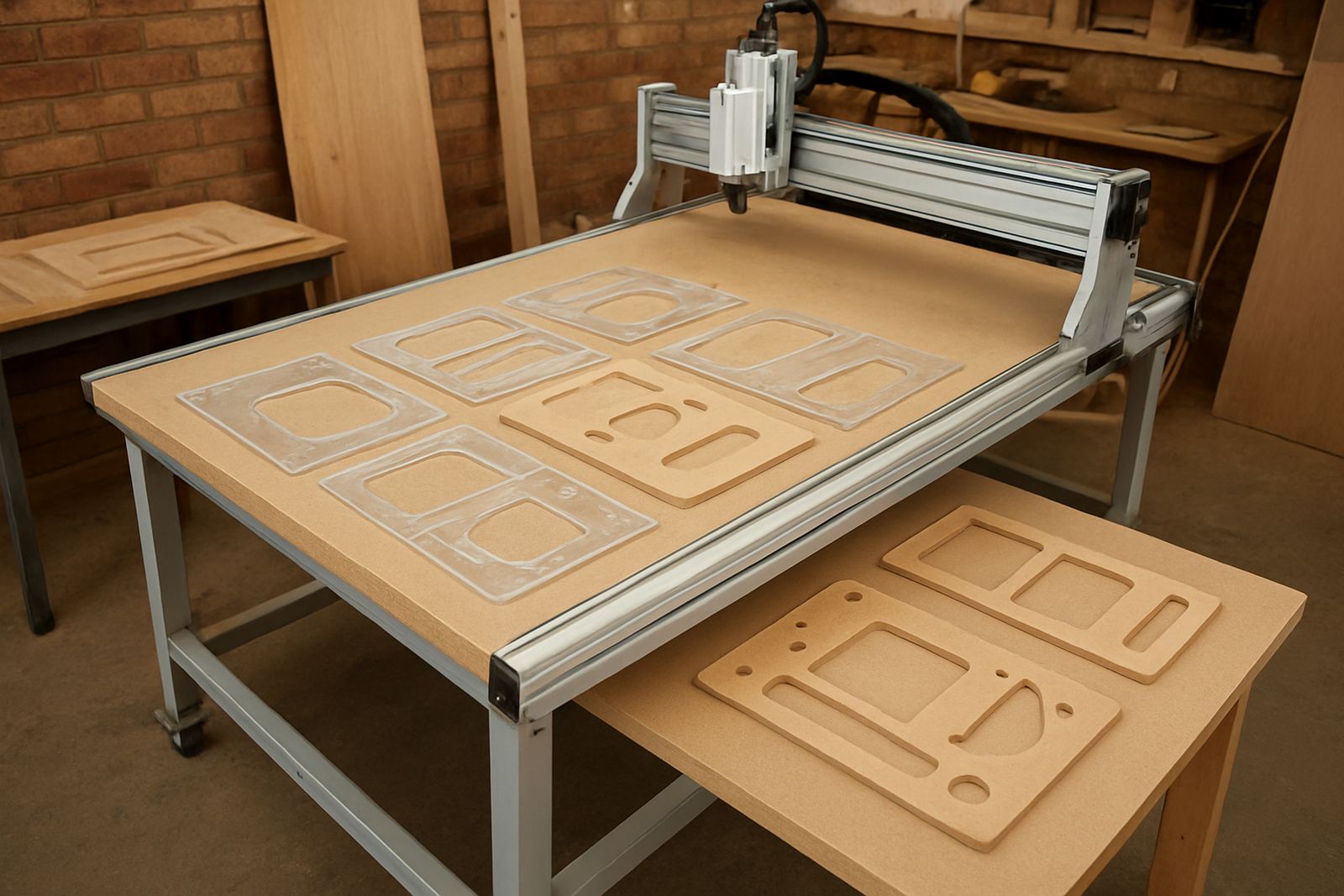
A sensible prototype setup does not need a huge machine. Many local users work on compact CNC router tables with a spoilboard, vacuum or clamp hold-down, and a spindle sized for MDF, pine, plywood and sheet plastics. A desktop or hobby router is often enough for sample panels up to about 600 x 900 mm, while larger workshop units are better when the test parts must match full production sheets.
- Compact router table with a flat spoilboard
- Spindle or router motor matched to the material thickness
- Basic dust extraction for MDF and melamine dust
- Hold-down clamps, double-sided tape or vacuum zones
- Tool set for engraving, slotting and edge profiling
If you are cutting plastics such as acrylic or HDPE, chip clearing becomes important or the edges can melt and gum up. For MDF, keep an eye on dust build-up around the rails and electronics. In Silverton and the east of Pretoria, a lot of small shops use these machines in mixed spaces, so clean airflow and a practical dust plan are not optional.
Layout planning before the first cut
Good prototype work starts before the machine moves. Lay out the parts at true scale and decide what must be checked first: fixing points, clearances, handed parts, edge distances, or how a door panel lines up with a frame. If you are testing a new product, it helps to cut one panel with witness marks, one with final finish allowances and one with the actual toolpath you plan to use for the full run.
Keep the drawing clear and easy to read. Mark the zero point, clamp locations and tool numbers, and record the material thickness measured in the workshop, not only the figure on the supplier sheet. In South African workshops, moisture during storage can alter MDF and plywood thickness slightly, and that is enough to upset a tight fit. One small mistake in the toolpath notes can turn into a full-sheet error later, so check everything again before you press cycle start.
- Confirm the sheet size and actual thickness
- Mark the zero point and clamp zones clearly
- Group small features into one test piece where possible
- Leave space for measurement points and caliper checks
- Record spindle speed and feed settings for later runs
Common mistakes on prototype panels
The biggest mistake is treating the test panel like scrap. A prototype should answer a clear question, otherwise you can cut three versions and still not know which setting caused the error. Another common issue is using the final finish material too early, especially on expensive plastics or decorative boards, when a cheaper test offcut would have done the job.
Other errors include poor clamping, wrong tool choice and ignoring dust extraction. Thin panels can move during cutting if the hold-down is not planned properly, and that movement shows up as a bad fit at assembly. On high humidity days around Gauteng, material can swell slightly and a panel that fitted in the morning may feel different by afternoon. It sounds minor, but on close-tolerance work it matters.
- Cutting the full design before doing a fit check
- Using damaged cutters or the wrong diameter tool
- Forgetting clearance for hinges, screws or inserts
- Not accounting for tool deflection on long cuts
- Skipping a dry assembly after machining
Budget ranges for small workshop testing
Budgets vary depending on how much of the work you want to bring in-house. For basic prototype panels on a compact setup, many users start with a machine budget from about R45 000 to R90 000 for an entry workshop unit, while a stronger table with better control and workholding can run from about R95 000 to R180 000. The final number depends on table size, spindle power, motion system and what spares you keep on hand.
Training, setup and maintenance should be part of the budget too. A starter setup visit, software basics and operator training can save a lot of wasted material in the first few jobs. For small shops in Pretoria East, Centurion, Midrand and Kempton Park, it often makes sense to add a small spares plan for cutters, belts, switches and consumables, because waiting for a part can stop the whole job.
Support for Pretoria and nationwide spares
CNC Router Hub is based in Silverton, Pretoria and supports users across Gauteng and further afield with training, breakdown support, preventive maintenance and remote support. For prototype panel work, that support matters when a spindle starts sounding rough, a toolpath needs checking, or the control setup is not holding a repeatable zero. The goal is to keep the machine accurate enough for repeat work, not just running on the day.
Clients often need practical help with software basics, control tuning, spindle replacement and spares planning. If you are building product samples, jigs or short-run panels, the best results come from a machine that is set up properly, the operator knows the process and the spare parts are already identified. That way you can move from one test panel to the next without long delays.
For training or parts enquiries, reach the team at our contact form. The team includes Mpho Johannes Maseko, Retha Kleynhans, Nhlanhla Majola, Lindelwa Sigcau, Wessel Rabie and Palesa Maluleke, with service and support arranged from Silverton and supplied nationwide.