
When plywood work needs clean repeatability
Plywood cutting usually starts with a simple problem. You need the same panel, slot, hole pattern or part shape again and again, and hand cutting starts to slow the job down or drift off size. That is where a CNC router table earns its keep, especially when you are working with 9 mm, 12 mm, 15 mm or 18 mm sheets for cabinetry, shopfitting, crates, signage carriers and small production runs.
In Pretoria, Silverton and the surrounding industrial areas, many workshops deal with mixed work. One day it is cabinet parts, then display items, then a few jigs and templates. A compact CNC setup suits that kind of work because it handles sheet nesting, repeat cuts and routing details without needing a full factory floor. For hobby users, it also gives proper control when you want accurate parts but do not have a large team on hand.
Plywood behaves differently from solid timber. Grain direction, glue layers and surface veneer all affect the cut, so feed speed, cutter choice and hold-down matter. If those basics are off, the edges can chip or the sheet can move a few millimetres, and that is enough to throw off a cabinet carcass or interlocking box. We often see this on jobs where the machine is capable, but the setup is rushed.
Typical CNC router setup for sheet goods
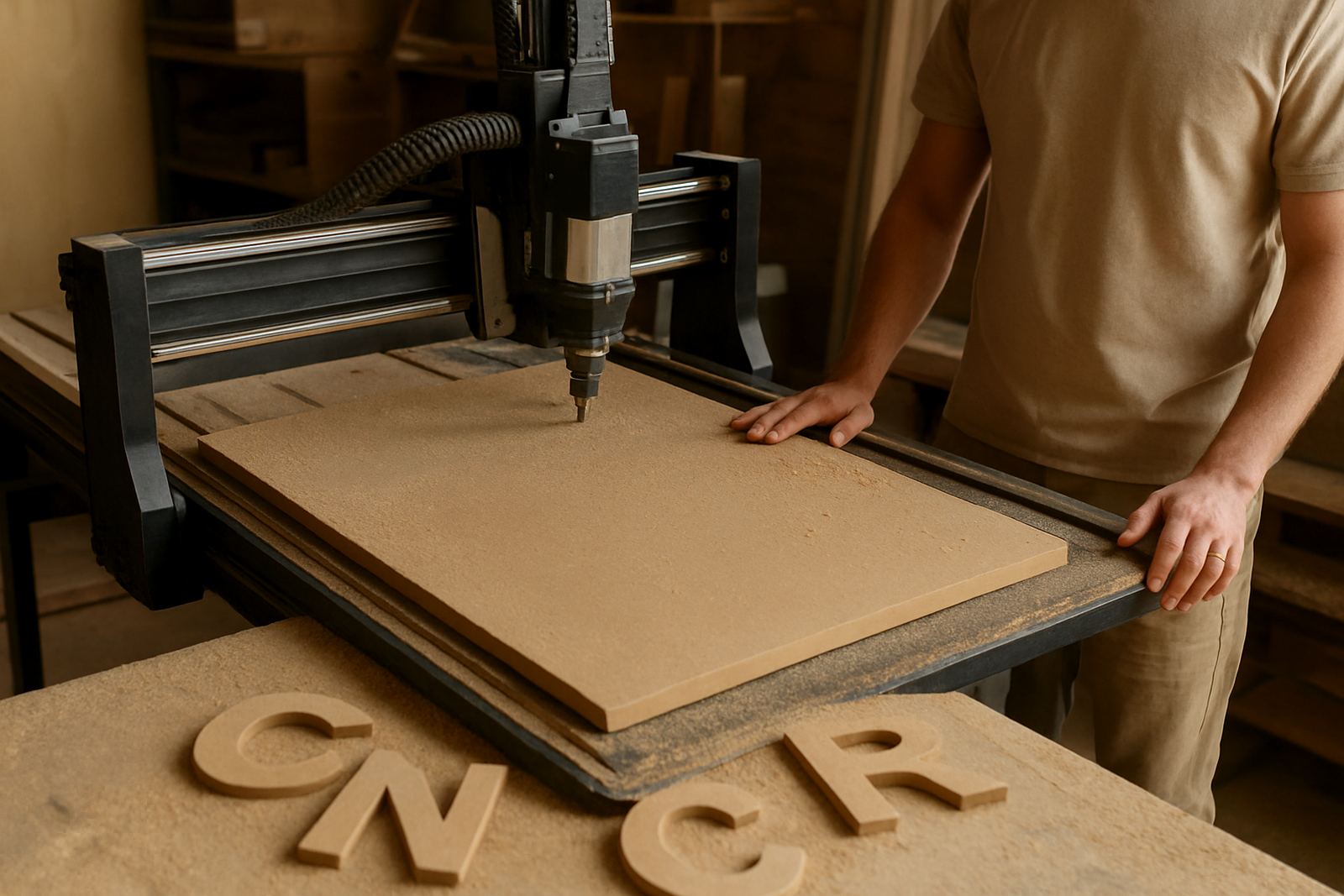
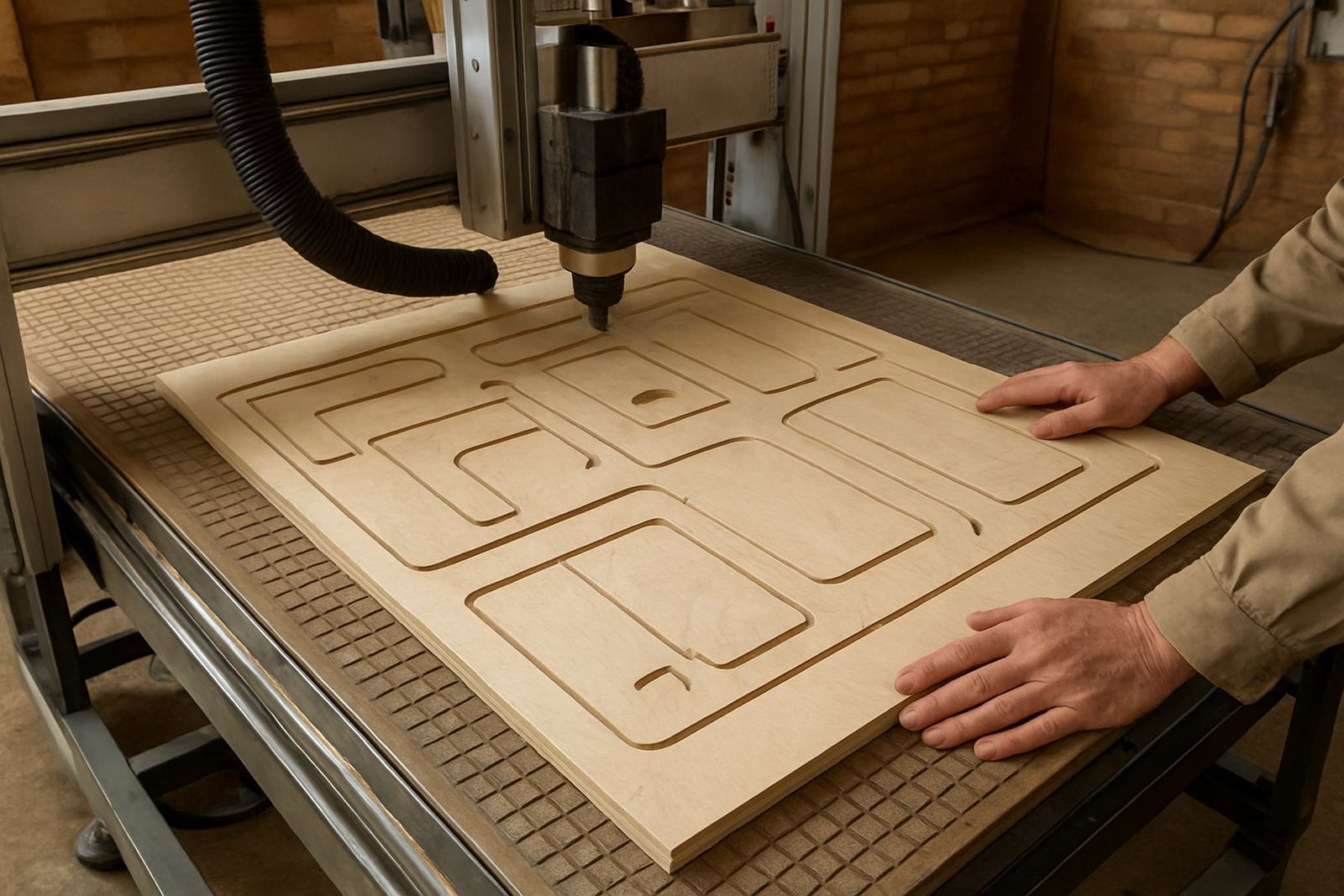
For plywood cutting, the usual setup is a flatbed CNC router table with a vacuum or mechanical hold-down system, a suitable spindle, dust extraction and software that can manage nesting and toolpaths. Smaller workshops often start with a desktop or hobby router, while more active shops move to a larger bed once the workload grows. The machine size depends on the sheet sizes you handle, the space available and how often you cut full panels.
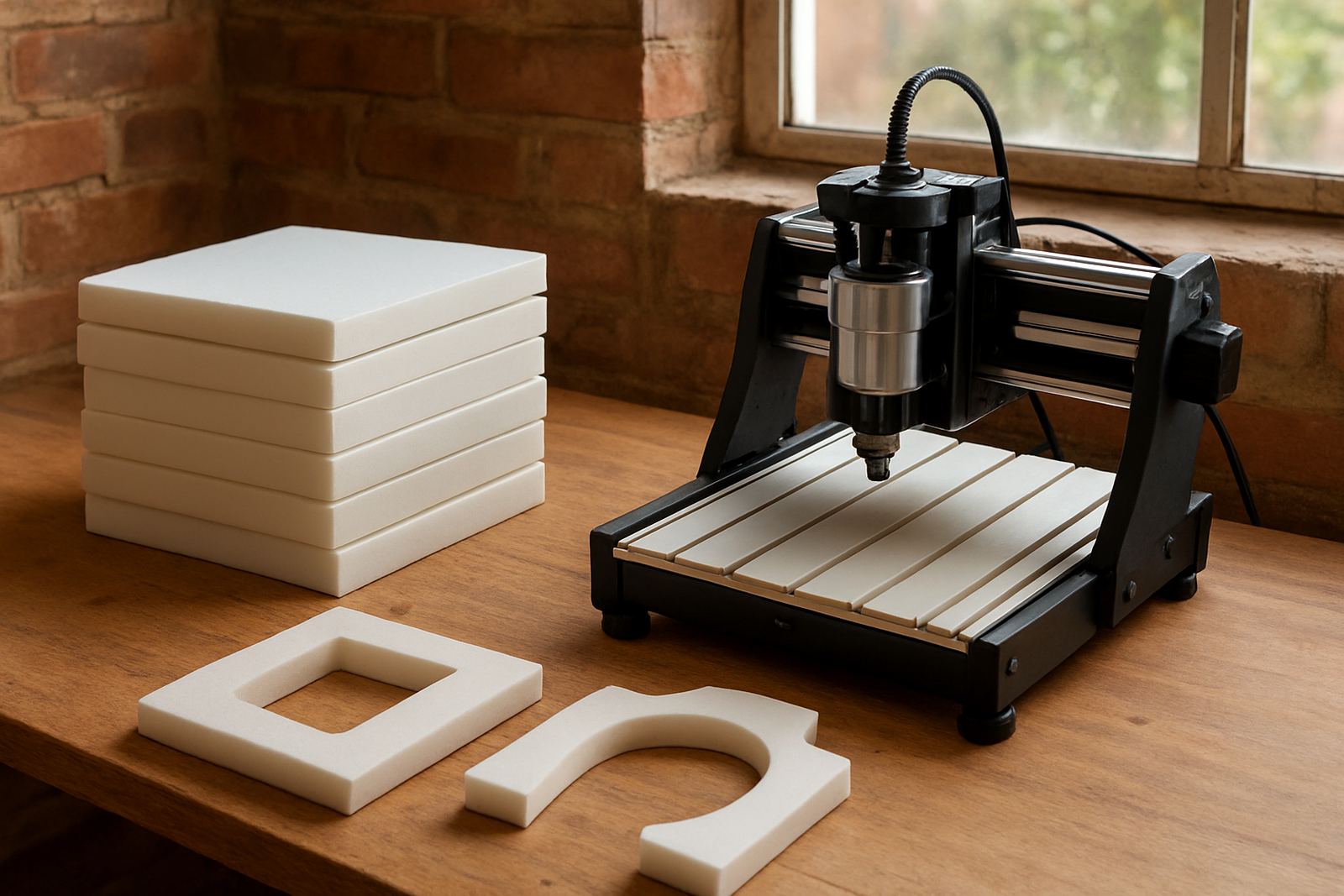
- Desktop and hobby routers for templates, smaller parts and test runs
- 1200 x 2400 mm or similar beds for standard sheet processing
- Spindle power matched to cutter size and production pace
- Dust extraction to keep the cut line clear and reduce cleanup
- Basic computer setup for layout, nesting and file transfer
For a practical workshop layout, leave space for loading sheets, offcut storage and safe movement around the table. If the machine is in Silverton, Pretoria East or Centurion and you are dealing with load-shedding, think about backup power for the control system, computer and dust extractor where possible. Even a short interruption can ruin a long cut if the job is not planned with restart points in mind.
Planning the sheet before the cutter starts
Good plywood work begins before the first cut. Measure the actual sheet size, not just the label, because sheets can vary by a few millimetres. Allow for saw marks, damaged corners and the small amount lost to the cutter path. If you are producing multiple parts for flat-pack items or furniture, nest the parts to reduce offcuts and keep the grain direction where it matters.
Separate your work by thickness and material type as early as possible. Birch ply, pine ply and coated boards cut differently, and not all sheets behave the same on the machine. For workshops in Midrand, Kempton Park or Pretoria East, moisture and storage conditions matter too. Plywood stored in a damp area can bow slightly, and that creates hold-down problems and uneven depth on the cut.
- Check the sheet for bowing before loading it
- Use sacrificial boards where needed to protect the bed
- Keep part labels clear for assembly and packing
- Set origin points the same way for repeat work
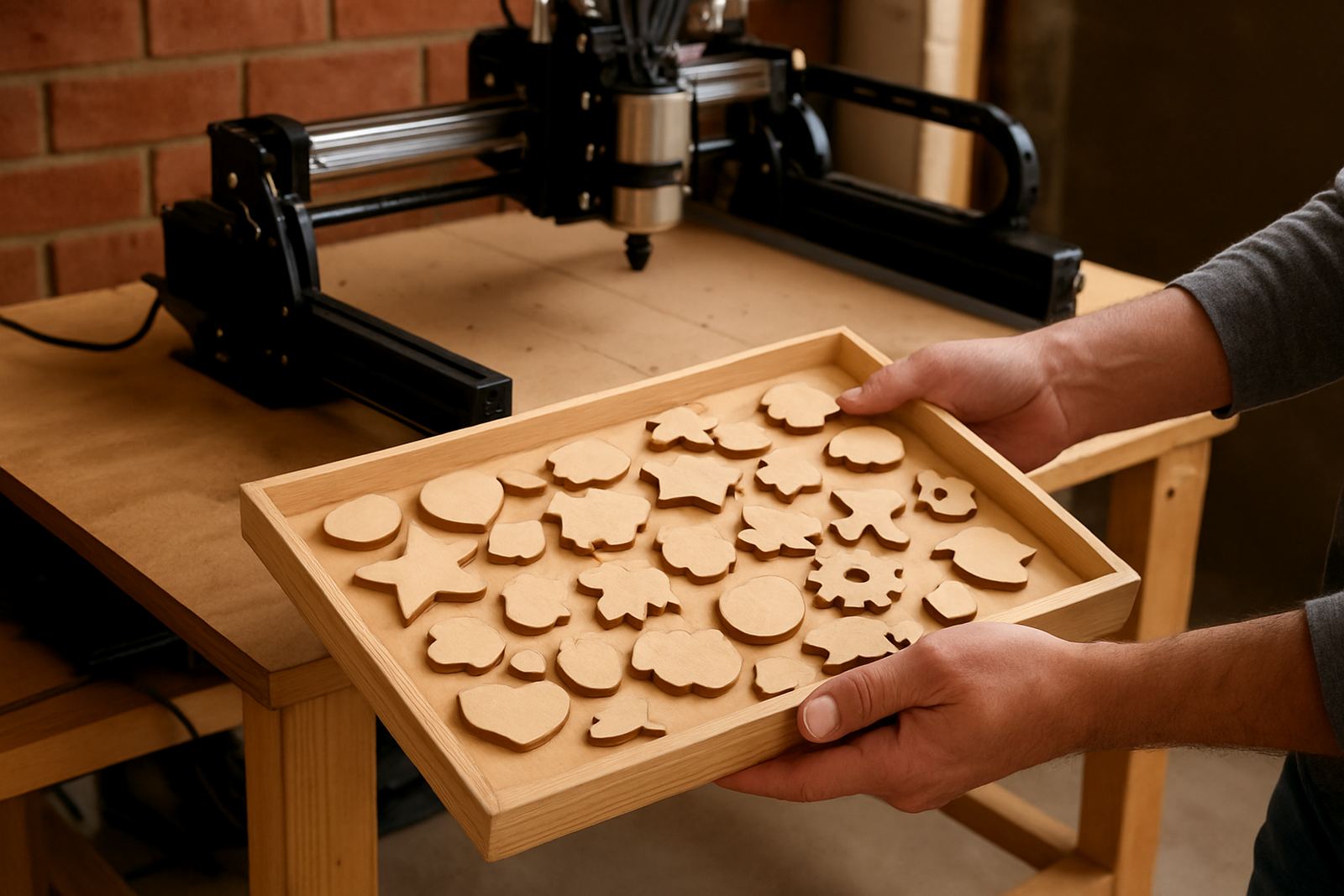
When the layout is planned properly, you waste less material and spend less time sorting parts after the cut. That matters on box work, cabinet doors, drawer parts and template sets where a single incorrect panel can hold up the whole job.
Common mistakes that cause wasted plywood
One of the most common mistakes is using the wrong cutter for the material. A blunt cutter or the wrong flute type can leave frayed edges and tear-out, especially on faced plywood. Another issue is cutting too fast or with poor chip clearance, which leaves burn marks and a rough edge that needs extra finishing. On small workshops, we also see operators trying to push a job through without checking tool height, clamp positions or spoilboard flatness.
Another problem is ignoring support during the cut. If a sheet is not properly held down, vibration can move the part a little and the final size is off. That is a real issue when making interlocking panels or box joints. Control tuning also matters because if the machine loses steps or the axes are not behaving properly, the dimensions will drift across a full sheet.
For operators doing their own work, training makes a big difference. A basic setup session, software refresher or starter visit can save a lot of material on the first few jobs. In practice, a few hours of guidance is often enough to stop repeated errors that cost far more in scrap than the training fee.
Budget ranges for plywood cutting in South Africa
Budgets depend on sheet size, production pace and how much support you want with the machine. For a small hobby workshop in Pretoria or Centurion, a desktop CNC router may start in the lower tens of thousands of Rand. That can work well for templates, small panels and occasional plywood jobs, provided the cutting area matches the work you do.
For a more serious part-time or commercial setup, expect a larger investment. A proper sheet-capable CNC router table, spindle, control system and dust extraction can move into the mid to higher hundreds of thousands of Rand depending on capacity and included accessories. If you add spares, training, installation support and a backup plan for power interruptions, the upfront spend grows, but so does the reliability of the workshop.
- Starter desktop units: lower tens of thousands of Rand
- Mid-size sheet routers: often from about R80 000 to R180 000
- Larger workshop setups: can exceed R200 000 with extras
- Training, setup visits and spares planning should be budgeted separately
It is usually better to choose the right bed size and spindle now than to outgrow a small machine within six months. In a place like Pretoria East or Silverton, where workshop space and material handling can be tight, the wrong size machine becomes a daily annoyance.