
When Hardwood Work Suits a Compact CNC Router
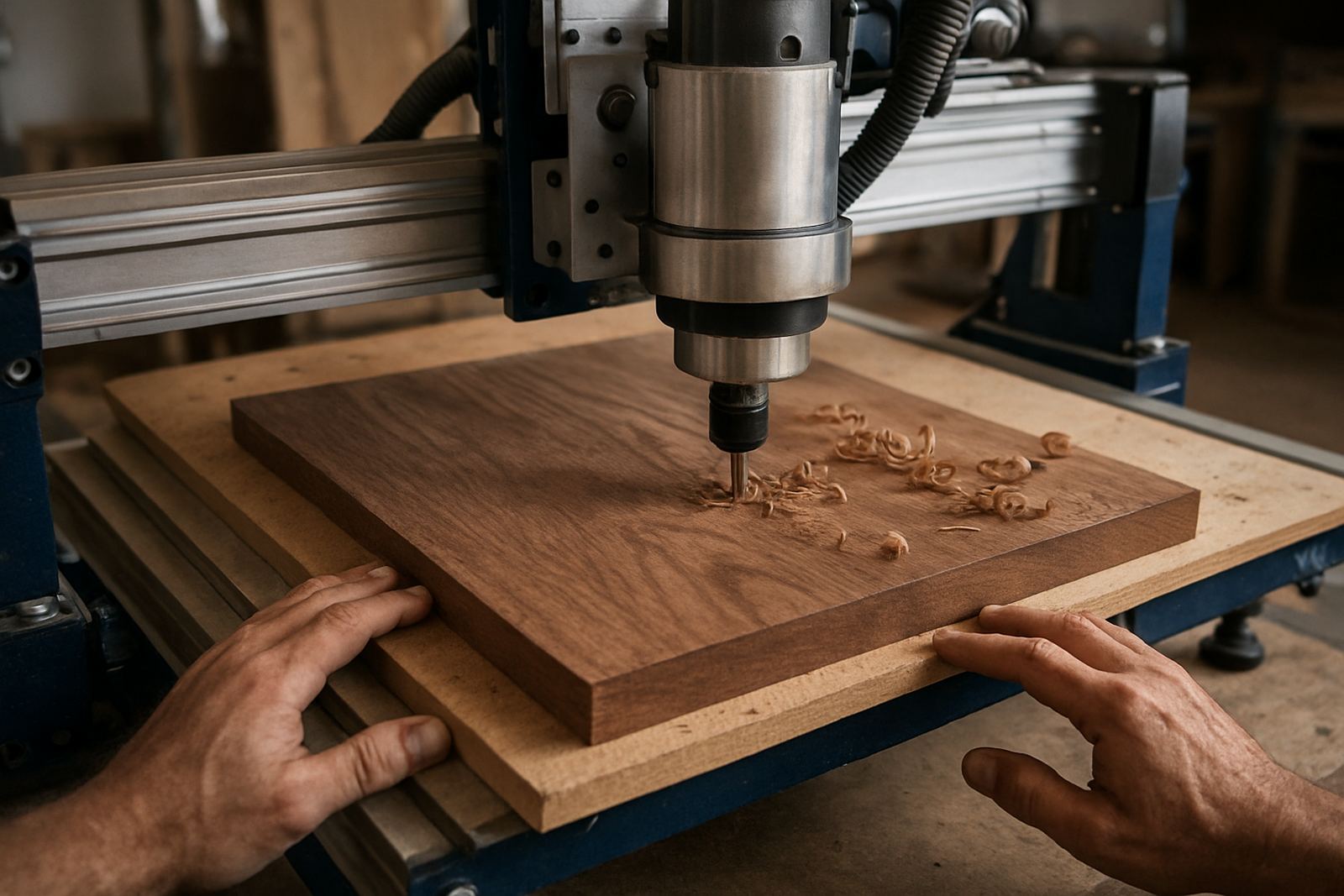
Hardwood routing on a smaller CNC table works best when the job calls for repeat cuts, neat inlays, nameplates, cabinet door details, jigs, small components or sign parts. It is not the same as trying to push heavy production volumes through a large industrial setup. In a small Pretoria workshop, a compact machine can be a good fit when space is tight and the work changes often.
Selected hardwoods like meranti, oak, teak, ash and beech can be machined well if the board is dry, straight and properly fixed down. The real advantage is control. Once the toolpath is set, each part comes out the same, which helps when you need matching parts for furniture, display pieces or small joinery runs.
Typical Equipment Set for Hardwood Jobs
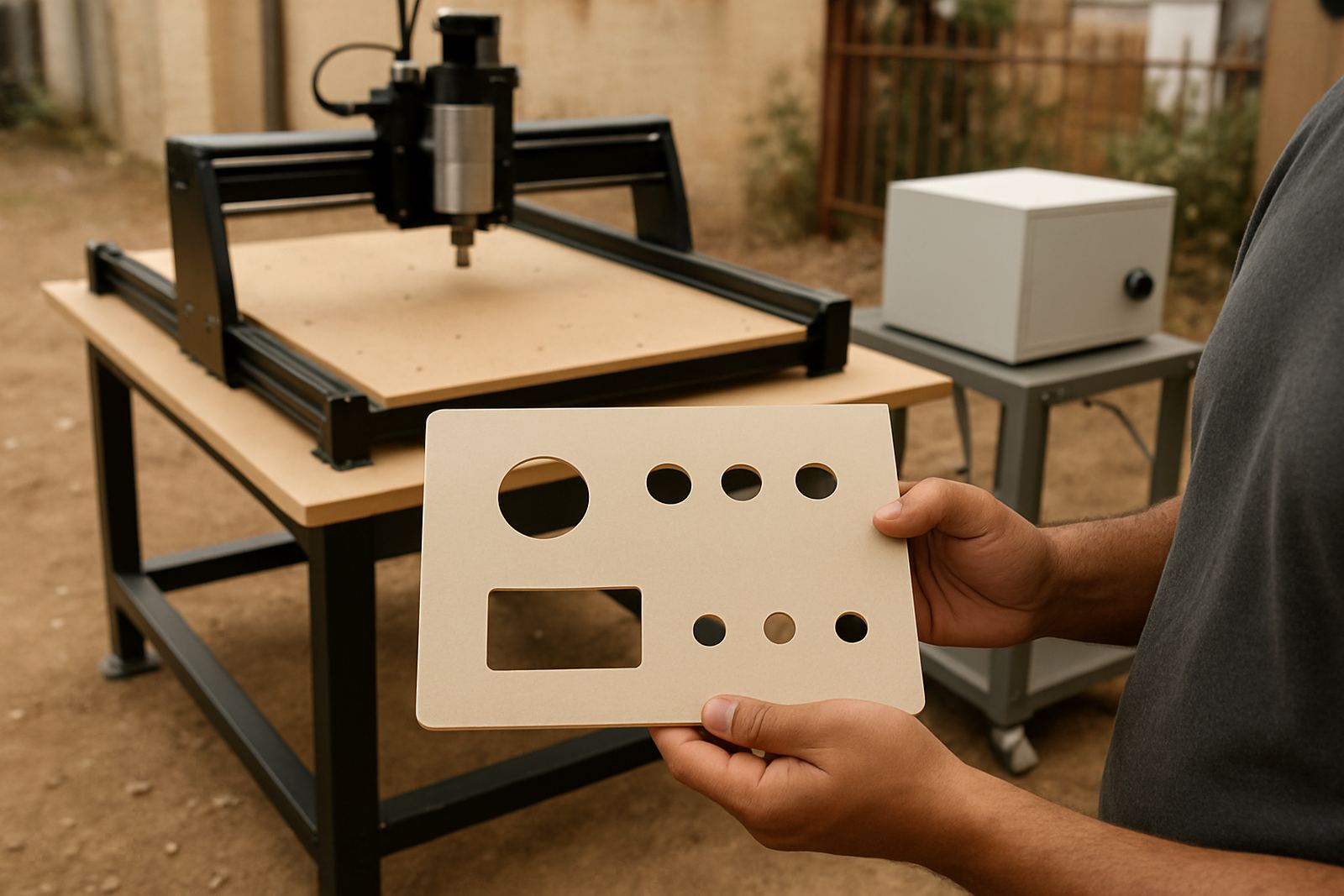
A compact router table for hardwood usually includes a rigid bed, a decent spindle, proper workholding and dust extraction. For most small shops, a 600 x 900 mm or 900 x 1200 mm machine is enough for panel parts, profiling and engraving. If your work is mostly smaller items, a desktop unit can still do the job with the right cutter choice and feed settings.
- Compact CNC router table with a stable frame
- Spindle matched to the cutting load, usually 1.5 kW to 2.2 kW for lighter hardwood work
- Vacuum or clamp-based holding, depending on the part size
- Dust extraction, because hardwood dust builds up fast
- Basic software package for drawing, nesting and toolpath generation
- Spare cutters, collets, belts and limit switches
We often advise customers to keep one spare set of the consumables on hand. It saves downtime when a cutter chips or a collet starts slipping. In Silverton and Pretoria East, power interruptions are still part of planning, so a small UPS for control gear and a proper restart procedure are worth having.
Layout and Planning for a Small Workshop
Hardwood routing needs more than the machine footprint. You need infeed space, outfeed space, storage for boards and enough room to clean chips off the floor. A compact setup can fit in a garage, back room or light industrial unit in Centurion or Midrand, but only if the flow is planned properly. Put the machine where dust extraction and operator access are easy, not where it blocks other work.
Keep the timber stored flat and off the floor. If boards twist from humidity near the coast or from poor storage inland, the machine will only copy the problem. For that reason, material preparation matters just as much as the cutting itself.
- Leave at least 1 m around the machine for loading and maintenance
- Store hardwood in a dry area with airflow
- Separate cutting, sanding and finishing zones if possible
- Plan cable routes and extraction hoses so they do not cross walkways
Common Mistakes That Waste Timber
The most common mistake is trying to cut hardwood like MDF. Hardwood needs sensible depth of cut, the right feed rate and cutters that are still sharp. If the cutter is burning the edge, the job is usually too fast, too slow, or the tool is worn out. Another issue is poor clamping. A board that moves even a little can spoil a whole batch.
Operators also underestimate grain direction. Routing across a difficult grain can lift fibres and leave a rough edge that needs extra finishing. That adds labour and can ruin a small run. We see this often with new users who have the right machine but have not yet built a good cutting routine.
If you are cutting decorative parts, test on offcuts first. A short trial on scrap timber saves material and gives you a clear idea of spindle load, cut quality and hold-down strength.
Budget Ranges for Hardwood Routing in Rand
For a small hardwood routing setup, budget planning depends on the machine size and the kind of work you want to do. A hobby unit for light decorative work may start from around R85 000 to R150 000. A more capable compact router with better rigidity, stronger spindle and improved motion components can sit between R160 000 and R280 000. If you need extraction, tooling, setup and training, add more for the full working package.
Ongoing costs are not only electricity and cutters. You should also plan for spares, periodic maintenance and software basics. A sensible annual spares and service allowance for a small workshop can be between R8 000 and R25 000, depending on usage. That figure can rise quickly if the machine is running most days or if the timber is dusty and hard on components.
Support, Training and Spares from Silverton
CNC Router Hub works from Silverton, Pretoria and supports customers across Pretoria East, Centurion, Midrand, Kempton Park and nationwide. For hardwood routing, the right support makes a real difference because the machine, material and operator all need to work together. Our team can help with starter setup visits, operator training, software basics, preventive maintenance, control tuning, spindle replacement, breakdown support and refresher training.
We also assist with spares planning so you do not get caught waiting for a small part while orders back up. For many small shops, that is the difference between finishing a delivery on time and missing the job. If your work includes hardwood, the spare cutter kit, collets and routine service checks should not be left until something fails.