When Foam Board Makes Sense in a Small Workshop
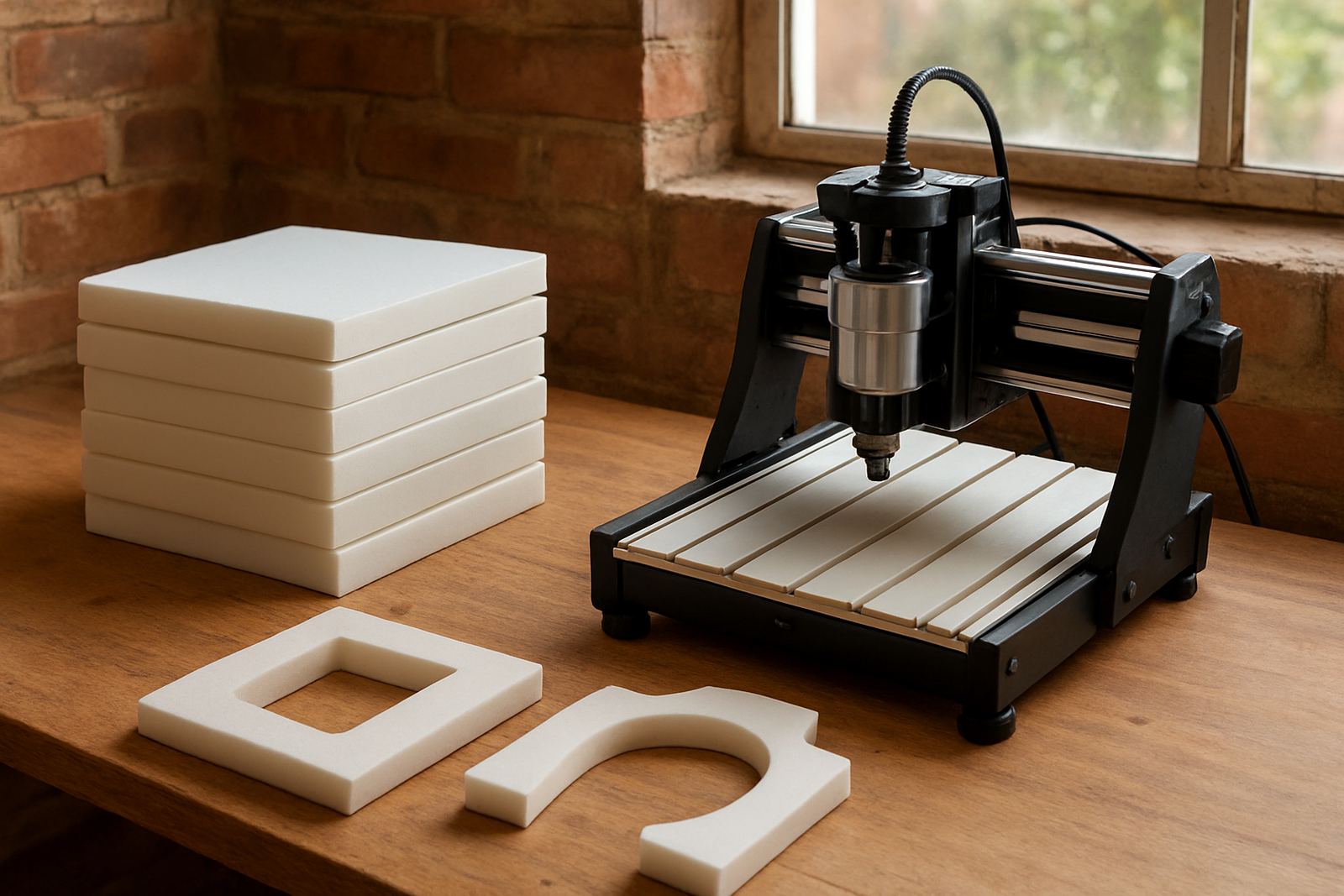
Foam board is popular with sign shops, model makers, pack-and-ship teams and cabinet makers who need quick templates or presentation parts. It is light, easy to handle and cheaper to test on than timber or acrylic, which helps when you are still proving sizes or fitting details. In Pretoria, Silverton and Centurion, many customers use it for one-off packaging inserts, exhibition samples, jigs and presentation backs for retail displays.
This material suits work where the goal is shape and fit rather than strength. It can be routed for pockets, cut-outs, bevelled edges and shallow channels, but it needs proper support under the sheet. If the board is left hanging between clamps or runs over a rough spoil surface, the cutter can tear the face and leave a messy edge. That is why the setup matters as much as the machine.
Typical CNC Router Setup for Foam Board Jobs
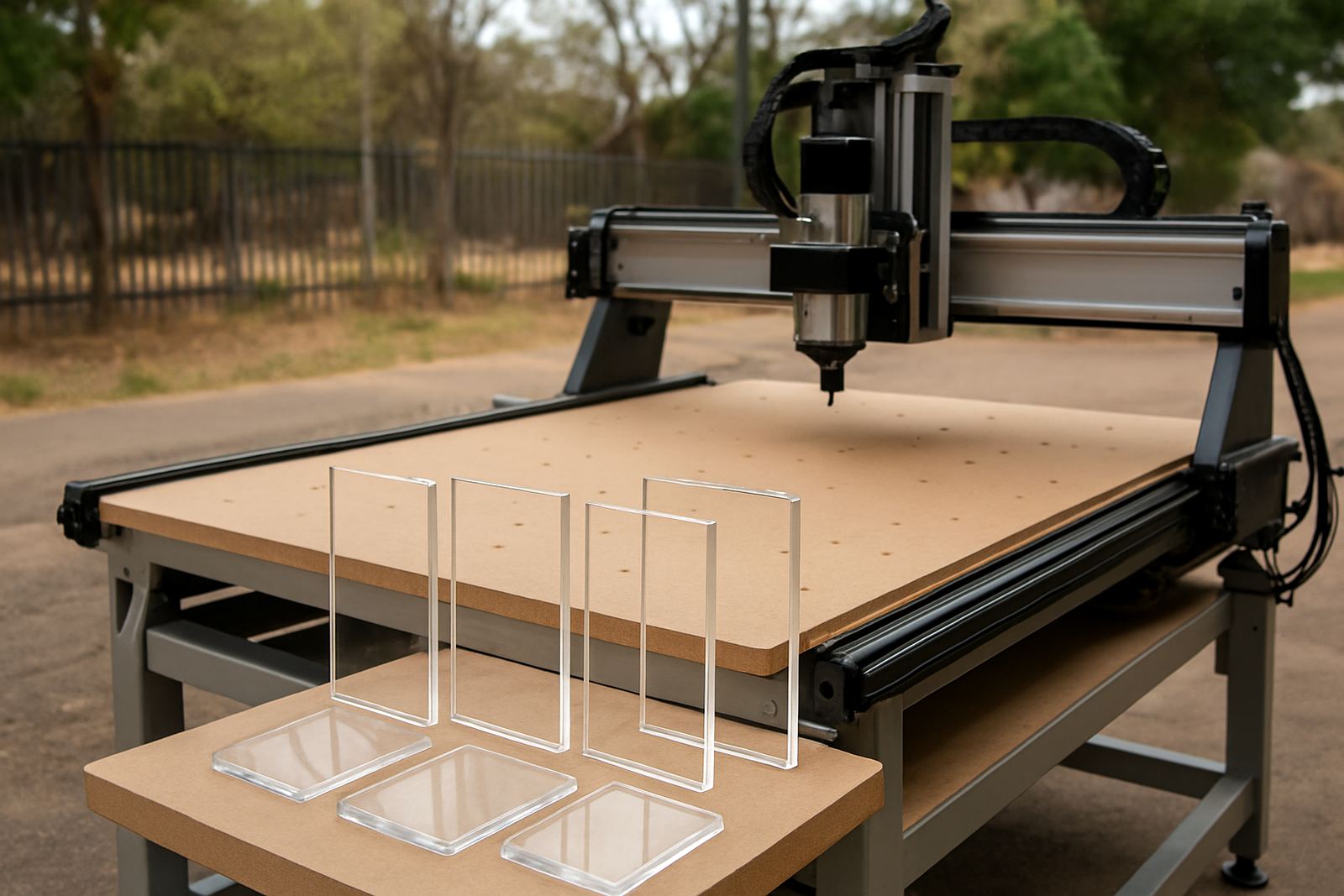
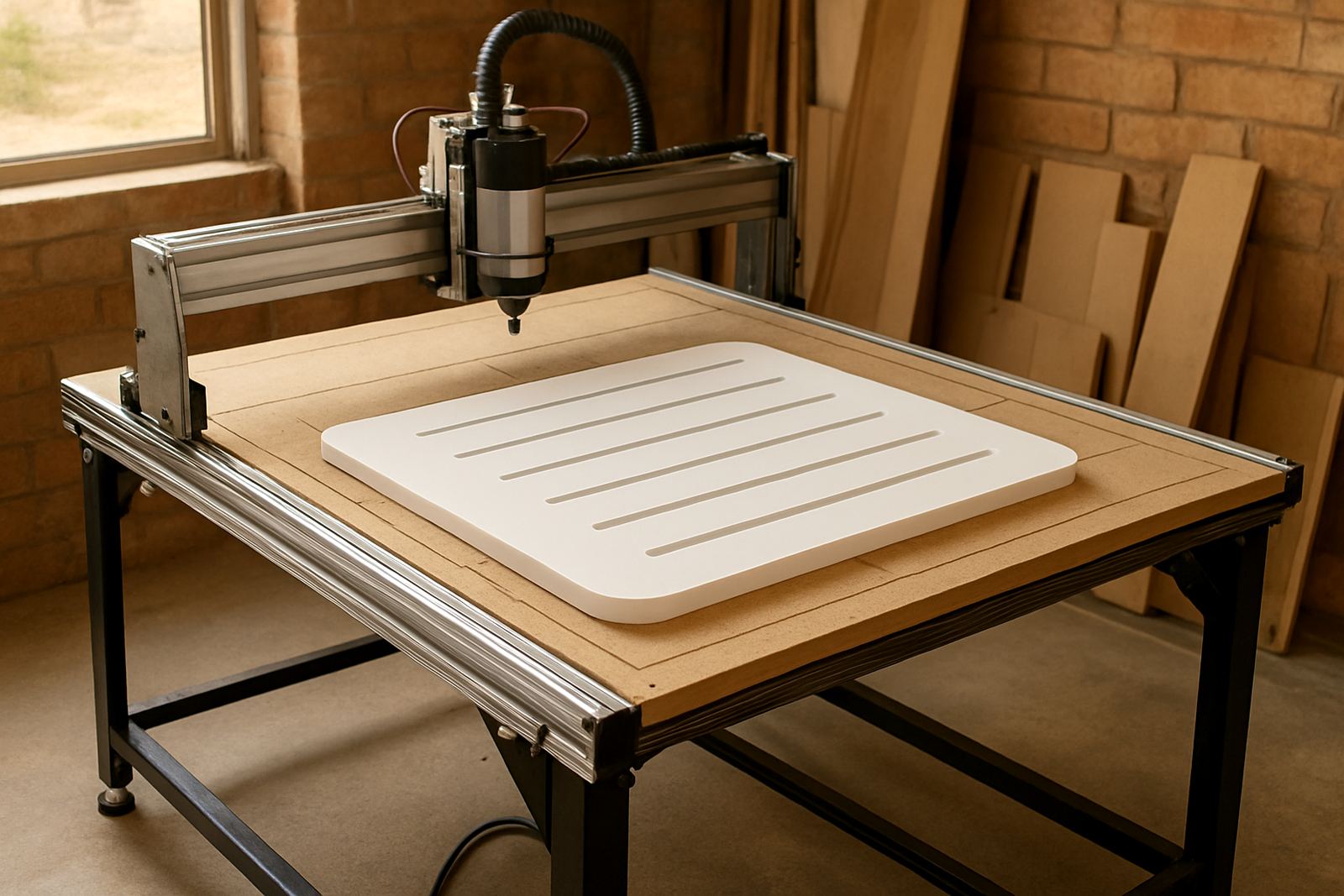
For foam board, a smaller CNC router table is often enough, especially for hobby users and compact workshops in Midrand, Pretoria East and Kempton Park. A common set-up includes a flat bed, vacuum hold-down or light mechanical clamping, a suitable spindle and sharp single-flute or foam-specific cutters. Dust extraction still matters, even though foam is light, because fine particles build up fast around the cut path and control components.
- Table size: often 600 x 900 mm, 900 x 1200 mm or 1200 x 1200 mm for small production
- Material thickness: commonly 5 mm, 10 mm and 20 mm board
- Cutter choice: sharp single-flute, compression not usually needed for foam board
- Support method: vacuum bed, sacrificial board or closely spaced tabs and clamps
- Control needs: steady feed rate, correct depth of cut and simple repeatable toolpaths
Because foam board moves easily under heat and pressure, the operator should avoid over-tight clamping. Too much pressure leaves dents, while too little lets the sheet shift mid-job. A simple starter setup visit can help confirm the hold-down method before larger batches go through the machine.
Layout Planning Before You Start Cutting
Good layout planning saves time and keeps waste down. Start by drawing the actual sheet size and nesting parts with enough space for cutter diameter and lead-in movement. If you are making packaging inserts, measure the product first, then allow for a snug but not crushing fit. On display backing, check the frame opening and leave a little clearance for paint, vinyl or laminate if those finishes are added later.
For workshops in humid coastal areas, the board should be stored flat and off the floor. Even inland, like around Pretoria, it is worth keeping stock away from direct sun and dust. A board that bows before cutting will not lie flat on the table, and that leads to depth changes across the job. In load-shedding conditions, many operators also keep their files organised and the machine homed properly after power returns, so there is less risk of wasting a sheet on the next run.
- Measure the finished cavity and the product itself, not only the box outer size
- Allow for cutter width in every pocket and slot
- Label each sheet with thickness and job number before cutting
- Test one sample on new material before starting a full batch
Common Mistakes That Waste Material
The biggest mistake is running too fast with too much depth on the first pass. Foam board cuts easily, but that does not mean it can be rushed without control. If the feed is too aggressive, edges can break away and the surface can fuzz. Another common issue is using a blunt cutter, which leaves drag marks and heat buildup. In a busy workshop, that can turn a quick order into a rework job.
Another error is assuming every foam board is the same. Some grades are denser than others, and some have paper skins that behave differently to plain foam. This changes the spindle speed, feed rate and finish. A proper control tuning check helps the machine respond cleanly, especially where parts have tight corners or small internal radii. It is also worth keeping a spare set of cutters on hand, because one damaged tool can stop an entire batch.
For users taking on client work, poor dust and scrap control creates housekeeping problems too. Bits of foam spread quickly across a workshop floor and can block air flow around the machine. That is not ideal in a small space with other hand tools and offcuts nearby.
Training and Support That Help New Operators
Many first-time users only need practical guidance to get steady results. Operator training usually covers material setup, zeroing the job, choosing the correct cutter, setting depth per pass and checking the first part before running the full sheet. Software basics are just as important, because the cleanest cut still depends on the file being set up properly.
For teams around Silverton, Pretoria East and Centurion, a refresher session can help when staff change or the work mix shifts from wood to lighter board. If a spindle starts to sound rough or the cut edge suddenly gets worse, breakdown support and spindle replacement planning may be needed before the next order goes out. Preventive maintenance also helps keep bearings, belts and guide surfaces in good condition.
- Starter setup visit for new machines or changed materials
- Refresher training for new operators or updated software workflows
- Remote support for file checks, cut settings and simple fault finding
- Spares planning so cutters, collets and wear items are on hand before a deadline
Budget Ranges for Foam Board Routing Jobs
The cost of entering foam board work depends on whether you are buying a machine for occasional use or setting up for daily production. A hobby router table with basic controls can start from about R45 000 to R85 000, while a more capable small workshop machine with better hold-down and a stronger spindle can sit from about R95 000 to R180 000. If you need added support, training and setup, it is wise to budget another R3 500 to R12 000 depending on the site and the scope of the visit.
Running costs stay manageable if cutters are changed on time and the material is stored correctly. A small batch of cutters and common spares can be planned from around R1 500 to R6 500, depending on tool types and how much backup you want on the shelf. For repeated packaging insert work, budgeting for a spare collet, a spare cutter set and a maintenance visit usually costs less than losing one delivery date.
For businesses in Pretoria and surrounding areas, it is often better to start with the machine size that matches current sheet sizes, then add capacity later if orders grow. That keeps the setup practical and avoids paying for table area you do not use yet.