
When cabinet part cutting starts to save time
Cabinet shops usually feel the pressure when orders start stacking up for kitchen carcasses, wardrobe panels, drawer parts and shelving. Hand marking and manual saw work can get a small run out the door, but once the job count climbs, the errors arrive with it. A CNC router table helps by cutting the same part shape, hole pattern and pocket location over and over with very little variation.
For a workshop in Silverton, Pretoria East or Centurion, the biggest gain is not only speed. It is consistency. If the left side panel, right side panel and stretcher all come off the sheet from the same file, then assembly is easier and installations go smoother. That matters on site when the installer has to work in a tight kitchen or a house with limited access.
Typical equipment for sheet-based cabinet cutting
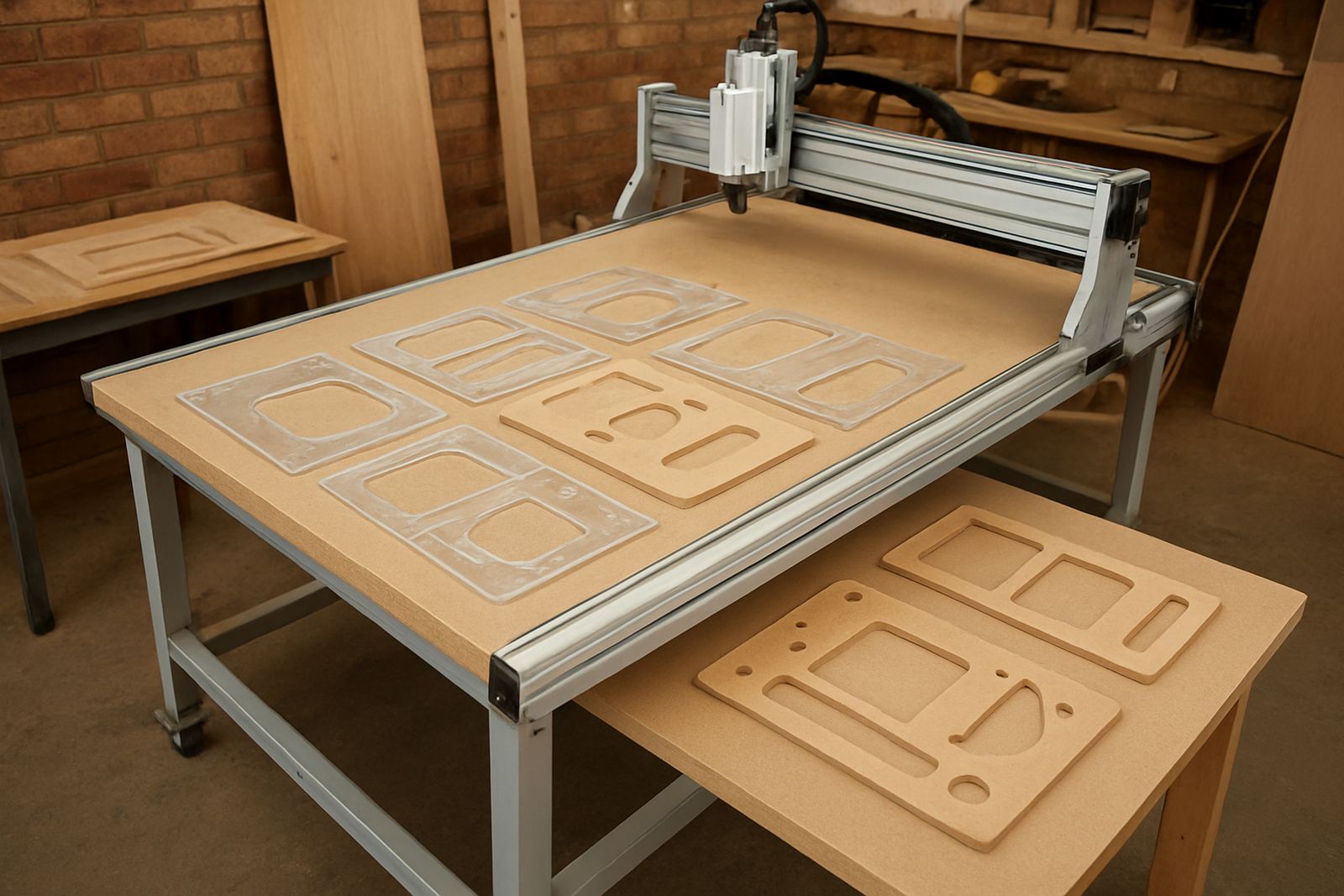
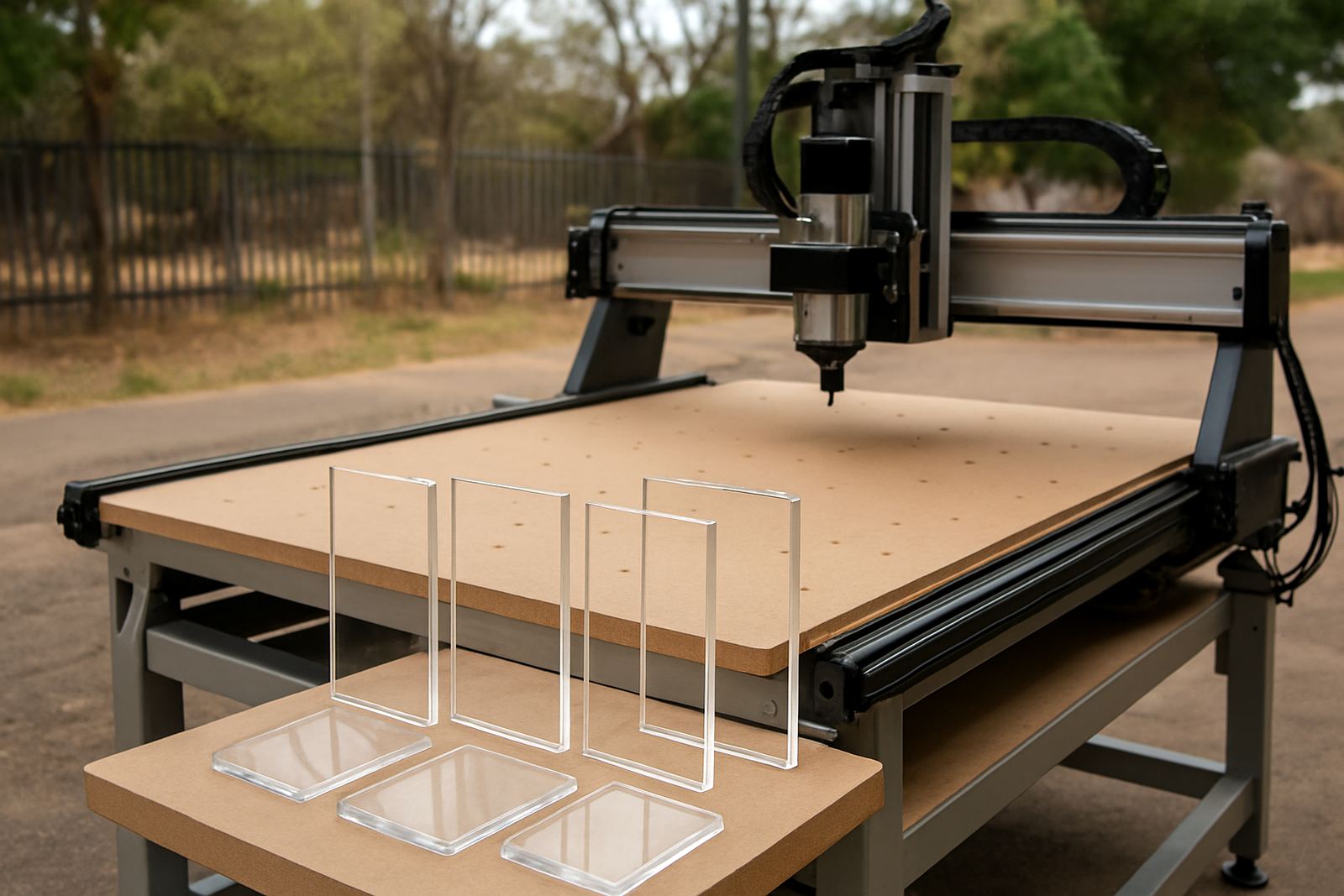
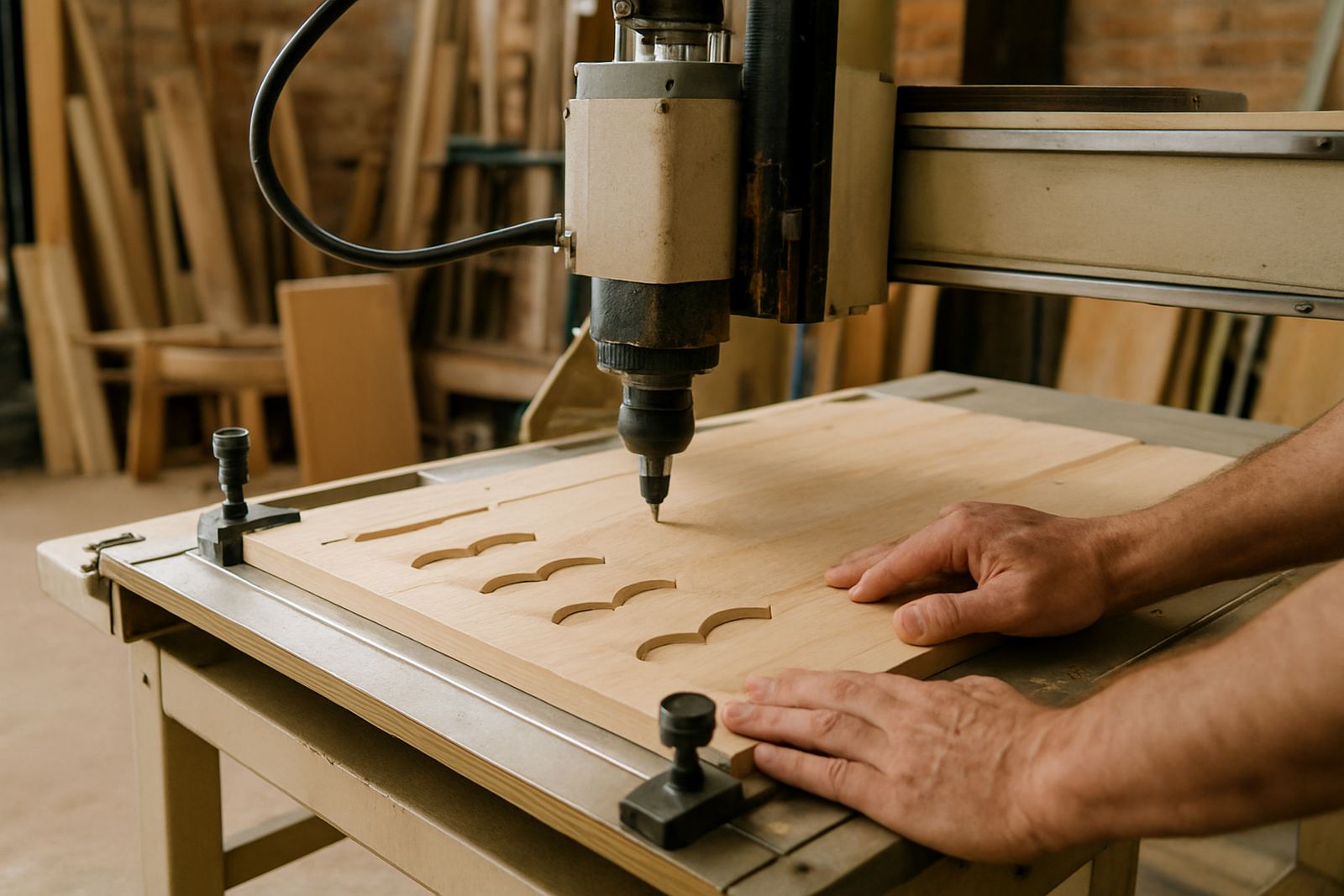
Most cabinet part cutting setups use a CNC router table with a vacuum bed or a well planned mechanical hold-down system. A nested sheet workflow is common for MDF, melamine faced board, ply and plastics. The machine size depends on your sheet size and workshop floor space, but many smaller South African shops work around full 2 440 mm x 1 220 mm sheets so they can cut parts directly from standard stock.
- CNC router table with a spoilboard or vacuum hold-down
- Spindle suitable for MDF, board and plastics
- Extraction for dust control, especially on MDF
- Control software for nesting and part labels
- Tooling for profiling, drilling and light pocketing
- Basic spares such as cutters, belts, collets and limit switches
If you are running in a place where load-shedding still affects production, it helps to plan for restart routines and clean file management. A short interruption should not mean hours of lost work because the sheet map was not saved or the origin was not checked. This is one area where proper training pays for itself quickly.
How to plan the layout before the first cut
Good layout starts with how the cabinet is built, not with the machine. Decide your standard carcass dimensions, board thicknesses, edge banding allowances and drill patterns before you begin nesting. Once those rules are fixed, the router can repeat them on every sheet with far less fuss.
In many South African workshops, material waste rises because the nesting order is not thought through. Parts get rotated without considering grain direction on decorative board, or fillers are mixed in with main carcass panels and the offcuts become unusable. A practical plan should also include where finished parts will land after cutting, because sheet handling around a 2 440 mm board is awkward if the route from machine to assembly bench is too narrow.
- Keep one naming system for all parts, even on small jobs
- Allow space for sheet loading and offloading on both sides of the table
- Separate cabinet parts by job before cutting starts
- Plan for dust extraction and air flow around the machine
- Leave room for a safe operator walkway and storage racks
Common mistakes that slow cabinet production
The most common errors are not usually caused by the machine. They come from weak preparation. A file may look fine on screen, but if the tool diameter was not entered properly, the part will be too tight or too loose. Another issue is skipping test cuts on a new board type, which can leave you with burn marks or chipping on the face edge.
Misaligned material is another problem. MDF sheets that are not seated flat can move under cutting loads, especially where the hold-down is weak. In humid coastal conditions the board can also swell slightly, so the workshop should store stock off the floor and away from open doors. Even inland, dust buildup under the sheet can change depth settings and cause a bad fit.
Small workshops sometimes try to cut too many jobs in one shift without checking the cutter wear. That is where a simple maintenance routine helps. Check spindle noise, clean rails and inspect belts, because a minor issue can become a breakdown if it is ignored for too long.
Budget ranges for a practical cabinet cutting setup
The right budget depends on whether you are starting with light production or running daily cabinet output. A smaller entry-level setup for hobby work or part-time cabinet jobs can start around R120 000 to R250 000, depending on table size, drive system and accessories. A better specified production setup for regular sheet cutting often sits between R260 000 and R600 000.
Once you add extraction, tooling, software basics, training and a sensible spares plan, the total investment can rise further. That is normal. Cabinet work needs more than a machine on its own. You also need enough cutter stock, a stable power arrangement and someone who understands setup. Many shops budget separately for starter support, because one poor first month can cost more than the training fee.
Support for Pretoria and nationwide cabinet shops
CNC Router Hub works from Silverton, Pretoria, with support for Pretoria East, Centurion, Midrand, Kempton Park and cabinet shops across South Africa. For a new cutting line or a shop adding a second machine, the useful services are usually starter setup visits, operator training, software basics and preventive maintenance. Those services help with feed rates, tool choice, part orientation and safer day-to-day use.
When a shop is already cutting but wants better output, remote support can help with control tuning, refresher training and spares planning. If a spindle needs replacement or a drive fault appears, quick diagnosis matters because a stopped machine means missed delivery dates. The aim is simple: keep the cutter producing parts that fit first time, without wasting board or time.
- Operator training for new staff and owners
- Starter setup visit for first-time installation
- Breakdown support and control tuning
- Remote support for software and process questions
- Spares planning for cutters, belts, collets and sensors
For cabinet part cutting, the best machine is the one that suits your workload, your sheet sizes and your workshop flow. Get those pieces right and the process becomes far easier to manage, even on busy weeks.