
When ABS Cutting Makes Sense in a Small Workshop
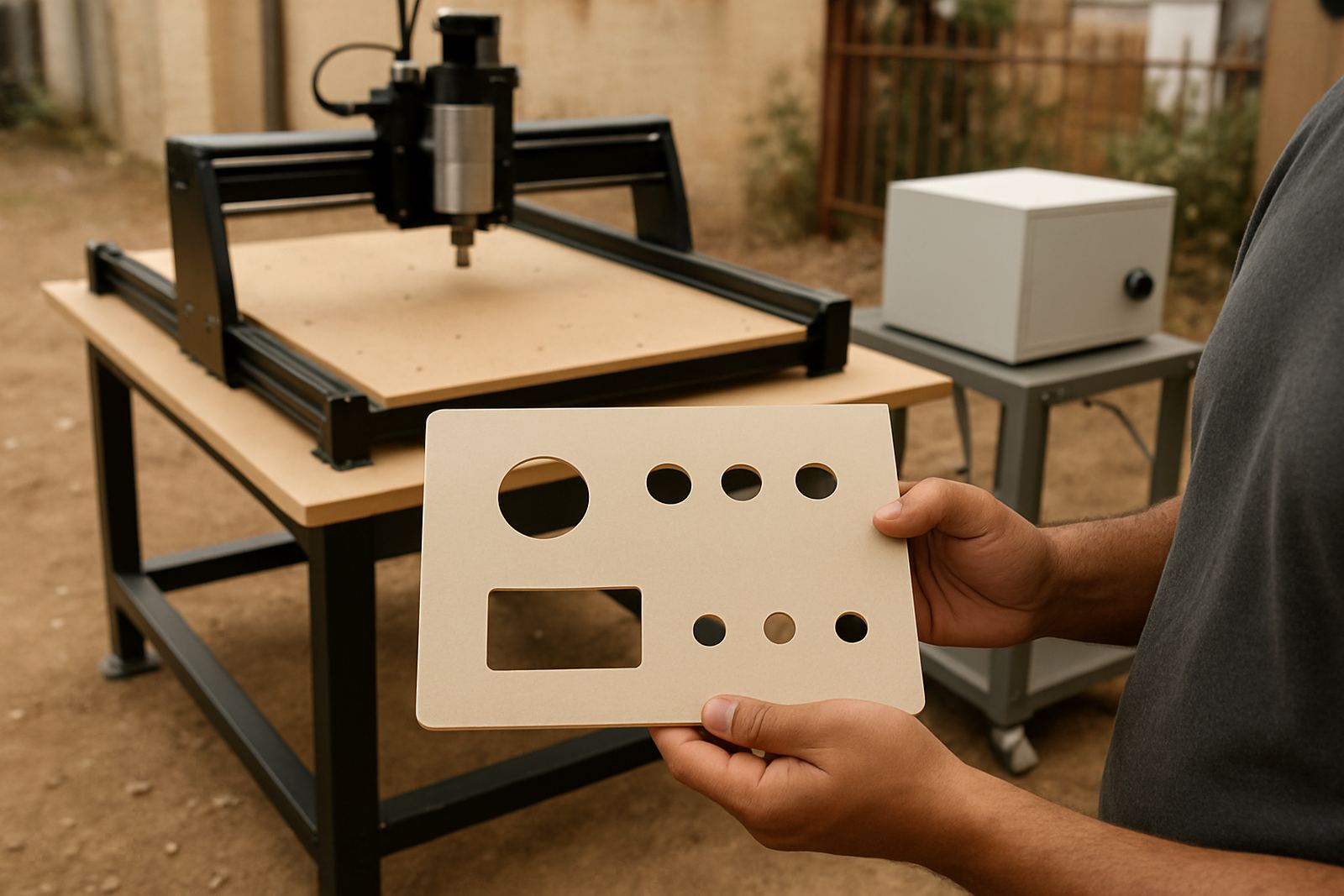
ABS is a useful material when you need light, tough parts that can handle daily handling without costing as much as metal. It works well for control box panels, machine guards, cable covers, vacuum fixtures, organiser trays and simple enclosures for electrical or electronic fitments. In Pretoria, Midrand and Centurion, many users choose ABS because it machines cleanly on a small CNC router and does not need the same finishing effort as hand-cut sheets.
For hobby users and small fabrication shops, the main attraction is consistency. Once a part is drawn up properly, the router can repeat it with very little variation. That matters if you are making ten or twenty matching pieces for a workshop fitout, or a small run of covers for a client. ABS is also handy where a part may be drilled later, clipped in place, or removed for service. It is not the answer for every job, but for practical parts it saves time and keeps the workshop moving.
Typical Router Setup for ABS Sheet Work
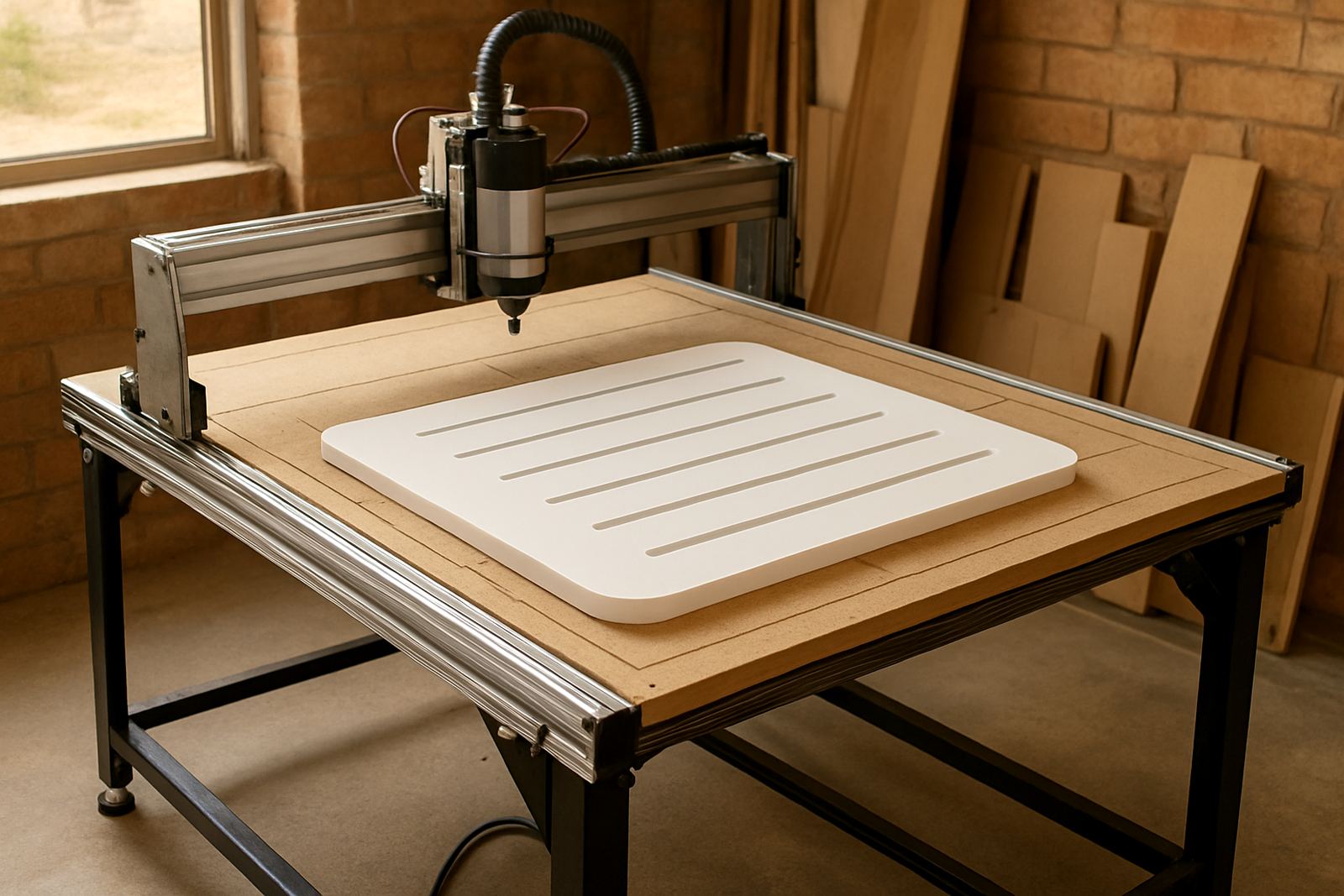
Most ABS jobs can be handled on compact CNC router tables with a rigid spoilboard, vacuum hold-down or simple mechanical clamping, and a spindle that runs smoothly at higher speed. Desktop and hobby routers are often enough for sheet sizes commonly used in smaller workshops, especially where the work is limited to 3 mm, 4 mm, 5 mm or 6 mm stock. If your work is mainly enclosure faces, brackets or templates, a smaller machine can do very well provided the frame is stable and the motion system is tuned.
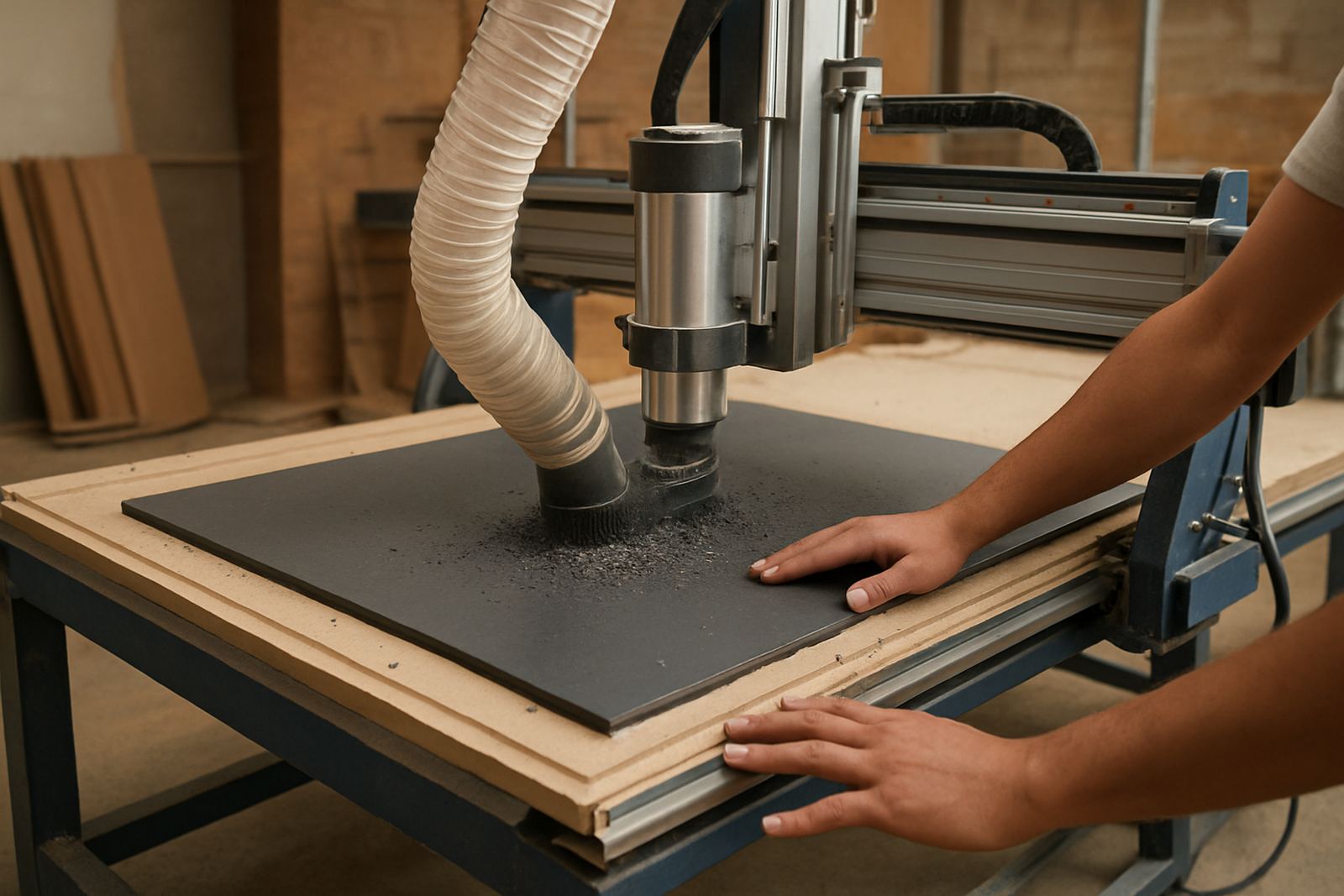
For best results, plan the job around the way ABS behaves during cutting. It can soften if the tool rubs too much, so the machine must cut cleanly rather than polish the edge. Dust extraction helps, because chips can collect around the cutter and mark the surface. In winter in Gauteng the air is drier and static can build up, so proper earthing and tidy cable routing are worth the effort. When load-shedding hits, a clean shutdown routine also protects your settings and the workpiece.
- Use a sharp single or double flute cutter suited to plastics.
- Keep feeds consistent to avoid heat build-up and melted edges.
- Allow enough support under thin sheets so they do not chatter.
- Check spindle runout before starting any longer production run.
Layout and Planning Before the First Cut
Good ABS work starts with layout, not cutting. Sheets should be nested with enough space between parts for tabs, clamps or vacuum zones, and the toolpath should reflect how the piece will be removed from the board. If a panel has screw holes, cable cut-outs or rounded corners, those details need to be measured properly before the file is loaded. A rushed layout often causes small errors that only show up once the part is fitted to an enclosure or frame.
For workshop users in Silverton, Pretoria East and Kempton Park, it helps to keep a simple cutting standard. Decide on hole sizes, corner radii and fitting clearances before you start. ABS can expand a little with temperature, so very tight fits can become a problem in a warm store room or a vehicle. Leave enough tolerance for clips and fasteners, and label each sheet by thickness and colour if you stock more than one type. That small habit saves time later, especially when a job has to be repeated months after the first sample was made.
- Confirm sheet thickness with a calliper, not only by supplier label.
- Mark the zero point clearly so the sheet goes back in the same position if paused.
- Keep drawing names simple and date your files for easier reorders.
Common Mistakes That Waste ABS Sheets
The most common mistake is trying to cut ABS too slowly. When the cutter dwells, the plastic warms up and the edge can smear or burr. Another issue is poor workholding. Thin ABS can lift, vibrate or shift, especially if the spoilboard is uneven. If the sheet moves even a little, the part may still look acceptable at first glance but will not fit properly when you assemble it later.
Another problem is using the wrong cutter for the task. A blunt bit can leave rough edges and visible marks, while an aggressive tool may chip the corners. Some users also forget to clear chips during longer runs, which creates heat and reduces cut quality. If the workshop is busy, it is easy to skip a test piece, but a 10 minute sample can save a full sheet. On a few jobs we have seen people blame the material when the real issue was an uneven spoilboard or loose collet.
- Do a small test cut before starting the full nest.
- Inspect the spoilboard for low spots and replace damaged sections.
- Do not force deep passes if the machine is lightly built.
- Keep spare cutters on hand so a worn tool does not ruin the job.
Budget Ranges for ABS Cutting Work in Rand
The budget depends on whether you are buying a router table for one-off use, setting up a proper small production line, or adding support items to an existing machine. For a hobby user who wants to cut ABS panels for home projects and light workshop use, entry level CNC router tables often start from about R35 000 to R80 000, depending on table size, spindle specification and control system. A more capable small workshop setup with better rigidity, dust extraction and safer clamping can sit in the R90 000 to R180 000 range.
Ongoing costs matter too. Keep allowance for cutters, spoilboard material, hold-down parts and spare drive components. Many small workshops set aside R2 000 to R8 000 for basic spares planning, then review that figure once the machine starts running regularly. If you are doing paid work, training is worth including from the start because it reduces wasted sheets and avoids the false economy of trial and error. A short starter setup visit can often sort out the basics before bigger losses add up.
Training, Spares and Support for Ongoing ABS Work
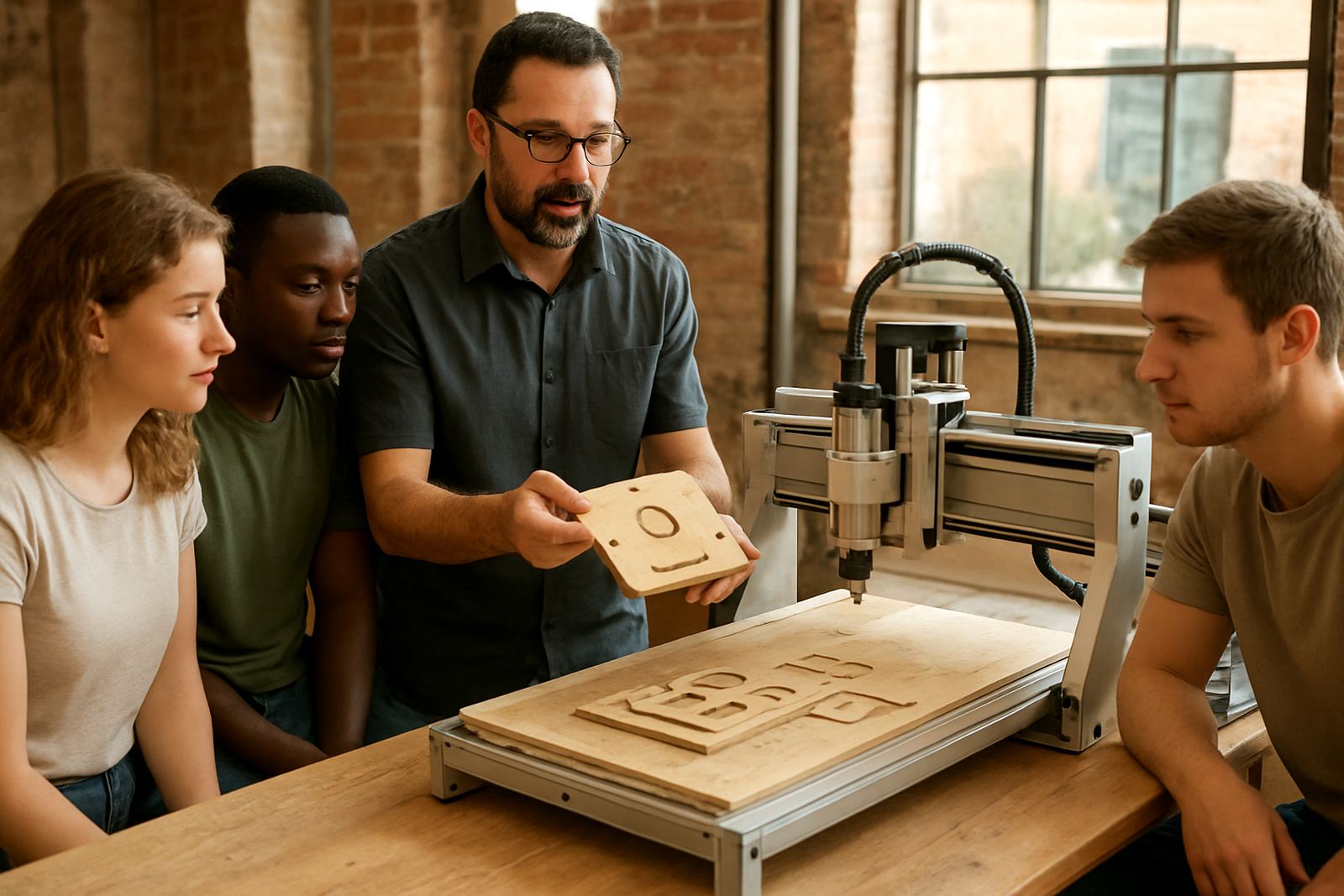
ABS cutting is easier when the operator understands the machine, the file and the material together. That is why many users ask for software basics, starter setup visits and refresher training after the first few jobs. Once the machine is dialled in, preventive maintenance keeps the table accurate and avoids shutdowns when a spindle starts sounding rough or a control setting drifts. For busy workshops around Pretoria, Centurion and Midrand, remote support can also help with troubleshooting when a job is already lined up for delivery.
CNC Router Hub supplies training and spares nationwide from Silverton, Pretoria, and supports users who need practical help with setup, tuning, spindle replacement or breakdown support. That matters when you are cutting ABS for real work, not just test pieces. If a clamp slips, a spindle needs attention or a feed setting has gone off, the delay can affect a client order. Having a local contact for service and a sensible spares plan makes the difference between a quick fix and a wasted day.
- Operator Training for new users and workshop staff.
- Software Basics for drawing, nesting and toolpath setup.
- Preventive Maintenance and Control Tuning for steady running.
- Breakdown Support, Spindle Replacement and Remote Support when needed.