
Client Brief From A Busy Pretoria Craft Studio
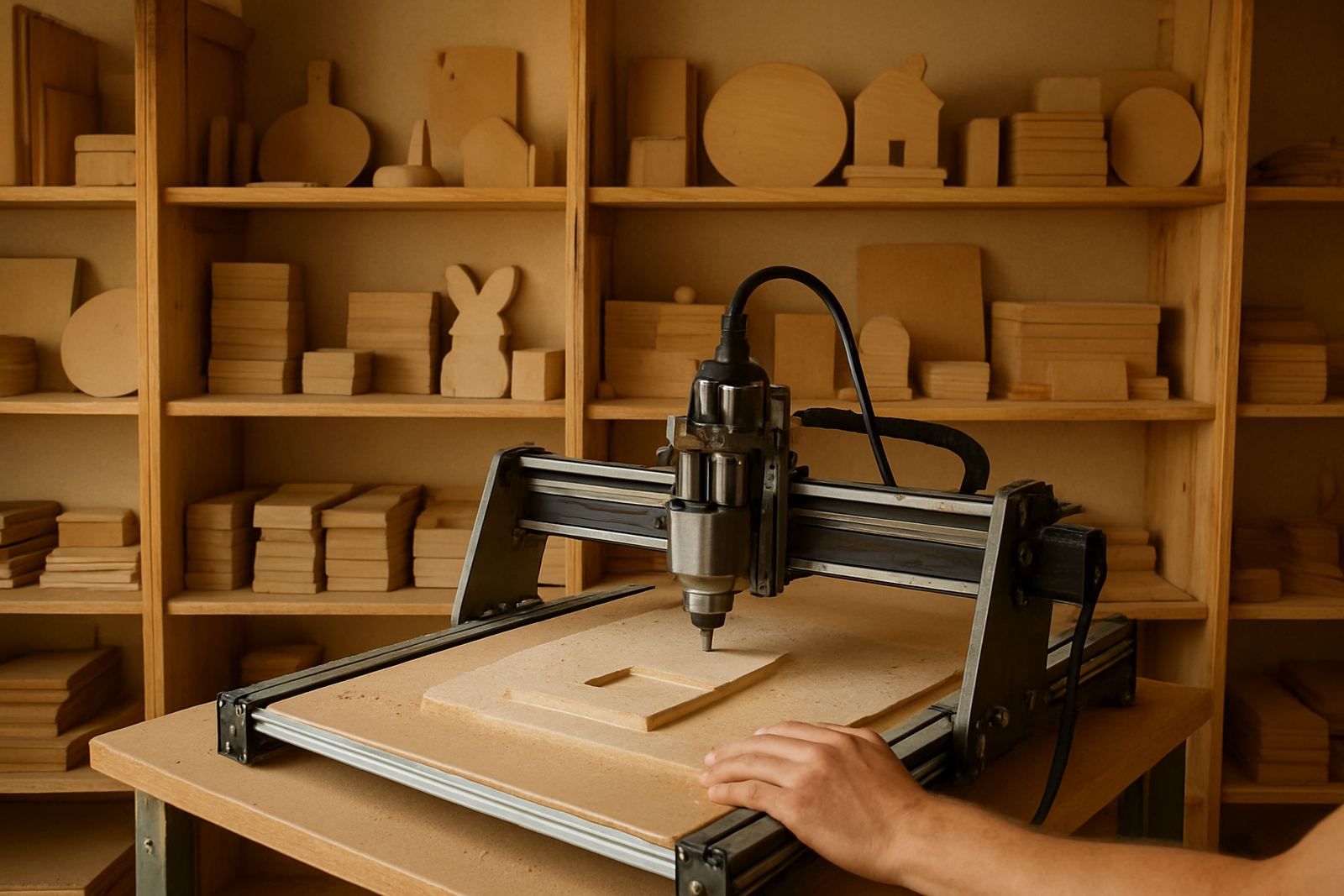
The client was a small craft studio in the Pretoria East area, serving walk-in retail orders, corporate gifting and custom décor work. Their range included small signs, layered plaques, engraved name items and MDF gift boxes, all of which needed the same cut quality from one batch to the next.
The brief was practical. They wanted better repeatability, less manual rework and a machine that could fit into a smaller workshop without forcing a full layout change. The team also needed guidance on setup, file handling and day-to-day use, because different operators were sharing jobs across the week.
They were not looking for heavy production machinery. What they needed was a compact system that could handle wood, MDF and plastics, with predictable movement and enough working area for common gift sizes. We also had to keep the solution suitable for a typical South African workshop, including power interruptions and dust control.
- Work type: decorative wood products, MDF signage and personalised gifts
- Work area: small workshop in Pretoria East, close to Silverton and Menlyn
- Priority: repeatable cuts, easy training, low maintenance
- Material range: wood, MDF, acrylic and other plastics
What Needed Fixing Before Production Could Improve
Before the project, the studio relied on hand finishing and mixed methods for shaping and lettering. That caused variation from one item to the next, especially on repeat orders where customers expected the same size and finish every time. The team also lost time checking settings and correcting small errors after the first pass.
There were a few constraints. The workshop had limited floor space, so the machine footprint needed to stay compact. Load-shedding was another reality, so the team asked for practical advice on safe shutdowns, restart checks and what to do when power returned mid-job. Dust and fine chips were also a concern, because MDF and routed plastics can build up quickly in a smaller space.
The other issue was operator confidence. The studio did not need advanced industrial programming on day one, but they did need the right training so each operator could load work, set origin points and manage basic tool paths without calling for help every time.
- Limited floor space in a shared workshop
- Power interruptions and restart checks during load-shedding
- Dust extraction and chip control around MDF work
- Need for repeatable setup by different operators
The CNC Setup We Supplied And Why It Fit
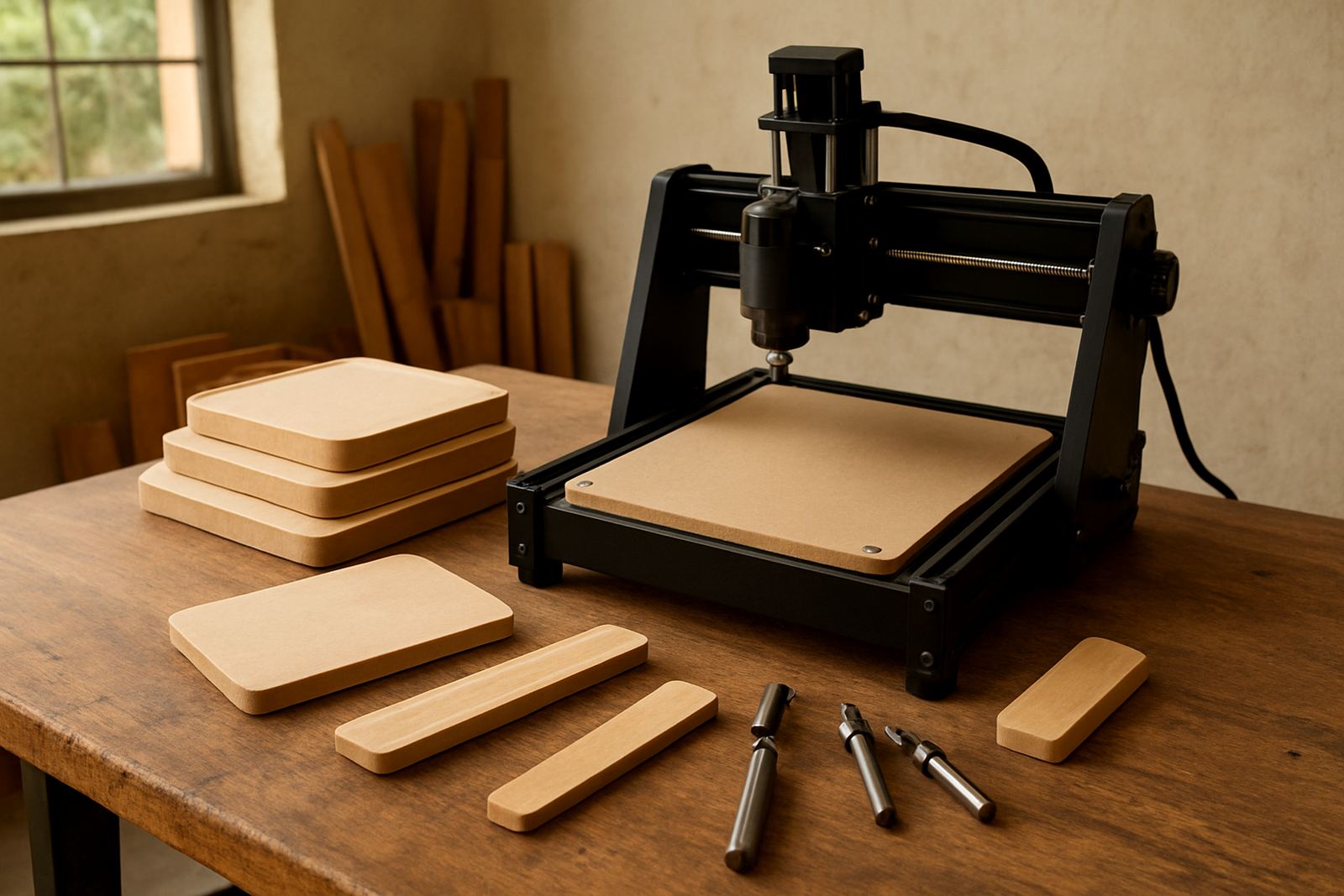
We supplied a compact CNC router table suited to hobby and small workshop use, sized for decorative sheets and smaller nested jobs rather than oversized industrial panels. The working area was selected to suit typical craft items, with enough travel for signs, plaques and smaller box components, while still fitting into the studio layout.
The package included the machine, a suitable spindle arrangement, control setup, basic tooling guidance and spare parts planning. We also helped with the practical side of ownership, such as cable management, safe start-up checks and the order of operations for everyday use. For a studio doing mixed materials, that matters as much as the hardware itself.
The specs were kept suitable for a small team, with attention to clean motion, repeatable zeroing and stable operation on common South African workshop power conditions. We also discussed where the machine should sit in relation to dust extraction, storage and the finishing area so material flow would not become messy after installation.
- Compact CNC router table for wood, MDF and plastics
- Suitable for decorative panels, lettering and gift item components
- Spare tooling and wear parts planned from the start
- Layout advice for dust extraction, storage and finishing
Training For Operators Who Needed Results Fast
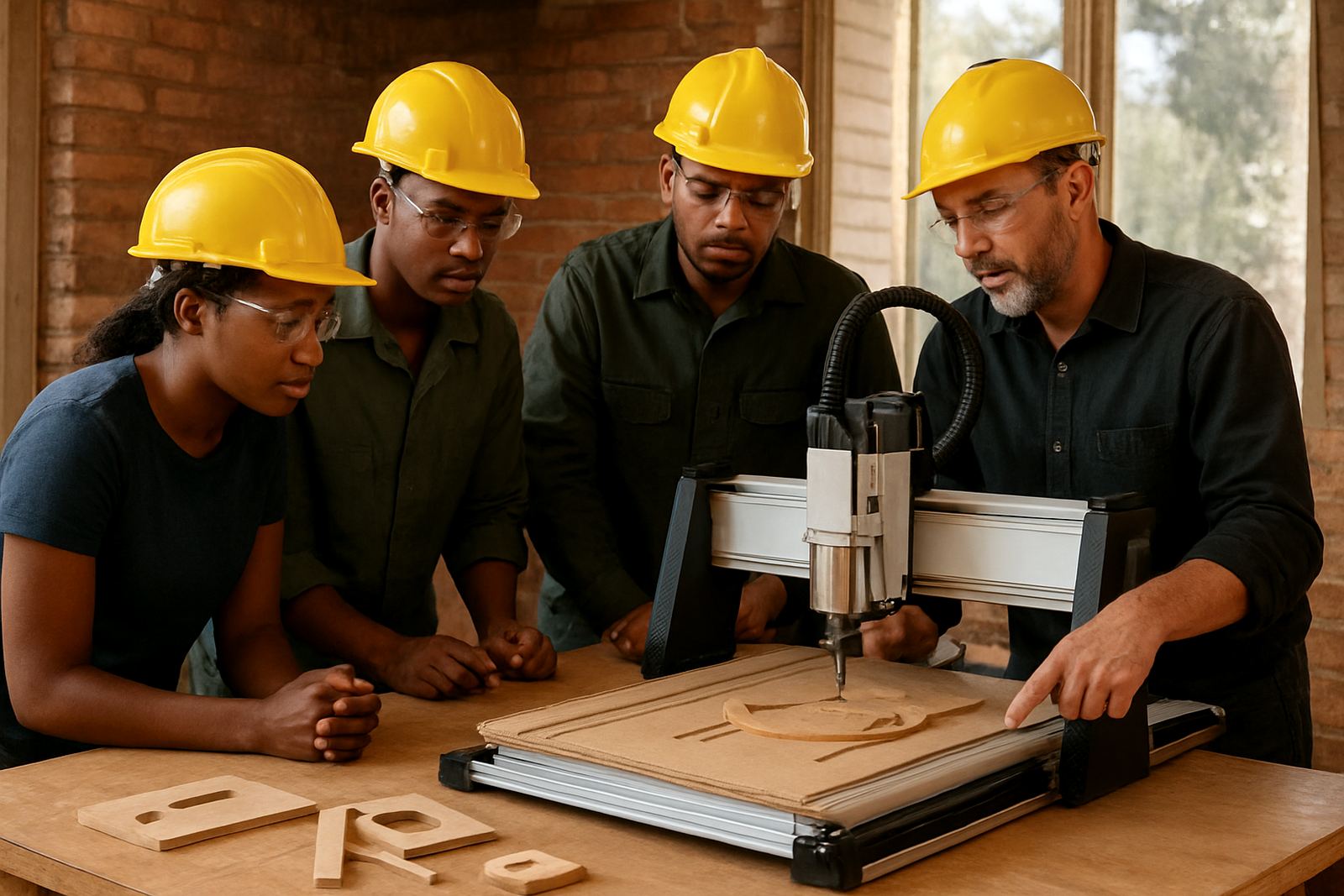
The project included operator training because the studio needed more than a machine, they needed people who could run it properly. Training covered machine basics, safe clamping, setting work zero, loading files and checking tool paths before starting a job. We kept it practical and focused on the items they make every week.
Software basics were also included, with guidance on how to prepare jobs for signage, layered pieces and repeat batches. Nhlanhla handled the training side, with support from the broader team where needed. The aim was to reduce trial and error, especially on small items where one incorrect offset can waste both material and time.
We also showed the team how to plan around order volumes. That meant setting up repeat jobs in a way that made sense for batch work, rather than starting from scratch each time. The result was better consistency across shifts, and fewer interruptions when a different operator took over.
- Operator training for safe daily use
- Software basics for preparing repeat jobs
- Work zero setting and tool path checks
- Batch planning for personalised gift orders
Support, Maintenance And Spares Planning
Because the studio serves customers across gift seasons and corporate order peaks, the machine had to stay available. We set up preventive maintenance guidance, breakdown support procedures and a spares plan for the most common wear items. That included advice on keeping essential consumables on hand so a small fault would not stop production for a week.
Lindelwa coordinated the spares side, while Wessel handled service checks and control tuning guidance where needed. We also discussed spindle replacement planning and what symptoms to watch for, such as unusual noise, heat or finish variation. For a studio that works with MDF and wood on a regular basis, those checks save a lot of trouble later.
We recommended a simple maintenance routine suited to the workshop rhythm. Clean down after use, inspect the bed and hold-down points, check dust control and verify the first job after any outage. It is basic work, but it keeps the machine dependable. A small typographic error on a control file or a loose clamp can still ruin a good sheet.
- Preventive maintenance schedule for routine checks
- Breakdown support process for urgent stoppages
- Spindle replacement and tuning guidance
- Nationwide spares planning for consumables and wear parts
Results After Four Weeks Of Use
The studio saw improvement within the first month. Repeat items matched more closely from batch to batch, and the team spent less time correcting edges or re-cutting letters. They could also quote with more confidence, because production times became easier to estimate once the settings were standardised.
For personalised gift ranges, the change was noticeable in both finish and turnaround. Items that used to need extra hand work now came off the machine cleaner, which reduced finishing time and helped the team keep up during busy periods. The workshop also became easier to manage because job prep, running and clean-up followed a clear sequence.
The project took 4 weeks from initial brief to settled running. That included site assessment, machine selection, training and early support after start-up. For this kind of craft studio, that timeframe was enough to get the team moving without dragging the project out over months. The best part was that the client did not need to change their product range, they just improved how it was made.
- Repeatability improved on decorative wood and MDF items
- Less hand rework on personalised gift orders
- More predictable job timing for quotes and planning
- 4 week project from brief to settled operation
Approaches We Would Keep For Another Craft Studio Fit-Out
We would take the same approach again for a studio like this. Start with the products, not the machine model. Once the item sizes, materials and production rhythm are clear, it becomes much easier to choose the right working area, tooling and support plan. That keeps the solution practical for the workshop rather than overcomplicated.
We would also keep training close to the first jobs the team actually sells. For craft work, that is the fastest way to build confidence and reduce waste. A compact CNC setup can do a lot, but only if the operators know how to use it properly and the spares plan is in place before the first busy month arrives.
If a similar Pretoria or Gauteng studio asked for the same outcome, we would recommend the same mix of setup visit, operator training, maintenance guidance and sensible spares planning. It suits smaller teams, and it keeps the machine earning its keep from the start.
Key facts
| Client type | Craft studio producing decorative wood products and personalised gifts |
|---|---|
| Location | Pretoria East, near Menlyn |
| Material range | Wood, MDF and plastics |
| Machine class | Compact CNC router table for small workshop use |
| Project timeline | 4 weeks from brief to settled running |
| Support included | Training, spares planning, maintenance guidance and startup support |