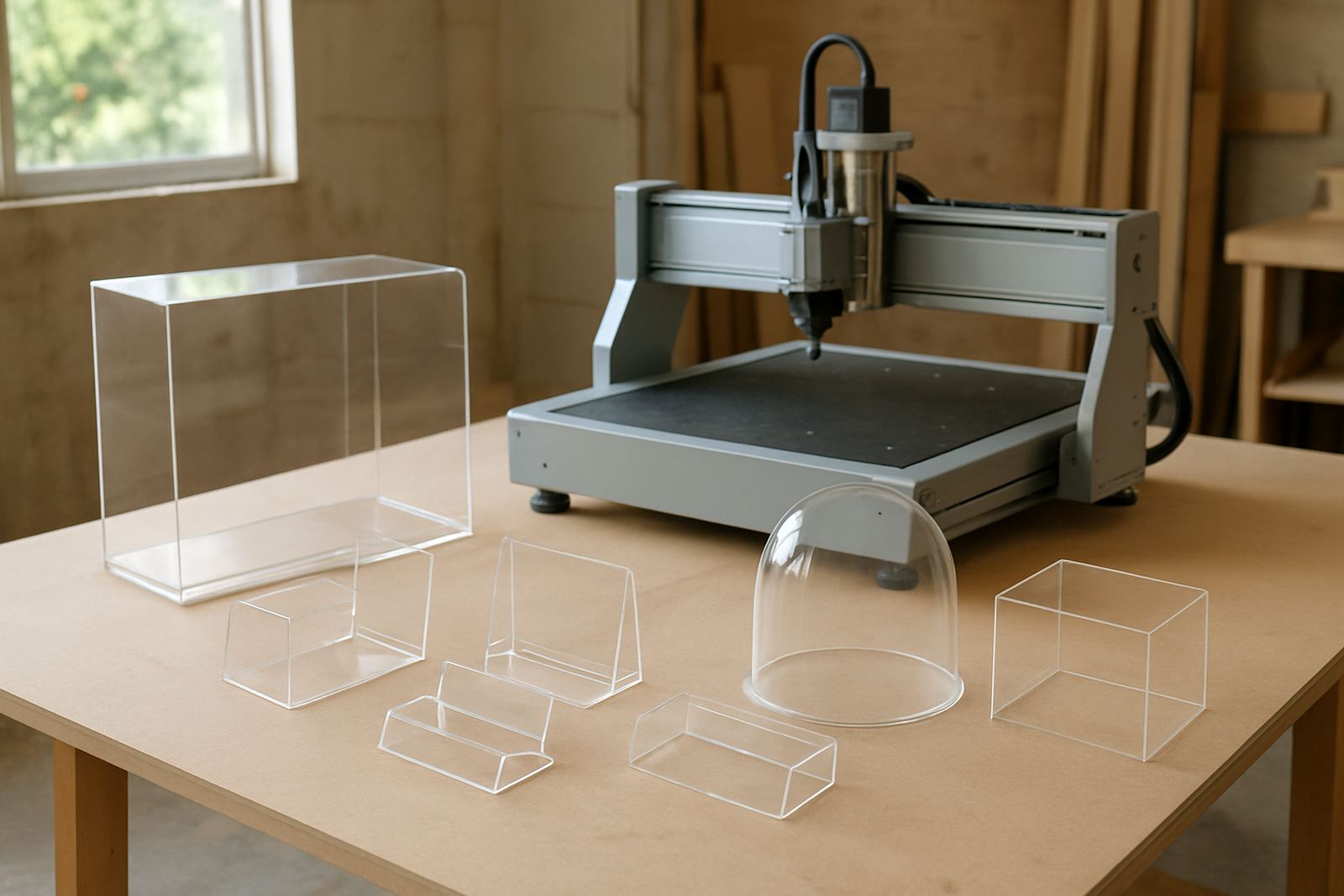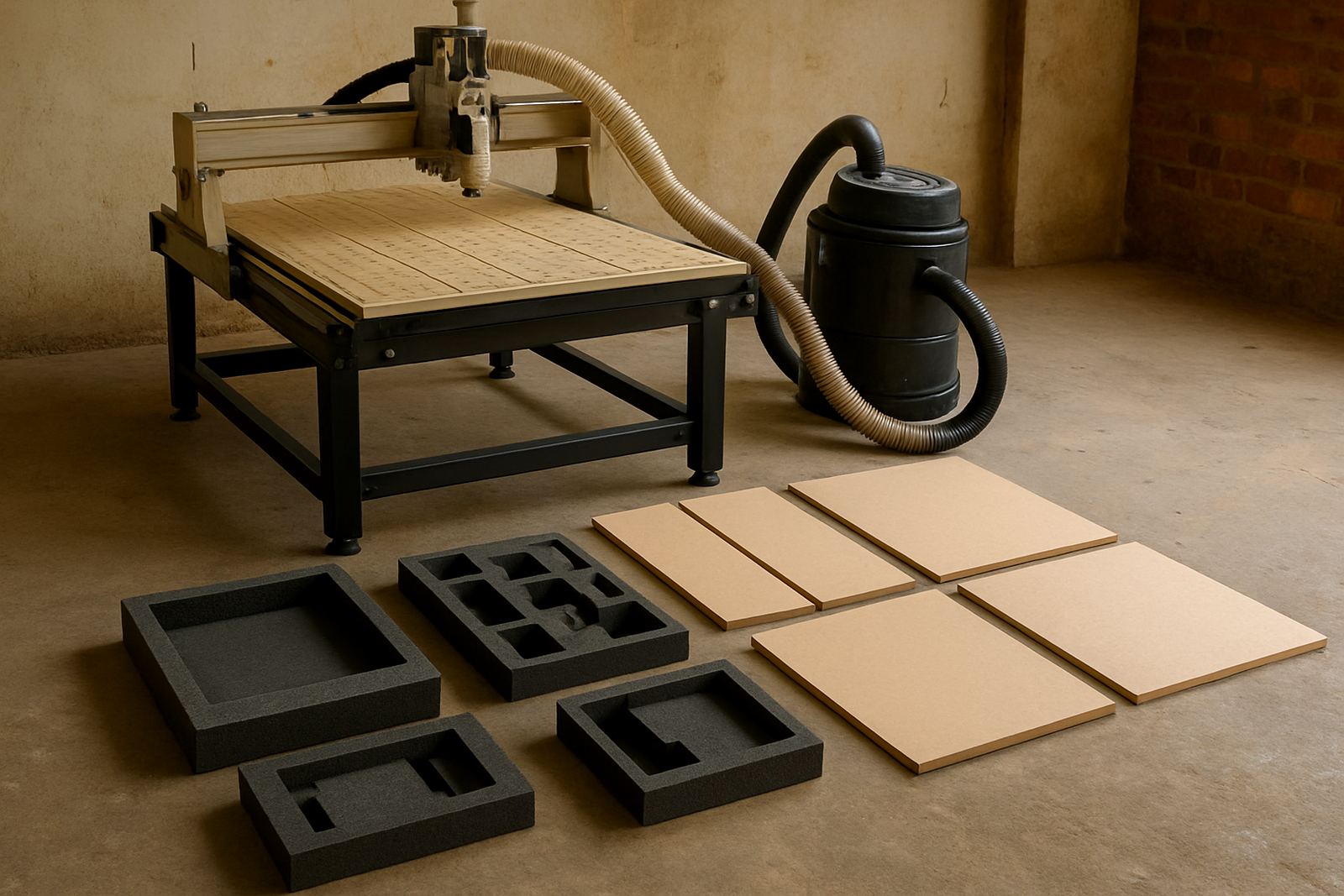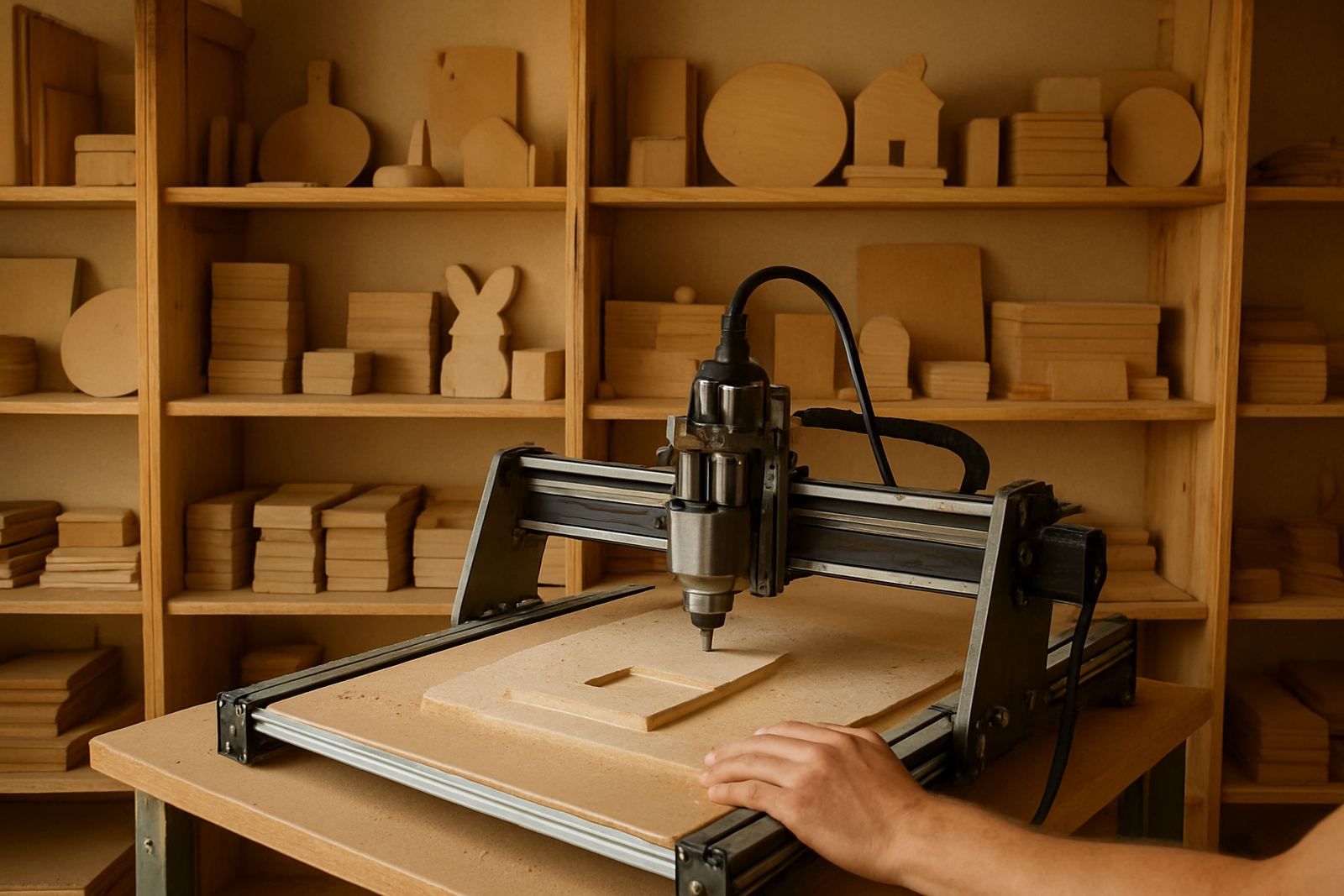

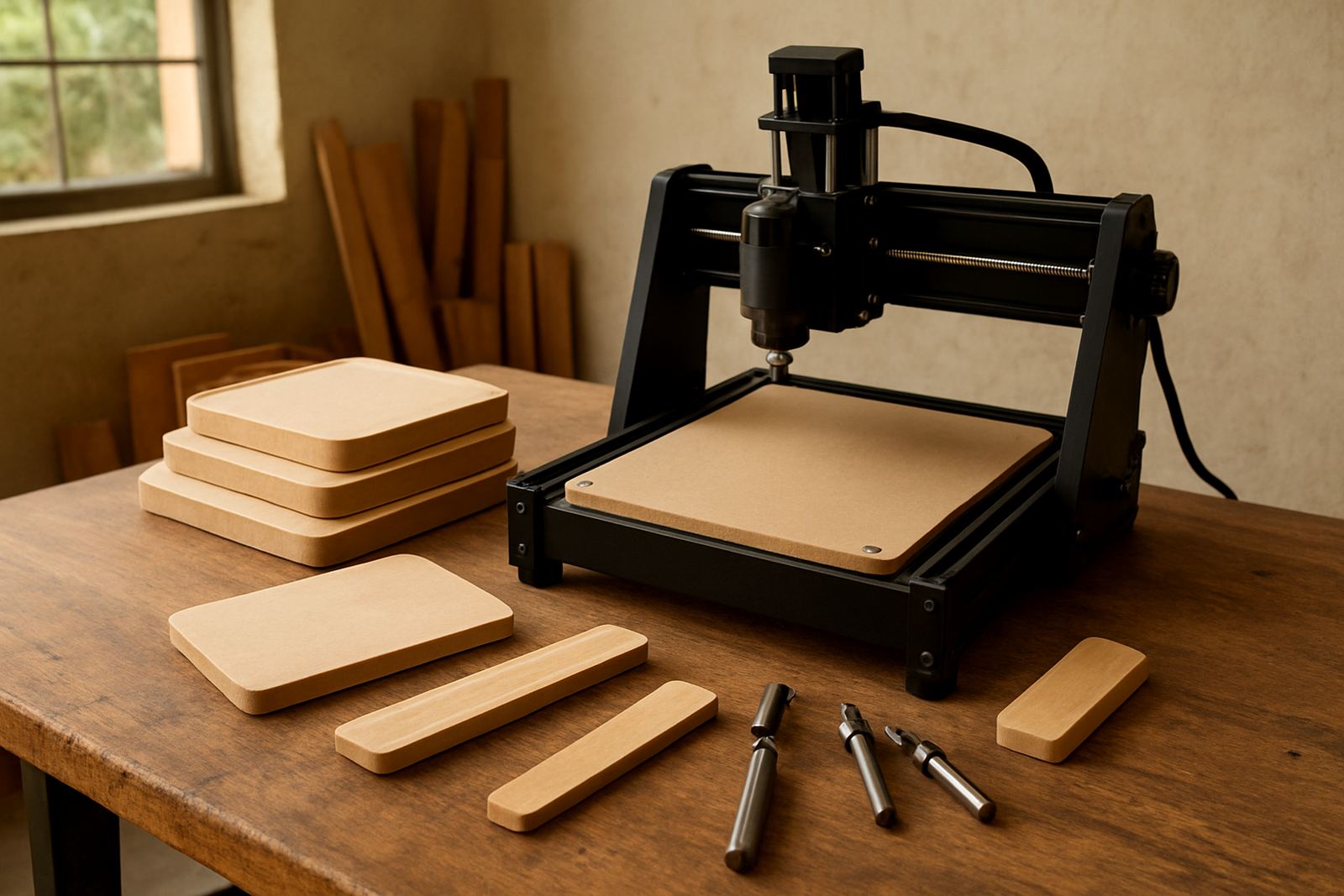
What the Lynnwood workshop needed
The client was a small gift and awards workshop in Lynnwood, Pretoria, serving schools, sports clubs, churches, corporate events, and local functions. Their orders were not massive, but they were steady, and many jobs needed names, dates, logos, and award titles cut into MDF, acrylic, and laminated sheets. They wanted cleaner edges than hand cutting could give, plus repeatable sizing for plaque faces and timber bases.
The brief was simple on paper: supply a CNC router table that could handle small batch plaque work, keep waste low, and fit into a compact shop. In practice, the workshop also needed help with software basics, work holding, cutter choice, and a process that would still work during load-shedding and after hours printing delays. They also wanted a setup that one or two staff members could run without needing a full time machine operator.
- Material types: MDF, acrylic, plastic sheet, and light timber for bases
- Typical plaque sizes: 120 x 80 mm up to 300 x 200 mm
- Batch size: 5 to 40 units per order
- Finish requirement: clean edges, readable engraving, consistent depth
Our practical approach to plaque production
We matched the shop with a desktop style CNC router table suited to smaller runs and repeat work. For plaque and base production, the important factors were table size, repeat accuracy, and enough spindle control for fine engraving. The machine was set up to suit their most common sheet sizes, so they could get better material yield and fewer offcuts. That matters when you are making award bases from decent timber or PVC sheet and every panel counts.
We also helped them choose cutters for different tasks. V-bit engraving was used for lettering and simple crest outlines, while straight end mills handled profile cutting and pocketing. For the bases, we set up a simple workflow for recesses, edge trimming, and fixing holes. The shop could then offer neat plaque and base combinations for annual events, not just flat engraved plates.
- Table format: compact CNC router suitable for smaller workshops
- Useful working area: ideal for nested plaque sheets and short runs
- Cutting tasks: engraving, pocketing, profile cutting, drilling patterns
- Operator level: beginner friendly after setup and training
Training that turned the machine into a daily tool
Once the machine was installed, we spent time on operator training and starter setup. The team needed to understand origin setting, material clamping, speed and feed selection, and how to avoid lifting thin plaque blanks during cutting. We also covered basic software work so they could open files, check dimensions, and make simple edits without waiting on outside help.
Because the shop handled regular award orders, we also helped them build a simple job flow. A plaque order could be measured, checked, nested onto the sheet, cut, cleaned, and matched with the base in a single process. That reduced rework and made it easier to quote confidently. The training was done in plain language and practical steps, which suited the team better than theory alone.
- Operator training for 2 staff members
- Software basics for size checks and toolpath loading
- Starter setup visit for first jobs and material testing
- Refresher guidance for future seasonal peaks
Constraints we planned around from the start
Pretoria workshops know the reality of power cuts, mixed material stock, and small working spaces. This client also had to work around a narrow production area and occasional delivery delays for sheets and fixings. We planned the setup so the machine could be used in blocks, with jobs queued and ready to go when power returned.
Another constraint was coastal style humidity not being the issue here, but Pretoria dust and dry air still affect routers, cutters, and boards sitting open in the shop. We advised on storage, dust removal, and the value of routine cleaning. The team also needed spares support without waiting for a full machine changeover, so we made sure the common wear items were identified early and stocked locally where possible.
- Load-shedding ready workflow for short job bursts
- Dust control and cutter cleaning plan
- Local support from Silverton, Pretoria base
- Nationwide spares planning for wear items
Timeline, handover, and the result
The project ran over three weeks from first site discussion to usable production. Week one covered needs analysis, size checks, and machine selection. Week two handled supply, installation, and first test cuts on plaque material. Week three focused on training, fine tuning, and the first live jobs, including engraved plaques, backing boards, and matching bases.
The result was a workshop that could now produce neat award sets in-house with better control over turnaround time. They cut more consistently, had fewer material mistakes, and could take on repeat orders with confidence. Their team also gained enough machine knowledge to handle routine maintenance and identify when a cutter or spindle needed attention before it caused lost time.
- Timeline: 3 weeks end to end
- Result: in-house production for regular award and event orders
- Benefits: less outsourcing, more control, better repeatability
- Support: breakdown help, spares planning, control tuning if needed
What we would repeat on the next plaque job
For the next awards workshop, we would do the same three things again: keep the setup matched to the actual sheet sizes used, train the operators on practical file handling, and set aside the common cutters and consumables from day one. That combination saves time later and cuts frustration, especially when the first batch is due for a local school function or year end event.
We would also repeat the early focus on maintenance. Small routers are easiest to keep accurate when the rails are clean, the cutter is sharp, and the spindle is checked before the busy season starts. That approach suits small South African workshops well, because it keeps the machine earning rather than standing still. It’s the sort of planning that pays off, not just for one job, but for every repeat order after that.
Key facts
| Client type | Small gift and awards producer |
|---|---|
| Town | Lynnwood, Pretoria |
| Materials | MDF, acrylic, plastics and light timber |
| Typical job size | 5 to 40 plaques per order |
| Project timeline | 3 weeks |
| Support supplied | Training, starter setup, spares planning, breakdown support |