Kempton Park packaging work, short runs and tight fits
The client was a packaging workshop in Kempton Park that handles presentation boxes and protective inserts for small product batches, sample kits and launch packs. Their jobs changed week to week, so the main need was not volume only, but accuracy, quick changeovers and a machine that could handle foam and board without fuss.
They were doing a mix of carton board, closed-cell foam and thin MDF for display parts. The shop floor was busy, with a few operators sharing the same area, so the machine had to fit into a practical working space and still leave room for cutting, packing and final check. They also wanted something that could keep going through load-shedding interruptions without losing settings every time power dipped.
The brief was clear: cut crisp inserts for product presentation, hold shape tolerances that made boxes close properly, and avoid hand trimming on every order. They also asked for support that was local enough for a quick call or site visit if a spindle, cable or control setting gave trouble.
Brief: foam, board and repeatable presentation inserts
The workshop wanted a CNC router table that could switch between nested board layouts and pocketed foam inserts. Most of their work was short-run, often between 10 and 80 sets per job, so the machine had to be simple enough for staff to learn quickly and accurate enough that a first piece could guide the rest of the batch.
- Material types: foam, carton board and thin MDF
- Typical sheet size: 2440 mm x 1220 mm
- Insert depths: from 10 mm to 50 mm depending on product
- Tolerance target: neat fit with minimal post-cut trimming
- Workflow: short runs, frequent changeovers, same-day turnaround where possible
They also needed practical advice on cutter selection, feed rates and cut order because soft materials can compress, chip or lift if the path is wrong. For presentation packs the edge finish matters, but the real test is whether the insert holds the product firmly and still looks clean after packing, transport and handover.
What we supplied and how the setup was handled
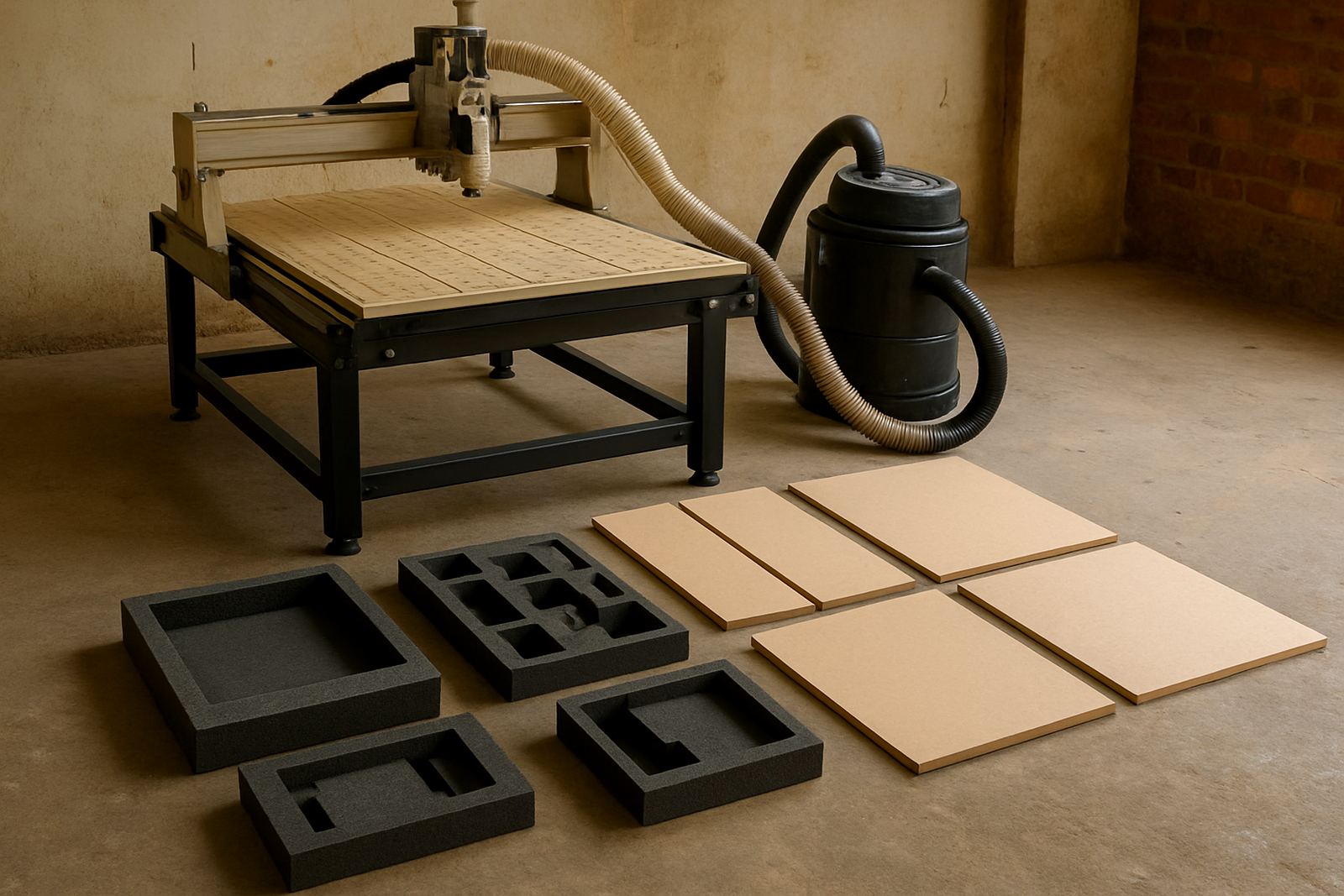
We supplied a compact CNC router table suited to smaller workshop use, with a working area that matched full sheets while keeping the footprint manageable. The setup included a dust extraction friendly cutting arrangement, controller configuration, basic software walkthrough and the first round of tooling advice for foam and board jobs. We also put in place a spare parts plan so common wear items could be kept on hand, which helps when a job is due and the yard is already full.
During commissioning we checked squareness, spoilboard flatness, spindle runout and axis movement. We then tuned the control settings for the materials on hand and ran test cuts on board, foam and a thin MDF sample. The team was shown how to clamp, zero the job, check tool offsets and inspect the first piece before committing to the rest of the sheet.
- Machine type: compact CNC router table for woodworking, board and plastic work
- Common use: foam cavity cutting and board insert profiling
- Support included: operator training, starter setup visit and remote support
- Service planning: preventive maintenance and spares planning
Because the workshop operates in a busy industrial area, we kept the setup practical no fancy routines, just clean steps that the operators could repeat under pressure. That matters when a courier is waiting in the yard and the packing line needs the inserts by the afternoon.
Training the team for day to day production
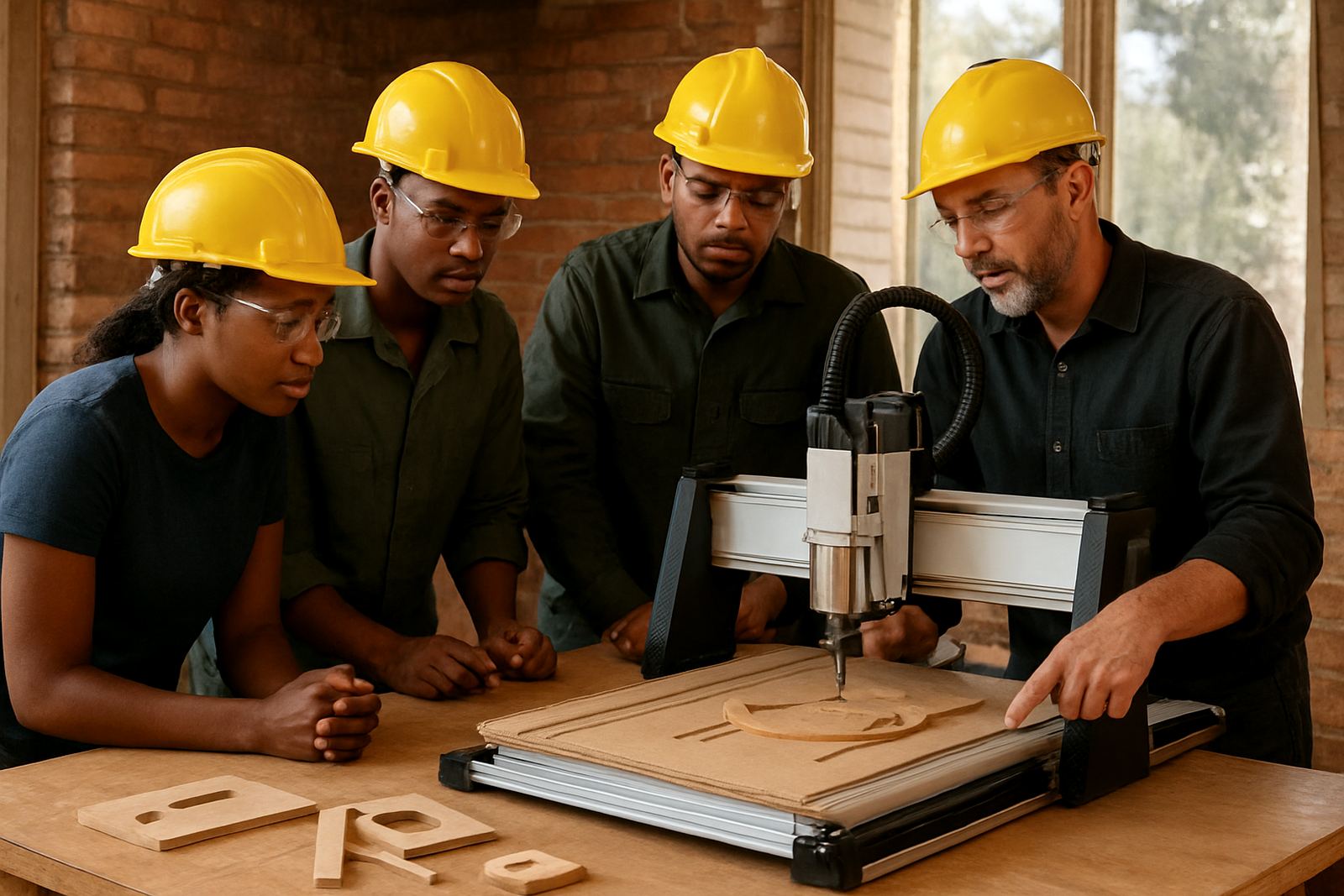
Training was done on site over two sessions in the first two weeks. The first session covered machine safety, homing, zero setting, material loading and how to read the job file before pressing start. The second session focused on tool changes, cut sequencing and simple troubleshooting. Nhlanhla worked through the software basics with the operators while Wessel checked the mechanical side and made sure the machine stayed in spec after the first production cuts.
The team was also shown what to do during a power interruption. In Kempton Park, like much of Gauteng, load-shedding can interrupt a shift at the wrong time, so we covered restart checks, job recovery and what to inspect before resuming a cut. That saved time later because the operators did not have to guess where the machine had left off.
Lindelwa arranged the early spares list so the workshop could keep extras for the items most likely to be needed first. A small stock of wear parts makes a real difference when a rush job lands on a Friday and the next delivery day is already booked.
Timeline, results and shop floor gains
This Kempton Park packaging installation took three weeks from the first site check to final handover. Week one covered the brief, space check and machine specification. Week two was installation, calibration and operator training. Week three focused on sample production and final tweaks to cutter choice, hold-down method and cut order.
By the end of the project the workshop was producing inserts with cleaner edges and much less hand finishing. The first-piece approval time dropped because the operators could check fit on the machine before a full run started. They also reduced waste on foam sheets because the cut paths were planned better and the nesting was more consistent.
- Cleaner fit in presentation boxes
- Less manual trimming after cutting
- Faster setup between different jobs
- Better repeatability across short runs
- More confidence for the team when switching materials
For the client, the biggest gain was control. Jobs that were once sent out for cutting could now be handled in-house, which improved turnaround and gave them more say over quality. It also helped them quote with more certainty because they knew the insert production step would not hold up final packing.
What we would do again for a similar workshop
If we were setting up another packaging workshop for Kempton Park or Midrand, we would take the same practical approach: start with the most common sheet sizes, test the real materials, and train the operators on the exact jobs they will run every week. That avoids guesswork and keeps the machine useful from day one.
We would also recommend planning spares early rather than waiting for the first breakdown. A simple stock of cutters, belts, contact items and a few control related parts can stop a small fault turning into a missed delivery. For workshops near Pretoria, Centurion or Edenvale, this is especially helpful because courier lead times can still knock a job off schedule if the missing part is not already on hand.
For this kind of work, we would repeat the same service mix: starter setup visit, operator training, control tuning, preventive maintenance and remote support. It suits small teams that need a machine to earn its keep without calling in outside help for every little thing.
Local support from Pretoria to Kempton Park
CNC Router Hub is based in Silverton, Pretoria and works with workshops in Kempton Park, Pretoria East, Centurion, Midrand and across Gauteng. We support CNC router tables, software basics, spindle replacement, breakdown support and spares planning for woodworking, MDF, foam and plastics.
For short-run packaging inserts, the right machine is only part of the job. The rest is setup, training and keeping the shop ready for the next order. That is where our team stays involved, from first cut through to routine maintenance and spare part planning.
Key facts
| Project town | Kempton Park |
|---|---|
| Client type | Packaging workshop |
| Materials cut | Foam, board and thin MDF |
| Typical run size | 10 to 80 sets per job |
| Timeline | 3 weeks from assessment to handover |
| Support included | Training, setup, tuning and spares planning |