
Project brief from a Faerie Glen décor workshop
The client was a small décor producer in Faerie Glen, Pretoria, making layered wall pieces, cut-out panels and decorative shapes for homes, offices and gift ranges. Their existing process was producing parts, but the finish was taking too long to clean up. Edges were showing tool marks, small internal details were soft, and repeat jobs were not matching closely enough from one batch to the next.
They wanted a practical CNC setup for MDF and plastics, with enough table size for common décor panels but still suitable for a workshop that shared space with packing and finishing. The ask also included operator training, basic software guidance and help planning spares so downtime would not drag on a whole week if something simple failed.
What was holding the job back
The biggest issue was consistency. The team had designs that looked good on screen, but once cut, the parts needed too much sanding and edge clean-up before paint or assembly. Some repeat shapes were drifting slightly, which created fitting problems when layers had to stack neatly. In a décor job, that sort of variation shows up fast.
There were also workshop constraints to work around. Power interruptions are part of life in Pretoria, so the client wanted a machine and workflow that could recover cleanly after a stop. Dust extraction had to be kept practical, and the machine footprint needed to fit a modest room without blocking movement around material storage. The workshop also sits in a humid zone during summer, so keeping MDF flat and stored correctly mattered just as much as the cutting program.
- Materials: MDF sheets, sign board, and light plastics for decorative inserts
- Typical part size: 300 mm to 1200 mm wide
- Required output: cleaner edges, accurate repeats, less hand sanding
- Workshop need: compact footprint, simple operation, local support
The CNC setup and spares planning we supplied
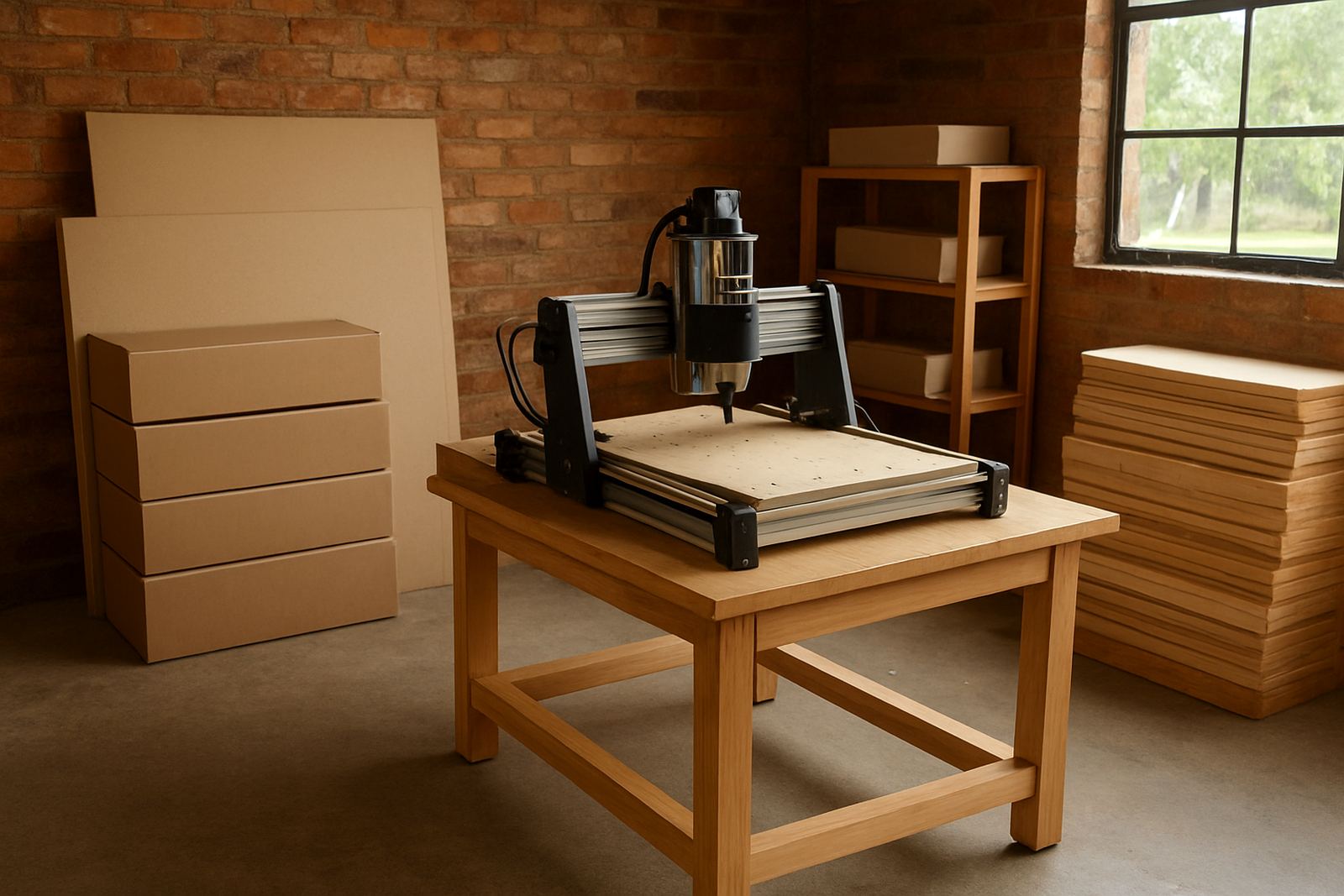
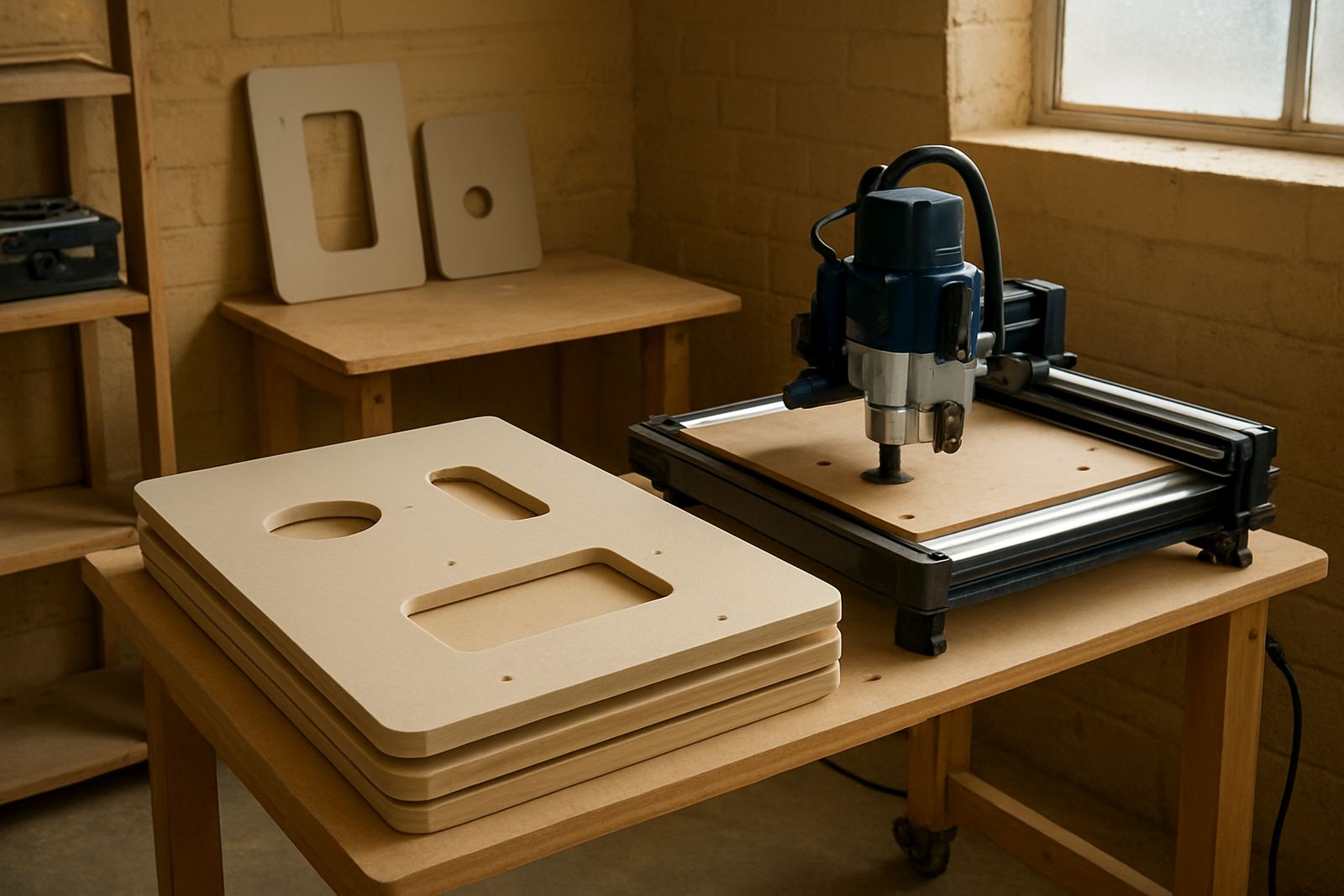
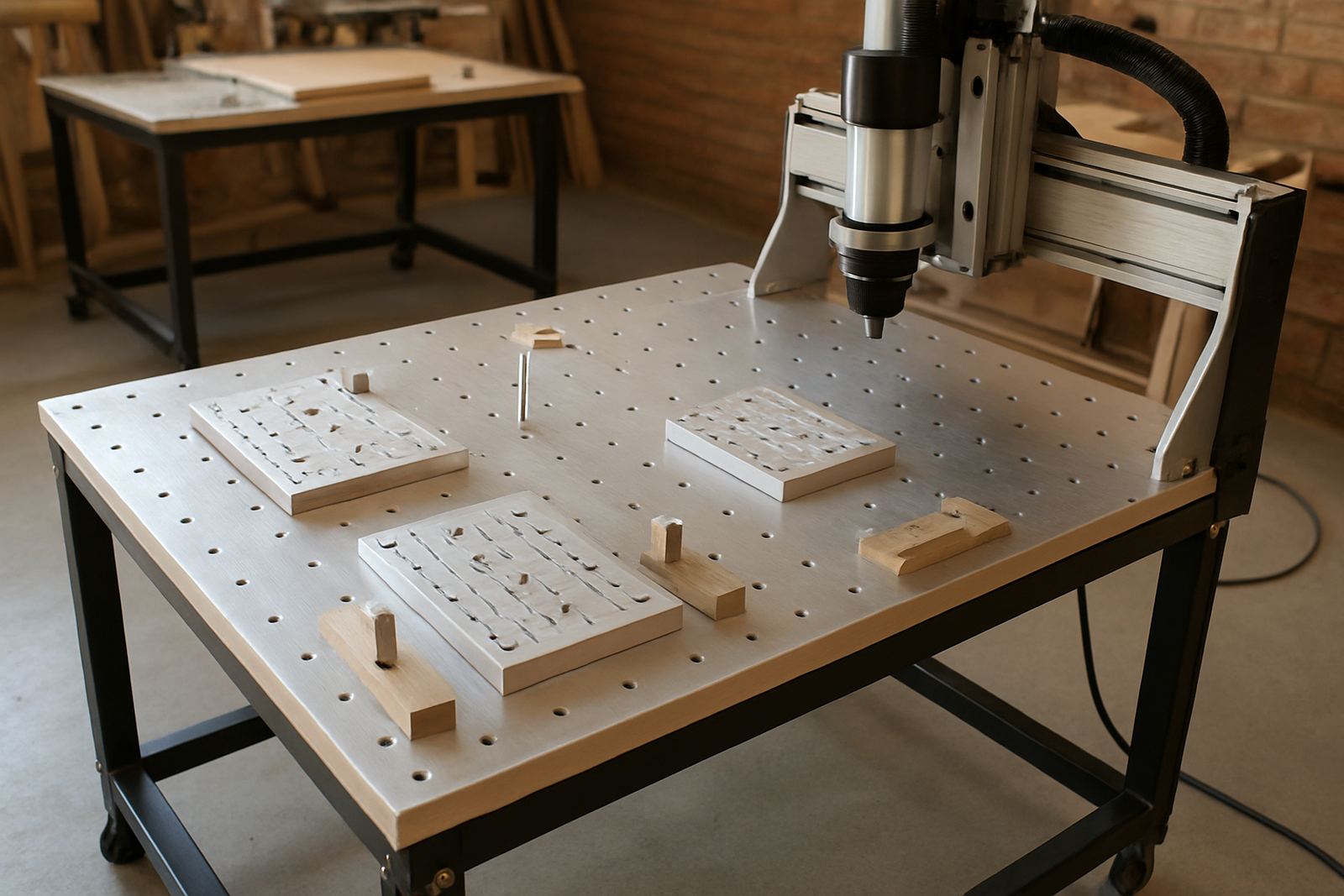
We supplied a desktop and hobby-friendly CNC router table suited to decorative panel work, with enough rigidity for fine detail and repeat cutting. The machine was set up for MDF and plastics, with a working area sized for common décor sheets and smaller nested parts. We also helped define a starter tooling list, basic holding methods and a spares plan for wear items that should always be on hand.
The handover included operator training, software basics and a starter setup visit so the workshop could move from test cuts to real production without guessing. Rather than leaving the client to figure out feed rates by trial and error, we worked through material thicknesses, finishing passes and edge quality on sample parts. That made a noticeable difference to the first production batch, and saved a fair bit of time.
- Machine type: compact CNC router table for wood-based board and plastics
- Suitable work: layered décor, repeat ornaments, cut-out letters and panels
- Support included: starter setup visit, operator training, spares planning, remote support
- Extra attention: control tuning and clean restart procedure after load-shedding
Training the team for day-to-day production
The workshop had staff with good practical experience, but they needed a shorter path between design, setup and cutting. We spent time on file checking, zero setting, tool changes and how to spot a problem before it wastes a full sheet. We also covered job notes, so the team could repeat a winning setting later instead of starting from scratch every time.
Because décor work often moves between short runs and custom jobs, the training was kept focused on real production habits. That meant safe clamping, accurate depth control, careful tool choice and neat part nesting on the sheet. We also covered what to do after a stop-start event, which is important when a machine loses power mid-job. A clean restart method prevents scrapped material and keeps the team calm when the lights go out and come back.
- Operator training for setup, zeroing and safe cutting practice
- Software basics for file prep, nesting and job checks
- Refresher notes for repeat production settings
- Remote support available for setup, software and cutting issues
Timeline, testing and the final result
The project ran over three weeks from first assessment to production readiness. Week one was the brief, machine selection and workshop planning. Week two covered delivery, installation, control tuning and sample cuts. Week three was training, test batches and setting up a simple spares plan for the common items that can delay décor production if they are not kept on the shelf.
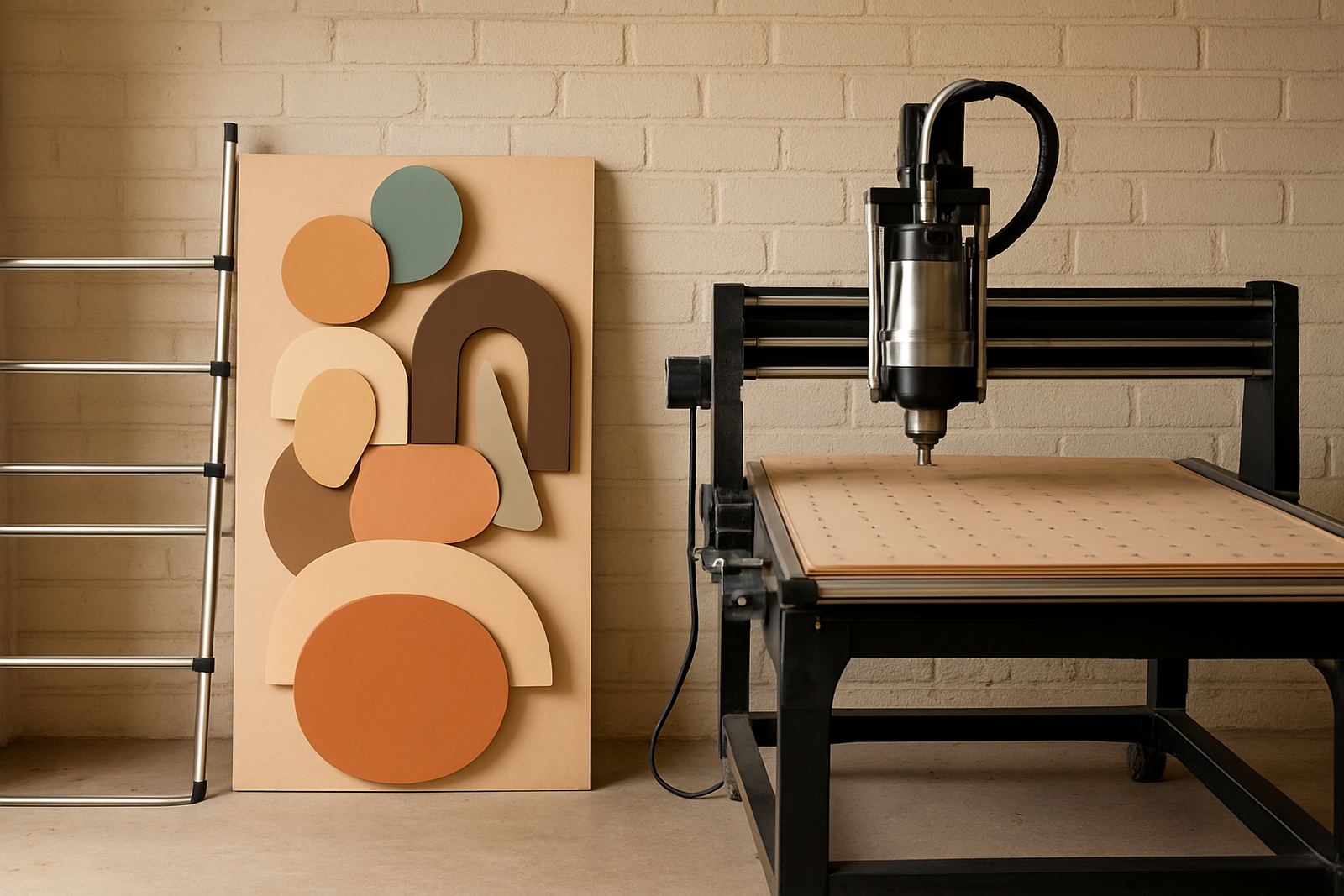
By the end of the rollout, the client had cleaner cut edges, more reliable repeat shapes and far less manual finishing. The layered wall art assembled better because parts were matching properly, and the workshop could move through a batch with less rework. In plain terms, they were getting parts that looked ready sooner and the team had more confidence running them. That is what the job was meant to do.
- Project duration: 3 weeks
- Outcome: cleaner output and better repeatability
- Workshop benefit: less sanding, quicker assembly, steadier production
- Business benefit: easier scaling of small décor orders without extra labour
What we would repeat on the next décor job
If we were doing a similar décor project again, we would keep the same approach. Start with the material list, measure the actual sheet sizes on hand, and match the machine settings to the most common panel thicknesses. That avoids buying tools or accessories that sound useful but do not match the work being done.
We would also keep spares planning in the first conversation, not as an afterthought. A workshop in Pretoria, Centurion or Midrand can lose hours when a small part is missing, and that lost time costs more than ordering the right spares early. For Faerie Glen style décor work, the best results come from accurate setup, practical training and simple support that the team can use straight away, no drama.
Key facts
| Client type | Décor producer making layered wall art and ornamental shapes |
|---|---|
| Town | Faerie Glen, Pretoria |
| Materials | MDF, sign board and light plastics |
| Machine focus | Compact CNC router table for small workshop production |
| Timeline | 3 weeks from brief to production readiness |
| Support included | Training, control tuning, starter setup visit and spares planning |