
What the Dust Shoe Kit Does on a CNC Router
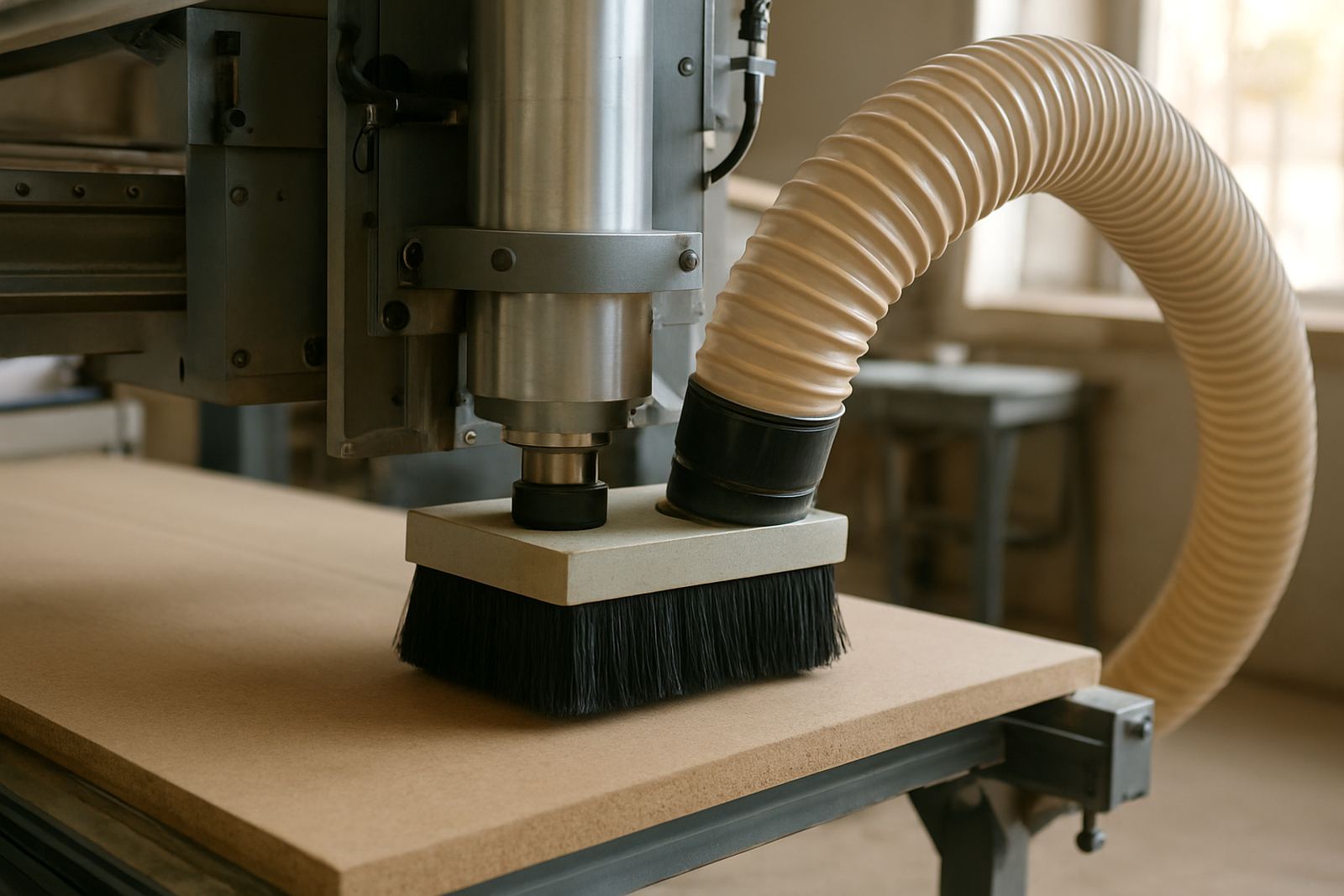
This dust shoe kit sits around the cutter and helps capture chips and fine dust at the source. On small routers, that makes a real difference when you are cutting MDF, plywood, pine, acrylic or other sheet materials that leave a lot of debris behind. You get a cleaner cut path, less dust settling on rails and fewer stops to brush the table off by hand.
It is especially useful where visibility matters. When the bit is hidden under loose dust, it becomes harder to judge the pass and spot chatter, lifted grain or a part moving in the hold-down. A well-fitted shoe gives you a clearer view of the work and helps keep the job organised, even in a busy Silverton workshop where more than one operator may use the same machine.
Sizes, Brush Options and Mounting Choices
Dust shoes are usually selected to suit the router size, spindle body and the cutter length you use most often. For hobby and desktop machines, a compact shoe keeps the added weight low and does not interfere with short Z travel. For larger gantry tables, a wider body with a deeper brush skirt can cover more of the cutting area and improve chip capture on bigger sheets.
- Common cutter access openings for 65 mm, 80 mm and 100 mm spindle bodies
- Brush skirt options for light dust, mixed chips or heavier MDF waste
- Fixed height or quick-release styles depending on how often you change tools
- Mounting that suits a spindle bracket, carriage plate or direct holder setup
If you work mostly on thin panels, a low-profile shoe is often enough. If you machine deeper pockets or switch between tools often, ask for a version that allows easier bit changes without stripping the whole assembly off every time.
Where It Suits Best in South African Workshops
This kit suits hobby routers, compact workshop machines and entry-level production tables used for signage, cabinetry parts, model making and plastic routing. It is a good fit for businesses in Pretoria East, Centurion, Midrand and Kempton Park that need cleaner machine areas but do not want a full extraction rebuild.
It is also useful in coastal towns where humidity makes fine dust cling to surfaces and cabinet parts. In places like Durban or Gqeberha, the extra dust control helps keep chips from packing around guides and spoiling a clean finish. In Gauteng, where load-shedding can interrupt a job, a tidier machine bed also helps you restart faster because you are not clearing piles of waste before continuing.
- Woodworking shops cutting cabinet parts, lettering and templates
- MDF users dealing with very fine, stubborn dust
- Plastic work where chips can scratch finished surfaces
- Small production bays that need quicker clean-up between jobs
Installation, Extraction and Power Needs
The dust shoe itself does not need electrical power or gas. It works with your existing dust extraction or vacuum system, so the main requirement is enough airflow for the machine size and the material you are cutting. A small shop vacuum may be fine for light hobby use, but larger tables usually perform better with a proper extractor and a hose size that matches the shoe outlet.
During installation, check that the shoe clears the spoilboard, clamp heads and any raised fixtures. The brush skirt should touch or almost touch the work surface without dragging hard enough to lift the cutter path. If your machine has a height probe or automatic tool setting, make sure the shoe does not interfere with those routines. A poor fit can cause rubbing, poor chip pickup or unnecessary wear on the brush edges.
Care, Cleaning and Servicing Intervals
Dust shoes are simple parts, but they need routine care. Brushes wear down over time, especially where the table sees a lot of MDF, resinous timber or frequent tool changes. If the skirt starts leaving a gap, dust will escape and settle around the rails, belts or lead screws. A quick inspection once a week is enough for most small workshops.
- Vacuum the shoe and brush area after heavy cutting days
- Check for cracked mounts, loose screws or warped plates
- Replace brushes when the skirt no longer seals close to the surface
- Keep the hose clear of offcuts and sharp corners that can cause blockages
If you already book preventive maintenance or breakdown support, a worn dust shoe should be included in the check. It is a small item but it protects bigger parts from grit and fine abrasive dust, which saves money on service calls later.
What to Check Before You Order
Before ordering, measure the spindle or router body diameter, the cutter reach below the shoe, and the space around your clamps or spoilboard fixtures. You should also note whether your machine uses a fixed spindle mount, moving carriage or a compact hobby router head. Those details determine whether the shoe will sit square and whether the brush can seal properly.
Please also check your extraction hose size, because a mismatch can reduce airflow or need an adaptor. If you are in a shared workshop, it helps to tell us what material you cut most often and whether you need easy tool access for fast changeovers. We can then match the shoe to your setup and spare parts planning, so you are not left waiting on a small fitting that should have been right the first time.
- Spindle or router body diameter
- Maximum cutter length below the shoe
- Hose or vacuum connection size
- Machine travel limits and clamp clearance
- Main materials used, such as MDF, wood or plastics
Key facts
| Product type | Dust collection add-on for CNC router tables |
|---|---|
| Compatible materials | Wood, MDF, plywood and plastics |
| Mounting style | Spindle mount, carriage mount or machine-specific fitment |
| Brush options | Light dust, mixed chips or heavy-duty skirt types |
| Power requirement | No electrical power required, uses existing extraction |
| Typical use | Cleaner cutting area, better visibility and reduced chip build-up |