
What a Spoilboard Panel Does on a CNC Router
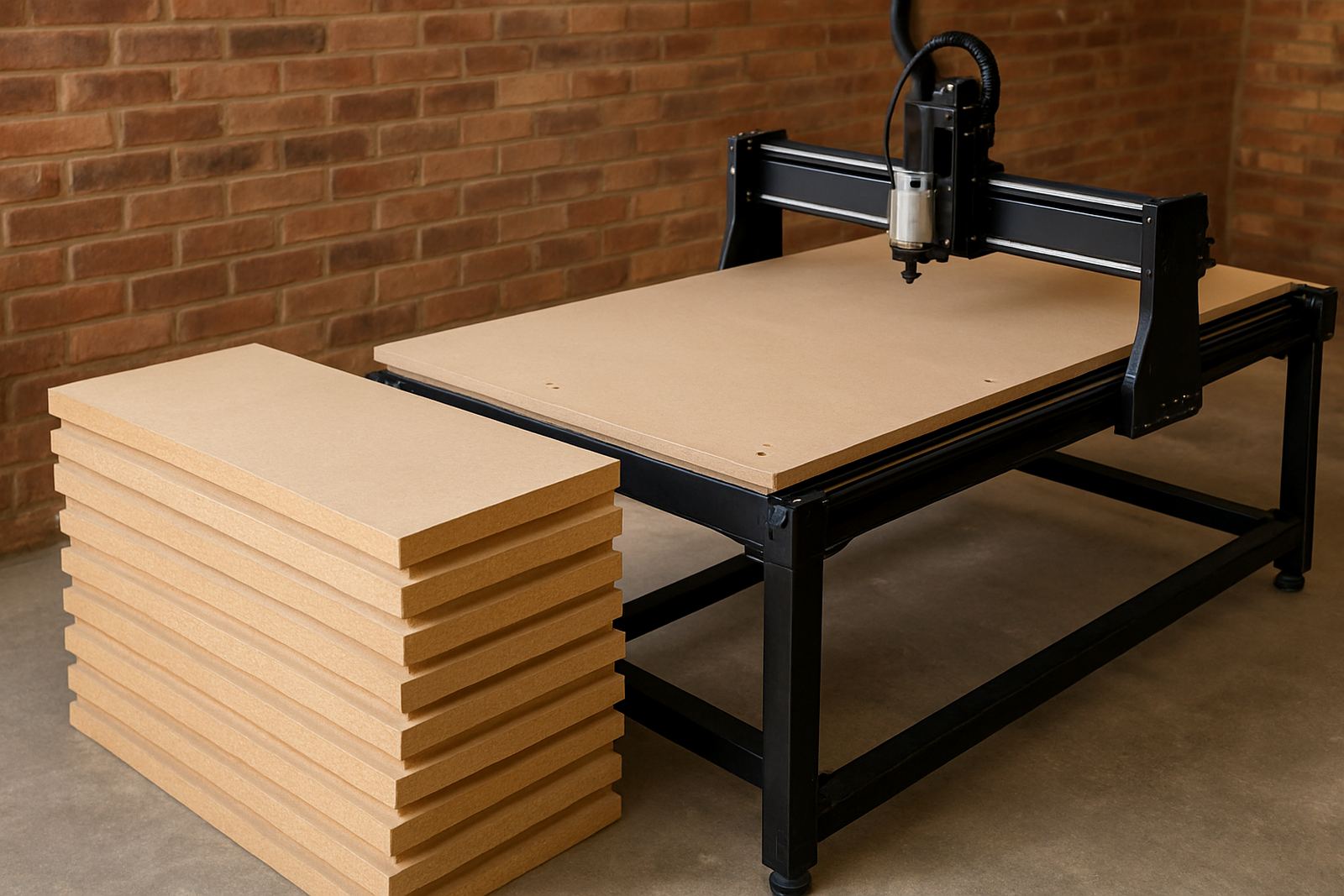
A spoilboard panel is the sacrificial top layer fitted to a CNC router table so the cutter can pass into it without damaging the machine bed. Over time it takes the wear from tool cuts, hold-down screws, vacuum marks and small misfeeds, which means you can replace only the top panel instead of resurfacing the whole table. That keeps the cutting plane true and helps parts come off with cleaner edges and more consistent thickness.
For woodworking, MDF and plastics, a good spoilboard matters more than many users expect. If the surface is uneven, your cutter may take off too much in one area and too little in another. That affects joinery, engraving depth and slot fit. In a small workshop, it can also waste sheet material because you end up re-running jobs or sanding more than necessary.
- Used as a replaceable cutting surface on CNC router tables
- Helps maintain flatness after repeated cutting and surfacing
- Supports cleaner part accuracy on sheet goods and plastic panels
- Protects the main table structure from tool damage
Sizes and Panel Options for Small Workshops
Replacement spoilboard panels are typically supplied to suit desktop and hobby CNC router tables, with sizes matched to the machine working area. Common options are made for smaller sheet handling tasks, sign work, cabinet components and plastic profiling. The panel should cover the usable bed area with enough overlap for clamping, but not sit proud where it could interfere with gantry travel or limit tool clearance.
Material choice usually depends on how you work. MDF is the most common because it is easy to machine flat and replace. Some users prefer a denser board where humidity is high or where they run more clamp-heavy jobs. In Pretoria, Centurion and Midrand, many workshops operate in mixed storage conditions so it helps to keep a spare panel sealed and stored flat until needed.
- Suited to desktop and hobby CNC routers
- Available to match working areas from compact panels to larger beds
- Commonly used for woodworking, MDF routing and plastic sheet work
- Can be surfaced after fitting for a fresh, level cutting plane
Where Spoilboard Panels Work Best
These panels suit smaller production environments and personal workshops where accuracy is important but floor space is limited. They are a practical fit for cabinet makers, signage shops, model makers and makers doing short-run components. They also suit schools, training rooms and side-line businesses that need a dependable surface for repeat jobs without moving up to a full production bed.
If your work involves nesting sheets, pocketing or through-cuts, a fresh spoilboard improves the finish and helps reduce tear-out at the underside. That is useful when you are making drawer components, template parts, lettering or plastic guards. It also helps when cutting on a machine that sees regular use and needs a quick return to service after maintenance or a tool change.
- Cabinet and joinery workshops
- Sign-making and lettering jobs
- School and training use
- Hobby routing, model work and plastic parts
Installation, Power and Setup Checks
Most spoilboard panels do not need any electrical power or gas supply because they are part of the cutting surface, not a powered machine. Installation usually involves fitting the panel to the machine table, checking that the fastening method suits the bed layout and then surfacing the top so it is flat to the cutter path. If the panel sits poorly or has twist in it, the machine can only copy that error.
Before fitting, check the machine bed for swarf, glue build-up and old screw damage. Make sure the support rails or sub-base are sound and level. If your workshop has load-shedding or frequent stop-start operation, it is worth confirming that the table stays in the same position after power returns, especially where vacuum hold-down or tool zeroing is involved. On coastal sites, humidity can move panel material over time, so storage and fit-up matter.
- No power or gas required for the panel itself
- Fit should match the machine bed, hold-down method and travel clearance
- Surface should be machined flat after installation
- Check for bed damage, twist and support alignment before fitting
Care, Wear and Replacement Timing
A spoilboard should be treated as a consumable item. Once it is heavily grooved, pinholed, swollen or uneven after resurfacing, it is time to replace it. The first signs often show up as poor part thickness, visible ridges under sheet material or more chatter on the cutter path. In many small workshops, the board gets pushed too far because it still looks usable from above, but the accuracy tells a different story.
Good care is simple: brush off dust, vacuum the table after every shift and keep liquids away from the board. If you use hold-down screws, note the positions so you are not re-driving fasteners into weak spots. A spare panel kept on hand can reduce downtime when the fitted board is spent. That is especially useful for busy shops in Pretoria East, Silverton and Centurion where jobs often need to keep moving the next morning.
- Replace when the surface is deeply grooved or swollen
- Resurface only while there is enough material left
- Keep the table clean to avoid false highs and cutter marks
- Store spare panels flat and dry
What to Check Before You Order
To get the right spoilboard panel, measure the usable bed area, not only the outer frame size. Check the machine model, the fastening pattern, the thickness you can accept under the gantry and whether you need pre-cut holes or a plain blank panel. If you are replacing an older board, bring the previous panel measurements as well as any notes on screw locations, vacuum zones or clamping points.
Think first about the material you cut most often. Light hobby work may suit a standard MDF panel, while more frequent routing may need a denser or thicker option. If your workshop handles plastics, ask for a panel that supports cleaner tool exits and easier resurfacing. For spares planning and training needs, our Silverton team can help you match the panel to the machine and the way it is used.
- Usable bed size and panel thickness
- Machine model and fastening pattern
- Clamp, screw or vacuum hold-down method
- Material type you cut most often
- Need for pre-cut holes or a blank panel
Key facts
| Product type | Replacement spoilboard panel for CNC router tables |
|---|---|
| Typical use | Woodworking, MDF cutting and plastic routing |
| Common materials | MDF and denser board options depending on application |
| Fitment | Desktop and hobby CNC router tables |
| Power or gas required | None |
| Support area | Silverton, Pretoria East, Centurion, Midrand, Kempton Park and nationwide spares |